





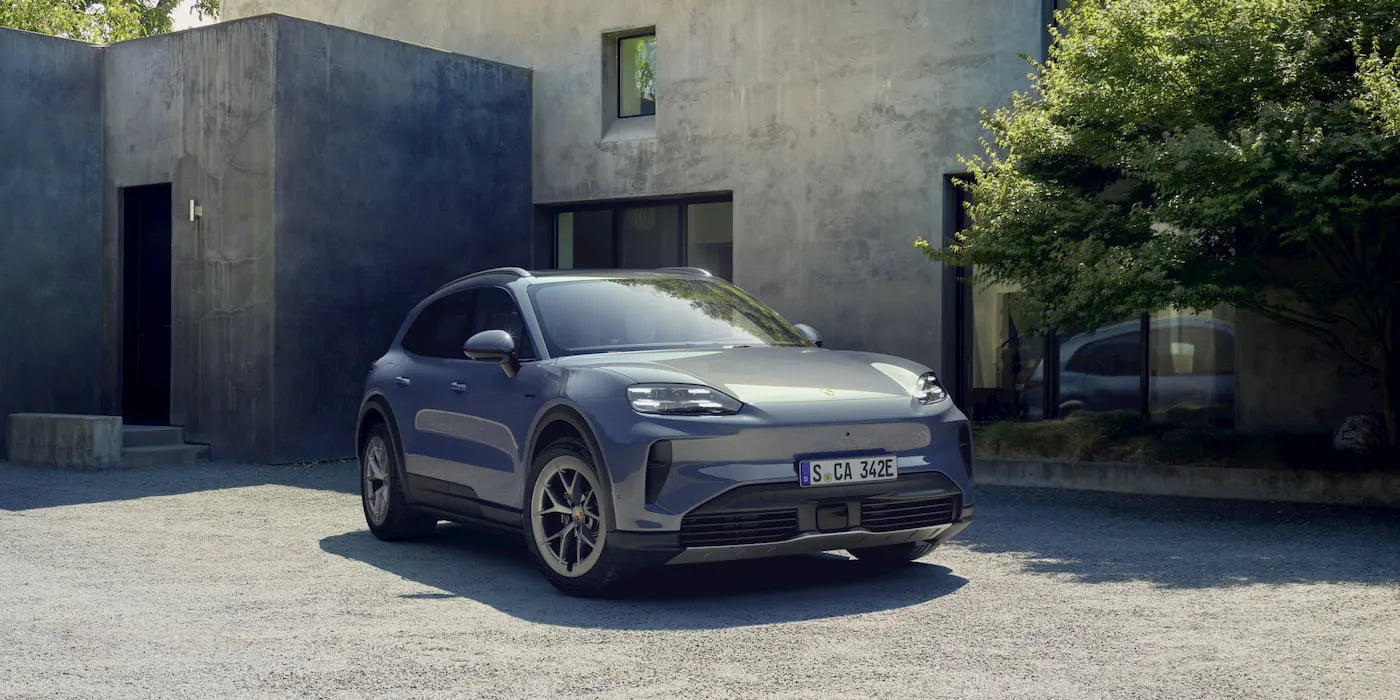
A New Position in the Electric Cayenne Range
Porsche has expanded its electric SUV portfolio with the introduction of the Cayenne S Electric, a model positioned between the entry-level version and the high-performance Cayenne Turbo Electric. The new trim fills an important gap in the lineup by combining strong performance with a significantly lower price than the flagship variant.
In the United States, the Cayenne S Electric carries a starting price of $128,650, including destination charges. This places it $17,300 above the base Cayenne Electric, while still remaining $36,700 cheaper than the Turbo version. With this positioning, Porsche appears to be targeting buyers who want high performance but may not need the most extreme version of the SUV.
Deliveries for the new model are expected to begin in the United States by late summer, marking the next stage in Porsche’s rollout of the electric Cayenne family.

Battery and Charging Technology Remain Consistent
Although the Cayenne S Electric occupies the middle of the range, it shares key hardware components with the other electric Cayenne models. All variants use the same 113-kilowatt-hour battery pack, which forms the core of the vehicle’s power system.
This battery supports ultra-fast charging through DC fast chargers with a peak rate of up to 400 kW. Under ideal conditions, Porsche says the battery can recharge from 10% to 80% in under 16 minutes. That level of charging speed places the Cayenne among the faster-charging electric SUVs currently available.
Like other recent Volkswagen Group electric vehicles, the Cayenne Electric features two separate charging ports. The DC fast-charging inlet is located on the driver’s side, while the AC charging port is positioned on the passenger side. This layout offers greater flexibility when connecting to different charging stations.
Longest Driving Range in the Cayenne EV Family
Interestingly, the Cayenne S Electric currently delivers the longest range within the lineup, despite sitting below the Turbo model in terms of performance. According to the WLTP testing cycle, the SUV can travel up to 405 miles (653 kilometers) on a full battery.
That figure exceeds the base version’s range by roughly 7 miles (11 km) and surpasses the Turbo variant by approximately 18 miles (30 km). However, it is worth noting that EPA range estimates for the electric Cayenne models have not yet been released, meaning official U.S. ratings are still pending.
The extended range may make the S variant particularly attractive to drivers who prioritize long-distance usability but still want strong acceleration.
Dual-Motor Powertrain and Performance Figures
The Cayenne S Electric uses a dual-motor all-wheel-drive system, delivering strong performance for a vehicle of its size. In standard operation, the system produces 536 horsepower (400 kW).
When certain performance features are activated, however, output increases significantly. Engaging Launch Control or Porsche’s Push-to-Pass function raises peak power to 657 horsepower (490 kW).
With this extra boost available, the SUV can accelerate from 0 to 60 mph in 3.6 seconds, making it considerably quicker than the base Cayenne Electric. Top speed is rated at 155 mph (250 km/h).
Compared with the entry-level model, the Cayenne S Electric reaches 60 mph 0.9 seconds faster and achieves a 12-mph higher top speed. However, the flagship Cayenne Turbo Electric still holds the performance crown, completing the sprint 1.2 seconds quicker and reaching a slightly higher maximum velocity.
Exterior Details and Customization Options
From a design perspective, the Cayenne S Electric features several visual distinctions compared with its siblings. The SUV receives revised front and rear bumper designs, giving it a slightly more aggressive appearance.
Additional styling touches include trim elements finished in Volcano Grey Metallic, helping the S variant stand apart within the lineup. In the U.S. market, buyers can select from 13 exterior paint colors, allowing for a wide range of customization.
A number of optional performance upgrades are also available. These include Porsche Torque Vectoring Plus (PTV Plus), Active Ride Suspension, and ceramic-composite brake systems designed for improved stopping power. Customers can also choose the Sport Chrono Package, which adds additional performance-focused driving modes and features.
Interior Technology and Standard Equipment
Inside the cabin, the Cayenne S Electric continues Porsche’s move toward screen-dominated interiors. A curved OLED infotainment display forms the centerpiece of the dashboard and is included as standard equipment.
The driver receives information through a 14.25-inch digital instrument cluster, while an optional 14.9-inch display for the front passenger can be added to the dashboard. Together, these screens create a technology-heavy cockpit layout.
Standard features also include a dedicated Track mode, designed for more demanding driving conditions. This function keeps the high-voltage battery within an optimal temperature range during aggressive acceleration or track use, helping maintain consistent performance.

Expanding Porsche’s Electric SUV Strategy
With the Cayenne S Electric, Porsche continues to broaden its electric vehicle offerings while maintaining the performance identity associated with the brand.
The addition of a mid-tier model gives buyers a wider range of choices between the entry-level variant and the high-end Turbo version. By combining strong acceleration, long range, and ultra-fast charging capability, the Cayenne S Electric may appeal to customers seeking a balance between performance and everyday usability.
As the company expands its electric portfolio, the Cayenne lineup is expected to play a key role in Porsche’s transition toward electrified mobility.
Recommend Reading: Porsche’s New Cayenne Electric Redefines the High-End EV SUV


Share:
2027 Chevy Bolt EV Fast-Charging Test Shows Major Upgrade
Gas Price Spike Drives More Americans to Research EVs