





Real-World Charging Test Confirms Faster Performance
Early hands-on evaluations of the 2027 Chevrolet Bolt EV suggest that General Motors has made meaningful improvements to its most affordable electric vehicle. While the overall design still resembles the earlier Bolt EUV, the newest version introduces upgrades that matter most to EV drivers—especially charging speed and usability.
To see how the updated model performs outside laboratory conditions, a real-world DC fast-charging session was conducted by Dave from Out of Spec Testing. The test aimed to evaluate whether the manufacturer’s claimed charging performance would hold up in typical use.
Before connecting to the charger, the vehicle’s battery was preconditioned to ensure optimal temperature for rapid charging. The car arrived at the station with 10% state of charge and an estimated 22 miles of remaining range. Environmental conditions were favorable as well, with an ambient temperature of approximately 75°F, creating ideal circumstances for the charging session.

Charging Power Quickly Reaches Peak Levels
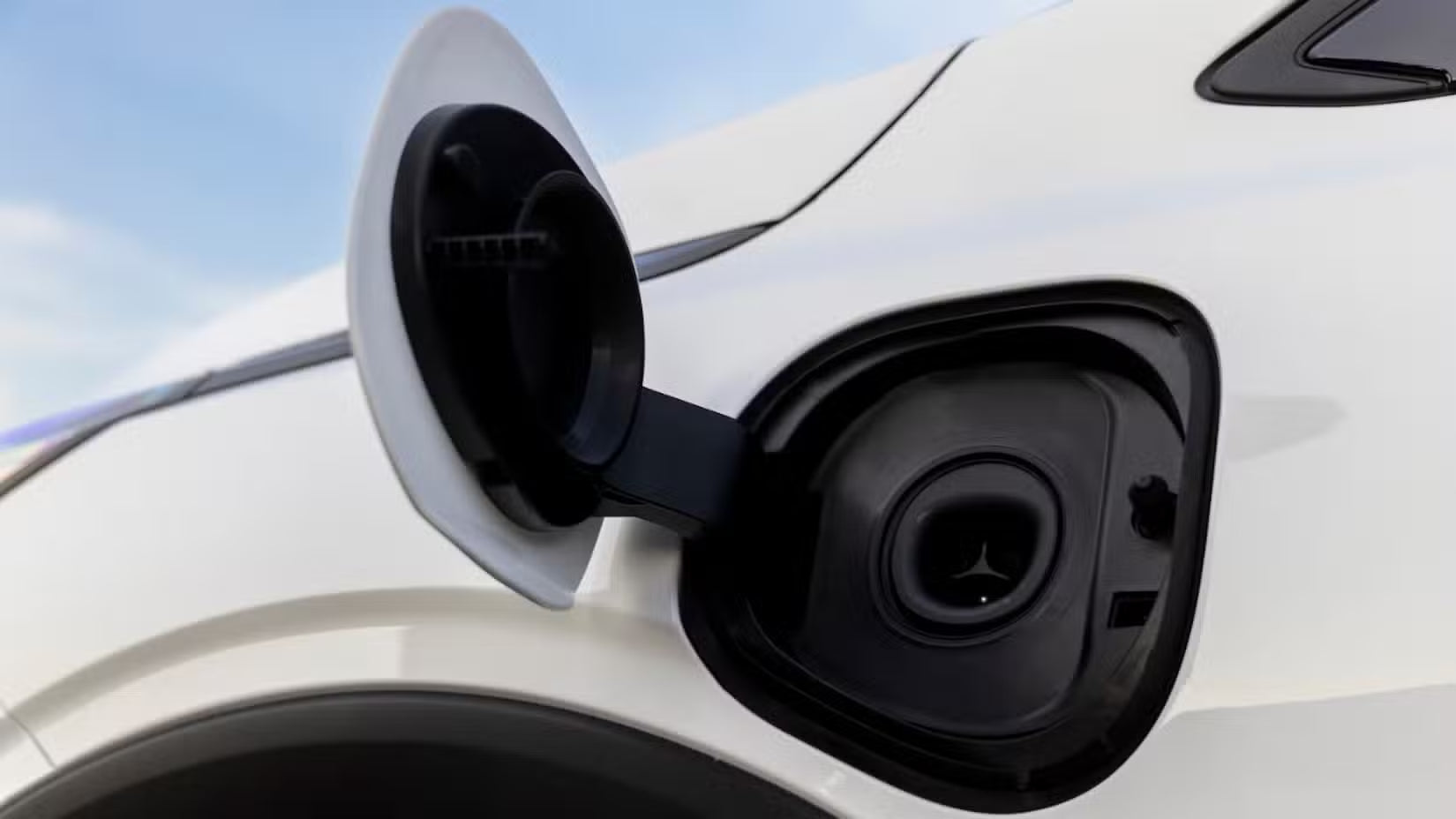
The Bolt EV was plugged into a Tesla Supercharger using the North American Charging Standard (NACS) connector. Almost immediately after the session began, the vehicle’s charging curve demonstrated strong performance.
Within the first minute, charging power climbed to roughly 151 kW, essentially reaching the model’s advertised maximum. Just two minutes into the process, when the battery level reached 18%, the power briefly increased further to 156 kW.
The vehicle maintained more than 150 kW of charging power until the battery reached approximately 40% capacity, indicating a relatively flat charging curve during the early stage of the session.
This sustained output is significant because it allows the car to add range quickly during short charging stops.
Charging Curve Gradually Slows After Midpoint
As expected with lithium-based battery systems, the charging rate began to taper once the battery filled beyond the midpoint.
At roughly 45% state of charge, the power dropped to around 140 kW. From there, the charging rate gradually decreased as the battery continued to fill. Measurements during the session showed approximately 115 kW at 50%, around 110 kW at 55%, and about 100 kW once the battery reached 60%.
Even toward the end of the fast-charging window, the Bolt EV continued to pull respectable power levels. When the battery reached 80%, charging speed still hovered near 80 kW, which is notable for a vehicle positioned primarily as a compact commuter.
Overall, the vehicle completed a 10% to 80% charging session in about 26 minutes, matching the timeframe published by General Motors. During that period, the car added roughly 191 miles of estimated driving range.
A Major Improvement Over the Previous Bolt
Compared with the earlier Bolt EV generation, the improvement in charging performance is dramatic. The previous model relied on a 65 kWh nickel-rich lithium battery that could accept a maximum of 55 kW from DC fast chargers.
As a result, drivers often needed about one hour of fast charging to add roughly 150 miles of driving range. That relatively slow charging capability was one of the most frequent complaints among owners.
The new Bolt EV addresses this issue by adopting a 65 kWh lithium iron phosphate (LFP) battery pack. This chemistry generally offers better durability and lower production cost, while also allowing for improved charging behavior compared with the earlier design.
Range and Pricing Position the Bolt as a Budget EV
Beyond charging improvements, the updated Bolt maintains competitive specifications for an entry-level electric car. According to official figures, the vehicle delivers an EPA-estimated driving range of 262 miles.
Power comes from a single front-mounted electric motor producing 210 horsepower, which is sufficient for everyday driving but clearly prioritizes efficiency and practicality over outright performance.
Pricing remains one of the model’s biggest advantages. General Motors lists the starting price at $28,995, including destination charges. That figure currently makes the Bolt EV one of the most affordable new electric vehicles available in the United States.
In fact, it undercuts the base version of the Nissan Leaf S+ by approximately $2,490, strengthening its position as an accessible EV option for buyers entering the electric market.
Designed Primarily for Daily Commuting
Although the Bolt EV’s charging improvements help expand its usability, the vehicle is still primarily designed as a practical urban hatchback.
Its subcompact dimensions and front-wheel-drive layout make it well suited to city environments and short-to-medium commuting distances. Drivers seeking a vehicle for long highway journeys may prefer larger EVs with bigger battery packs and more powerful drivetrains.
Nevertheless, for many consumers transitioning to electric vehicles for the first time, the Bolt EV offers a combination of affordability, manageable size, and improved charging capability.
Production Timeline May Be Limited
Despite the improvements introduced with the latest model, the Bolt EV may not remain in production for very long. According to comments previously reported by Bloomberg, General Motors plans to manufacture the model for a relatively short period.
The company expects the hatchback to be produced for roughly 18 months at its Kansas manufacturing facility. After that, production capacity is reportedly scheduled to shift toward the Buick Envision, a gasoline-powered crossover.
If this timeline holds, the new Bolt EV could represent a transitional product in GM’s evolving electric vehicle strategy.

A Stronger Entry-Level EV From GM
Initial testing indicates that the 2027 Chevrolet Bolt EV delivers the improvements many drivers were hoping for, particularly when it comes to charging performance.
With faster DC charging, a competitive range figure, and one of the lowest price points in the EV market, the updated Bolt strengthens its role as an accessible electric vehicle for everyday drivers.
While its long-term production future remains uncertain, the car demonstrates that General Motors has taken feedback from previous Bolt owners seriously—and made tangible upgrades in response.
Recommend Reading: Chevrolet Plans to End 2027 Bolt Production After Limited Run


Share:
Why the 2027 Chevrolet Bolt May Struggle Despite Its Low Price
Porsche Cayenne S Electric Adds Mid-Tier Performance to EV Lineup