


As the first quarter of 2025 wraps up, early sales results reveal which automakers are surging ahead — and which are struggling to keep pace. From booming SUV lineups to fading EV models, here’s a breakdown of the major winners and losers in the U.S. auto market so far.

Winners

General Motors’ SUV Lineup

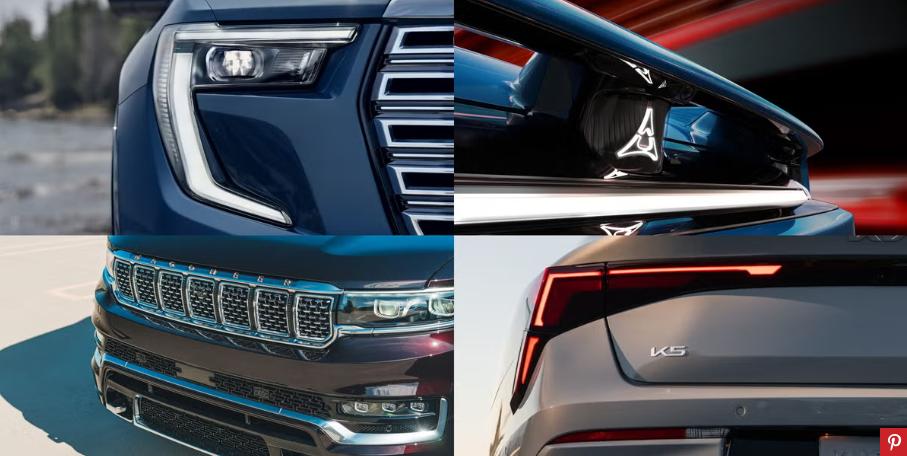
General Motors had a strong start, with Buick, Chevrolet, and GMC SUVs posting significant gains. Buick’s sales rose 39%, with notable increases across Encore GX (+53%), Envista (+54%), and Enclave (+37%). Chevrolet’s revamped Equinox (+31%) and Traverse (+62%) performed well, as did the affordable Trax (+57%). GMC saw the new Acadia surge by 73%, while Cadillac's Escalade grew 39%, and its electric sibling, the Escalade IQ, nearly tripled in sales.

Toyota bZ4X and Subaru Solterra

After slow launches, Toyota’s bZ4X and Subaru’s Solterra showed major improvements. The bZ4X jumped 196% to 5610 units, while the Solterra rose 173% to 3131 units. Toyota’s overall electrified sales grew 44%.

Hyundai and Kia Sedans

Sedans aren’t dead yet—at least not for Hyundai and Kia. The Kia K4 and refreshed K5 surged, with the K5 up 133%. Hyundai’s Elantra grew 25% and Sonata rose 20%, showing renewed consumer interest in affordable cars.

Nissan Sedans

Nissan’s Versa and Sentra both posted major gains. Versa sales leapt 156% to 19,130 units, while Sentra rose 36% to 54,536 units. Even the aging Altima gained 25%.

Japanese Sports Cars

Affordable performance cars from Japan saw a boost. The Nissan Z spiked 221%, while the Toyota GR86 (+36%), Subaru BRZ (+4.7%), and Mazda MX-5 Miata (+73%) also climbed. Only the Toyota Supra saw a decline, down 13%.

Losers

Dodge

Dodge suffered a sharp 49% drop following the discontinuation of its gasoline-powered Charger and Challenger. The new electric Charger Daytona managed only 1947 units in Q1, and even existing gas models outsold it.

American Sports Cars

The Corvette and Mustang both struggled despite minimal competition. Corvette sales fell 21%, and Mustang sales slid 32% compared to last year.

Jeep Wagoneer and Grand Wagoneer

Jeep’s largest SUVs dropped dramatically. Wagoneer sales plummeted 59%, while Grand Wagoneer sales slid 48%, losing ground to the Cadillac Escalade.

Toyota Crown and Highlander

Toyota’s Crown sedan and Highlander SUV both saw steep declines due to internal competition from newer models. Highlander sales dropped 63%, while the Crown fell 71%.

Audi EVs

Audi's electric models faltered across the board. The e-tron GT dropped 68%, Q4 e-tron fell 29%, and Q8 e-tron plunged 75%. Even with the new Q6 e-tron helping offset losses, Audi’s EV momentum has clearly cooled.

Recommend Reading: Ford Mustang Mach-E Records Best Sales Month as EV Market Heats Up

FAQs - Best-Selling EVs in the U.S. (2025)

Which electric vehicles are the top-selling models in the U.S. market in 2025?

The most popular EVs in 2025 include the Tesla Model Y, Model 3, Ford Mustang Mach-E, Chevrolet Bolt EV, Hyundai Ioniq 5, and Kia EV6. These models dominate U.S. sales charts thanks to their combination of range, pricing, and availability.

What is the range and price of the Tesla Model Y?

The Tesla Model Y offers an EPA range between 318–330 miles (Long Range AWD) at a starting price around $46,000. The Performance version provides dual motor acceleration while maintaining a strong range, typically above 300 miles depending on driving conditions.

How much does the Ford Mustang Mach-E cost and how far can it go?

The Mustang Mach-E starts near $40,000–$45,000 for the standard range RWD version, with EPA-estimated range of 230–270 miles. The extended-range AWD and GT Performance variants offer improved range (up to 320 miles) and acceleration, justifying their higher price.

Is the Chevrolet Bolt EV still a good choice in 2025?

Yes. Priced under $30,000 after federal incentives, the Bolt EV offers a solid EPA range of ~260 miles, making it a budget-friendly, reliable compact EV ideal for urban and suburban commuters.

What makes the Hyundai Ioniq 5 stand out among EVs?

The Ioniq 5 is praised for its ultra-fast charging (800V architecture, 10-80% in ~18 minutes), spacious interior, stylish design, and EPA range of 220–303 miles depending on battery and drive combination. Pricing starts around $44,000 after incentives.

How does the Kia EV6 compare with the Ioniq 5?

The Kia EV6 shares many components with the Ioniq 5 but emphasizes a sportier look and driving experience. Range varies between 240–325 miles depending on trim, with pricing similar—typically in the $44,000–$55,000 range after incentives.

Which EV among the top models offers the best value for long-distance travel?

The Tesla Model Y Long Range offers the best all-around value for long trips due to its extensive Supercharger network, ~330 miles range, and advanced driving assistance. Hyundai Ioniq 5 and Kia EV6 also offer excellent efficiency with fast charging, making them strong alternatives.

How do these EVs compare in terms of charging compatibility and charging time?

Most models—Tesla (NACS), Mach-E / Bolt EV / Ioniq 5 / EV6 (CCS1)—are brightening compatibility. The Ioniq 5 and EV6 stand out with 800V fast charging up to 233 kW, allowing 10–80% in about 18 minutes. Mach-E and Bolt EV charge at slower rates (~150 kW). Tesla offers up to 250 kW via NACS Superchargers.

What is the total cost of ownership (TCO) like for these top-selling EVs?

Although prices vary, EVs like the Bolt EV and Ioniq 5 have some of the lowest TCO due to lower maintenance and energy costs. While Model Y and Mach-E have higher upfront costs, resale value and long-term savings on fuel can offset the initial expense over 5–10 years.

How do federal and state incentives impact the MSRP of these EVs?

Federal tax credit of up to $7,500 can significantly reduce the up-front purchase price. Additionally, many states offer rebates, HOV lane access, and utility discounts. For example, a Trim-level Mach-E or Model Y effectively costs $40–45k after combined incentives, increasing affordability.

EV News

View all

Volkswagen Issues ID.4 Battery Recall as Fire Risk Prompts New Charging Guidance

Volkswagen Issues ID.4 Battery Recall as Fire Risk Prompts New Charging Guidance

Volkswagen has issued multiple recalls for ID.4 electric SUVs over battery overheating risks. While only a small group faces parking and charging limits, over 45,000 vehicles are affected by inspections and software fixes.

Read more

Volvo CEO Says the U.S. Is Built for EVs—and the Logic Is Hard to Ignore

Volvo CEO Says the U.S. Is Built for EVs—and the Logic Is Hard to Ignore

Volvo’s CEO argues the U.S. is uniquely suited for EV adoption thanks to widespread home charging access, suburban living, and consumer-driven demand—if automakers better address education and equipment barriers.

Read more

Most Scout Buyers Prefer Range-Extended Power Over Fully Electric Trucks

Most Scout Buyers Prefer Range-Extended Power Over Fully Electric Trucks

Scout Motors reports that 85% of reservations for its Terra pickup and Traveler SUV favor extended-range electric powertrains, as buyers prioritize long range and flexibility over fully electric options.

Read more