





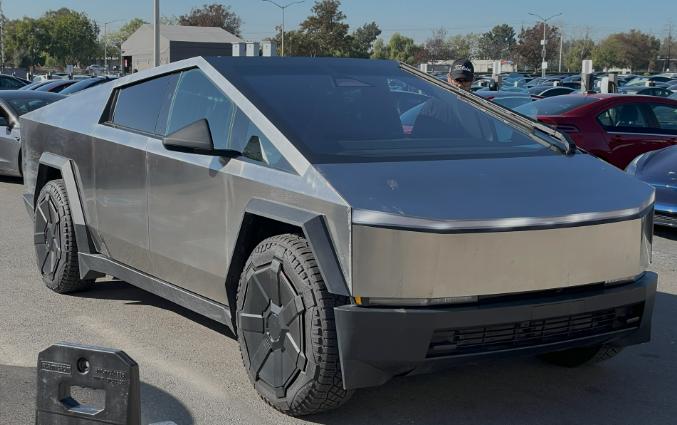
Entry Model Becomes More Expensive
Tesla’s attempt to broaden Cybertruck demand with a lower-priced configuration has shifted course. The Dual Motor All-Wheel Drive version that recently debuted at $59,990 now carries a starting price of $72,235, an increase of roughly $10,000 within days of its introduction.
Company leadership had indicated that the earlier price would be temporary and subject to change depending on buyer interest. The adjustment came shortly after that limited-time window expired, signaling that the initial figure was not intended to be permanent.
At the same time, the delivery timeline for this entry-level dual-motor variant has been pushed well into the future. Tesla’s ordering page currently estimates customer deliveries beginning in 2027, placing it at least a year behind higher trims that show projected arrival windows of 10 to 12 weeks.

Equipment Differences From Higher Trims
Positioned below the Premium All-Wheel Drive model, the revised entry trim reduces interior features and certain capabilities while maintaining the same two-motor drivetrain.
Cabin changes are noticeable. Rear-seat passengers no longer have access to a touchscreen display, and heated rear seats are not included. The sound system has been simplified to seven speakers, compared with the 15-speaker arrangement found in more expensive versions, and it omits active noise-canceling technology.
Suspension hardware also differs. Instead of adaptive air suspension, the lower trim uses coil springs paired with adaptive dampers. While drivers can still adjust ride firmness, they cannot modify ground clearance. Premium and Cyberbeast variants retain height-adjustable air systems.
Despite these cutbacks, the electric powertrain remains identical to that of the Premium model. Tesla lists an estimated driving range of 325 miles and a 0–60 mph time of 4.1 seconds, matching the higher-priced dual-motor configuration.
Reduced Work Capabilities
Where the distinction becomes more pronounced is in utility ratings. The base dual-motor truck is rated to tow 7,500 pounds, significantly below the 11,000-pound maximum quoted for the Premium version. Payload capacity is also lower, at 2,006 pounds, compared with as much as 2,500 pounds in certain higher-spec setups.
These adjustments suggest Tesla is targeting buyers who prioritize performance and styling over maximum hauling strength.
A Pattern of Short-Lived Variants
This is not the first time Tesla has introduced a more affordable Cybertruck configuration only to revise or discontinue it soon after. In the previous year, the company launched a rear-wheel-drive model priced at $69,990. That version featured a single motor and a longer estimated range of 366 miles, along with a similarly simplified interior. It remained available for roughly five months before being removed from the lineup.
The rapid evolution of trims and pricing reflects Tesla’s ongoing effort to calibrate production, margins and demand for a vehicle that has generated significant attention but uneven sales results.
Sales Performance and Market Context
According to Cox Automotive, Cybertruck deliveries in the United States declined sharply in 2025. Annual sales fell from approximately 39,000 units in 2024 to 20,200 units, representing a 48% decrease year over year. That drop marked one of the steepest contractions among newly introduced electric models.
The results stand in contrast to earlier projections from CEO Elon Musk, who had suggested the truck could eventually achieve production levels of 250,000 units per year. Current figures indicate that demand remains well below that benchmark.
Meanwhile, several competing electric pickup programs have scaled back or been discontinued, leaving Tesla as one of the few manufacturers still actively expanding in the segment. However, the company faces the challenge of sustaining interest in a product known for its unconventional design and premium pricing.

Looking Ahead
With the entry dual-motor version now priced above $70,000 and deliveries scheduled years out, prospective buyers must weigh whether to wait or opt for quicker access through higher trims. The pricing reset and extended timeline may influence how effectively Tesla can stimulate fresh demand in the near term.
As the electric pickup market continues to evolve, Tesla’s strategy appears fluid. Adjustments to pricing, equipment and production timing suggest the company is still searching for the right balance between affordability and profitability for its most distinctive vehicle.
Recommend Reading: Why Is Tesla’s Cybertruck Priced Under $60,000 for 10 Days?


Share:
Why Tesla Dropped the Autopilot Name in California
Why Europe’s EV Battery Ambitions Face China Reality