





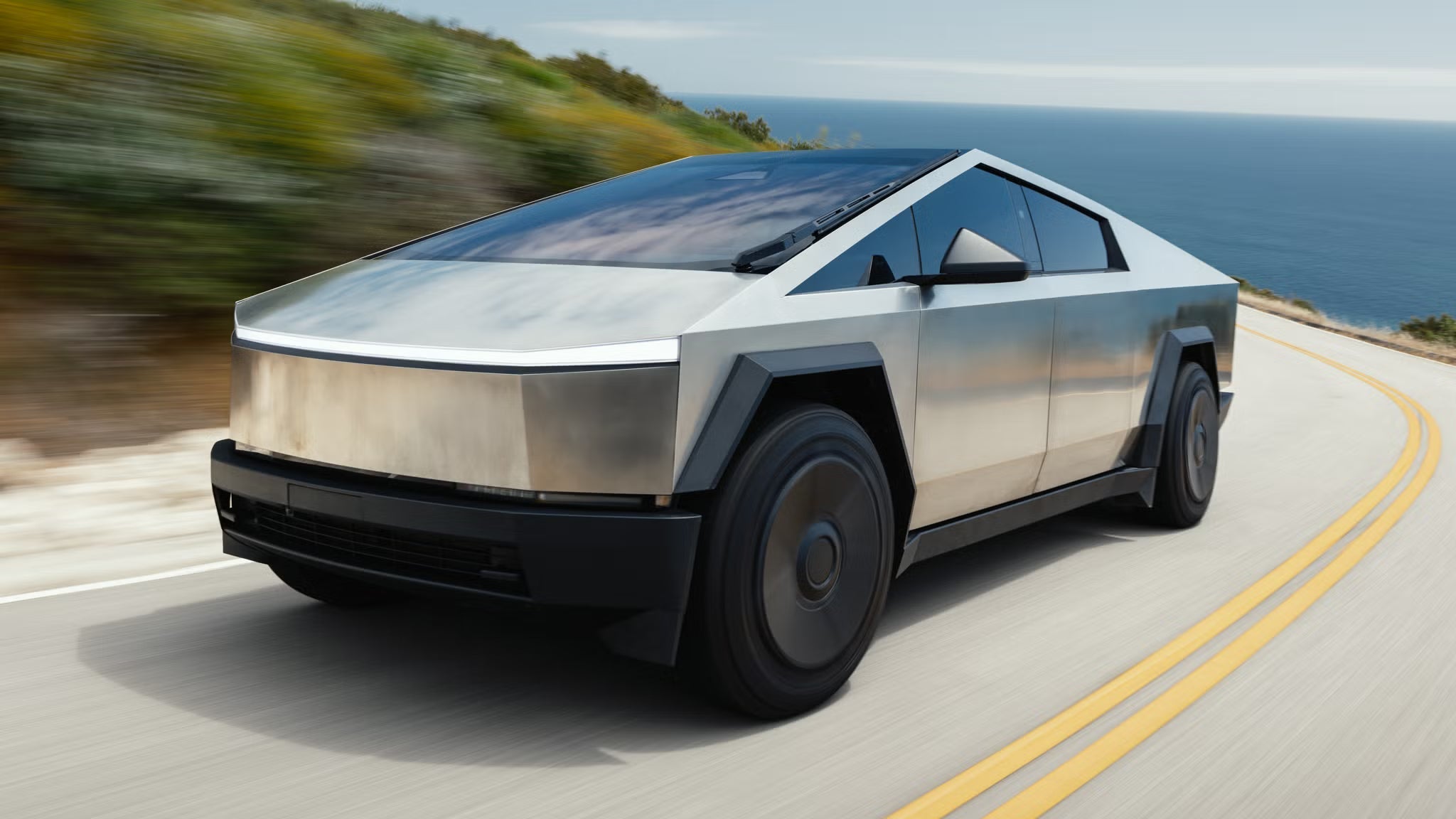
A Lower Entry Price After Slowing Sales
After a difficult year marked by weaker demand, Tesla has introduced a more affordable version of its angular electric pickup in an effort to broaden its appeal. The newly announced Dual Motor All-Wheel Drive trim starts at $59,990, significantly undercutting the $79,990 Premium AWD configuration while keeping the same two-motor setup.
This pricing move signals a strategic adjustment. By trimming equipment rather than performance, the automaker appears focused on preserving capability while lowering the cost of entry. The new variant is not the long-promised $40,000 truck, but it meaningfully narrows the gap between earlier high-priced editions and what many buyers consider attainable.

What’s Been Removed — And What Remains
To reach the lower price point, Tesla eliminated several comfort and convenience features. The adjustable air suspension system has been replaced with a setup that uses adaptive dampers only. Drivers can still fine-tune ride firmness, but they no longer have the ability to raise or lower the truck’s height.
Wheel size also changes. The base version rides on 18-inch “Core” wheels, compared with the Premium’s 20-inch set. However, driving range remains unchanged at an EPA-estimated 325 miles, meaning buyers do not sacrifice efficiency despite the smaller wheels.
Inside the cabin, materials and technology see more noticeable reductions. Upholstery shifts from synthetic leather to fabric. The 9.4-inch rear passenger display has been removed, along with two interior power outlets that are included in higher trims. Front-seat ventilation is no longer available, and the center console design differs from that of the Premium and Cyberbeast models.
The audio system also scales back significantly. Speaker count drops from 15 to seven, and active noise cancellation is no longer part of the package. Despite these deletions, the truck retains ambient interior lighting and several signature design elements seen across the lineup.
Capability Trade-Offs
Although the electric drivetrain is mechanically identical to the Premium AWD version, maximum towing capacity is lower. The base model is rated to pull 7,500 pounds, compared with 11,000 pounds for the Premium trim. Payload capacity also declines slightly.
Buyers seeking additional hardware can still add options. A larger 20-inch wheel package costs $2,500, while an underbody protection upgrade is priced at $3,000. The motorized bed cover remains standard equipment, as do three power outlets located in the cargo area.
Price Adjustments Across the Lineup
Tesla’s pricing revisions extend beyond the new entry model. The top-tier tri-motor Cyberbeast now begins at $99,990, reflecting a $15,000 reduction from its previous sticker. That figure returns it to the level seen before a price increase implemented in August 2025.
By cutting prices at both the lower and upper ends of the lineup, Tesla appears to be addressing demand challenges from multiple angles. The introduction of a more affordable dual-motor version suggests the company believes performance parity with higher trims is more important to buyers than premium interior finishes.

A Strategic Shift in Positioning
Earlier rear-wheel-drive Cybertrucks struggled to gain traction despite lower pricing, partly because many customers expected all-wheel drive capability from a truck marketed as rugged and futuristic. This new configuration retains dual-motor traction and identical acceleration characteristics to the Premium variant, potentially aligning more closely with buyer expectations.
The $20,000 gap between the base AWD and Premium models represents substantial savings, even if the feature list has been shortened. For shoppers prioritizing drivetrain performance, range, and distinctive styling over luxury touches, the revised offering could prove more attractive.
While it does not fulfill the long-standing promise of a truly low-cost Cybertruck, the new trim demonstrates a pragmatic recalibration. With demand fluctuating and competition intensifying in the electric pickup segment, Tesla’s latest move suggests a stronger emphasis on value positioning without abandoning core capabilities.
Recommend Reading: Tesla Cybertruck Sees Sharp Sales Decline as EV Market Cools in 2025


Share:
Why Used Tesla Prices Rose After the $4,000 EV Credit Ended
Why EV Battery Recycling Could Become a $70 Billion Industry