



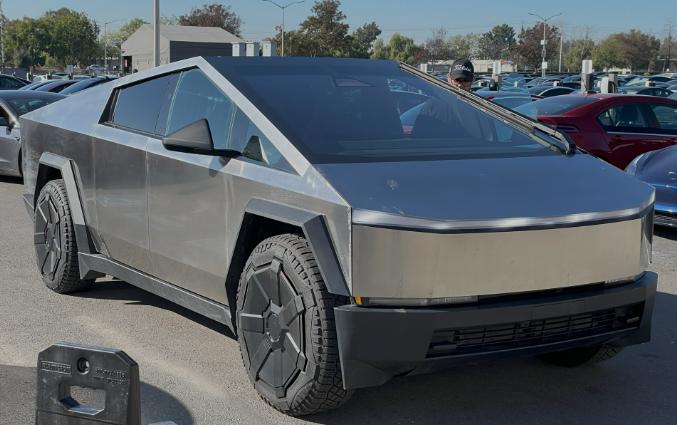
Cybertruck’s Sales Slump in 2025
Tesla’s once-hyped Cybertruck — marketed as an indestructible, bulletproof electric pickup — is struggling to find real-world traction.
According to new data from Cox Automotive, Tesla sold only 5,385 Cybertrucks in Q3 2025, a 63% drop from the same period last year when deliveries topped 14,000.
So far this year, Tesla has sold just over 16,000 units, far short of CEO Elon Musk’s original projection of 250,000 annually. The automaker is now on track to deliver around 20,000 Cybertrucks in total for 2025, less than half of 2024’s estimated 50,000.

EV Market Grows — But Not for Cybertruck
While Tesla’s pickup struggles, the broader EV market is booming.
EV sales reached 438,487 units in Q3, up nearly 41% from the previous quarter and almost 30% year over year, as buyers rushed to take advantage of the expiring $7,500 federal tax credit before September 30.
But the fourth quarter is expected to see a major dip as incentives expire — a challenge that could further strain Cybertruck demand.
Even in a softening electric truck market, Ford’s F-150 Lightning led with 10,005 sales, followed by the Cybertruck in second place. Still, both figures fall far short of what automakers had expected from the lucrative pickup segment.
Musk’s Companies Are Buying the Leftovers
So, who’s actually buying Cybertrucks?
It turns out, the answer may be Elon Musk himself — or rather, his other companies.
Reports reveal that hundreds of Cybertrucks have been delivered to SpaceX and xAI in recent weeks.
Truckloads of the vehicles were spotted at SpaceX’s Starbase facility, with more expected soon. Sources claim the company could ultimately take delivery of hundreds, possibly thousands of Cybertrucks.
At the same time, Tesla is reportedly reallocating unsold Cybertrucks to its own internal service fleet.
Photos of Tesla-branded Cybertrucks began surfacing online in August, confirming that the automaker is refreshing its mobile service units with its own product.
Wes Morrill, Tesla’s lead Cybertruck engineer, even posted on X that both Tesla and SpaceX are updating their support fleets with the electric pickups.

An Ironic “Silver Lining”
In a sense, the Cybertruck finally looks at home — among the rockets and robots of Musk’s empire.
Rather than sitting idle on dealer lots, these trucks are now serving a practical purpose at SpaceX and Tesla facilities.
Whether this is a strategic move to offset slowing demand, or simply a creative way to clear unsold inventory while keeping sales numbers afloat, one thing is clear: the Cybertruck’s “limitless demand” promise hasn’t held up.
Still, in typical Musk fashion, the ecosystem sustains itself —
if nobody else wants your product, your other companies can always buy it.
Recommend Reading: Elon Musk’s AI Ambitions: What Grok Means for Tesla’s Future
Share:
Zeekr 001 Update: The Chinese EV That Charges from 10% to 80% in 7 Minutes
Ford F-150 Lightning Dominates U.S. EV Pickup Market as Rivian R1T Falls Behind