



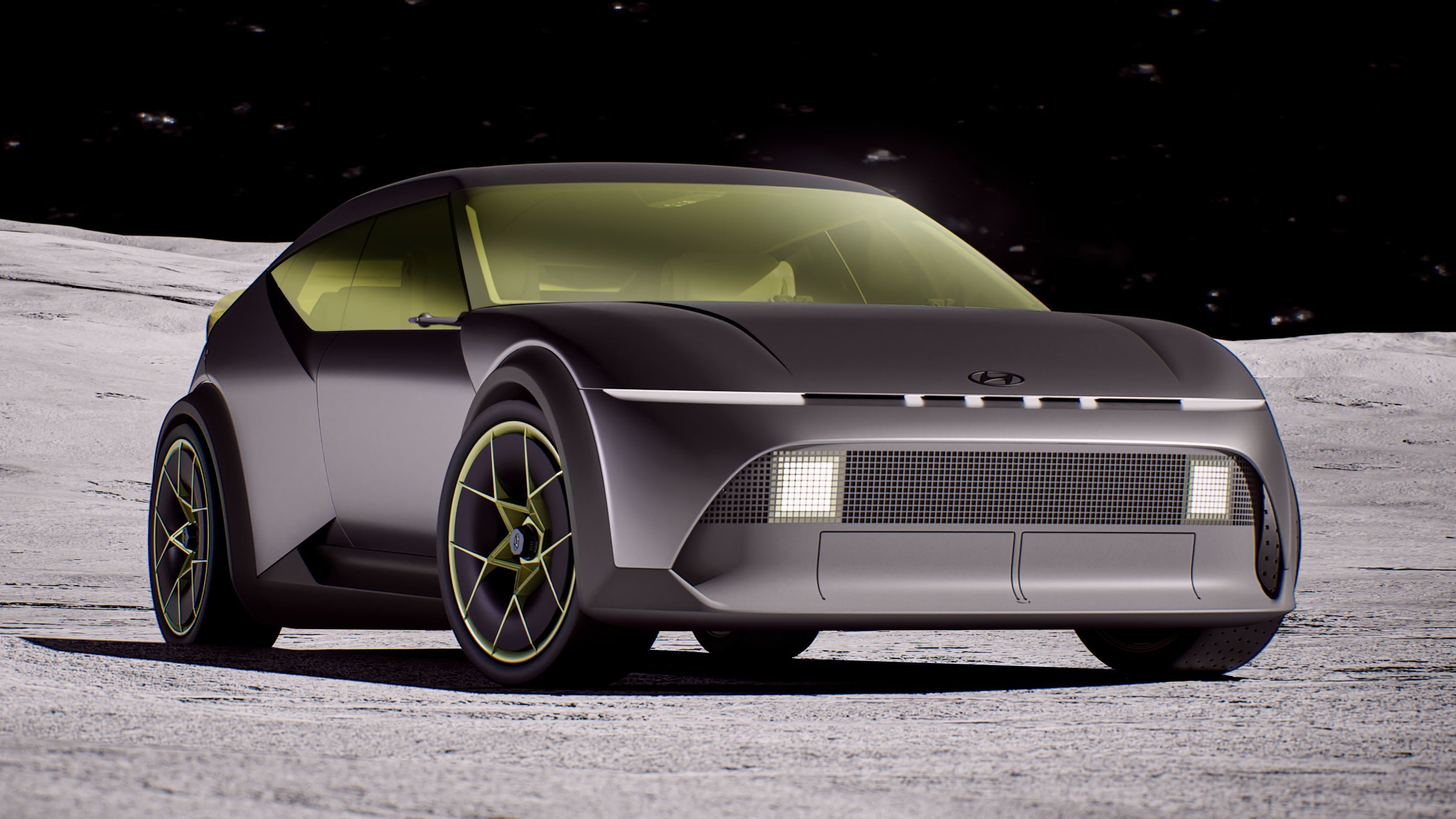
Hyundai is pushing hard to expand its electric vehicle lineup, and its latest reveal—the Concept Three—shows where the company is heading next. Judging by its name and Hyundai’s own hints, this compact hatchback concept is very likely a preview of the upcoming Ioniq 3.

Compact EV Positioned Between Inster and Ioniq 5
Measuring 168.7 inches long and 76.3 inches wide, the Hyundai Concept Three is a no-frills compact hatchback that neatly fills the gap between the new entry-level Hyundai Inster and the already-popular Ioniq 5 crossover.
Hyundai has explicitly called it the first compact EV concept under the Ioniq sub-brand, which all but confirms its transformation into the production Ioniq 3. This is welcome news for drivers seeking a bold alternative to the Volkswagen ID.3.
Design and Exterior Features
While still a concept, Hyundai has a history of carrying over many design elements from show cars to production vehicles. Notable exterior details include:
-
Parametric Pixel lighting with a new gradient effect that adds depth and visual rhythm.
-
Anodized body panels paired with lemon-tinted glass, wheels, and interior accents.
-
A vertical tailgate design similar to the Kia EV6 and Ioniq 5.
-
Front lighting cues borrowed from the refreshed Ioniq 6.
The result is a futuristic yet cohesive hatchback that maintains Hyundai’s recognizable design DNA.
Interior and Sustainability
Inside, the Concept Three emphasizes eco-friendly materials and playful design touches. The cabin features soft yellow and grey finishes made from ocean waste textiles and lightweight aluminum foam. Instead of a conventional infotainment layout, the dashboard integrates multiple square digital displays and touch controls.
Adding a whimsical touch, Hyundai introduced Mr. Pix, a fictional character woven into the user interface experience, signaling the brand’s focus on blending technology with personality.

Powertrain and Range Expectations
As with most concept cars, Hyundai has not released details on the battery or power output. However, industry watchers expect the Ioniq 3 to share underpinnings with the Kia EV3, which offers:
-
A 58.3-kWh battery with around 270 miles of range (WLTP).
-
An 81.4-kWh battery providing up to 375 miles of range.
The production model will likely feature Hyundai’s latest Pleos software architecture, potentially supporting Apple CarPlay Ultra and enhanced connectivity.
Production Timeline
There is no official release date yet, but Hyundai has committed to launching 21 electric vehicles globally by 2030. The Ioniq 3 is expected to be a key player in this strategy, strengthening Hyundai’s presence in the compact EV segment.
Final Take
The Hyundai Concept Three may still be a showpiece, but its design language and positioning clearly point to the upcoming Ioniq 3 EV. With sustainable materials, futuristic styling, and likely competitive range options, Hyundai is preparing a strong rival in the growing compact EV market.
Recommend Reading: Hyundai and Kia Report Record-Breaking EV Sales in August
Share:
Ford’s 2026 F-150 Lightning STX Brings More Range at No Extra Cost
Audi Concept C Redefines EV Sports Car Design