
Launch of Zoox’s Autonomous Shuttle Service

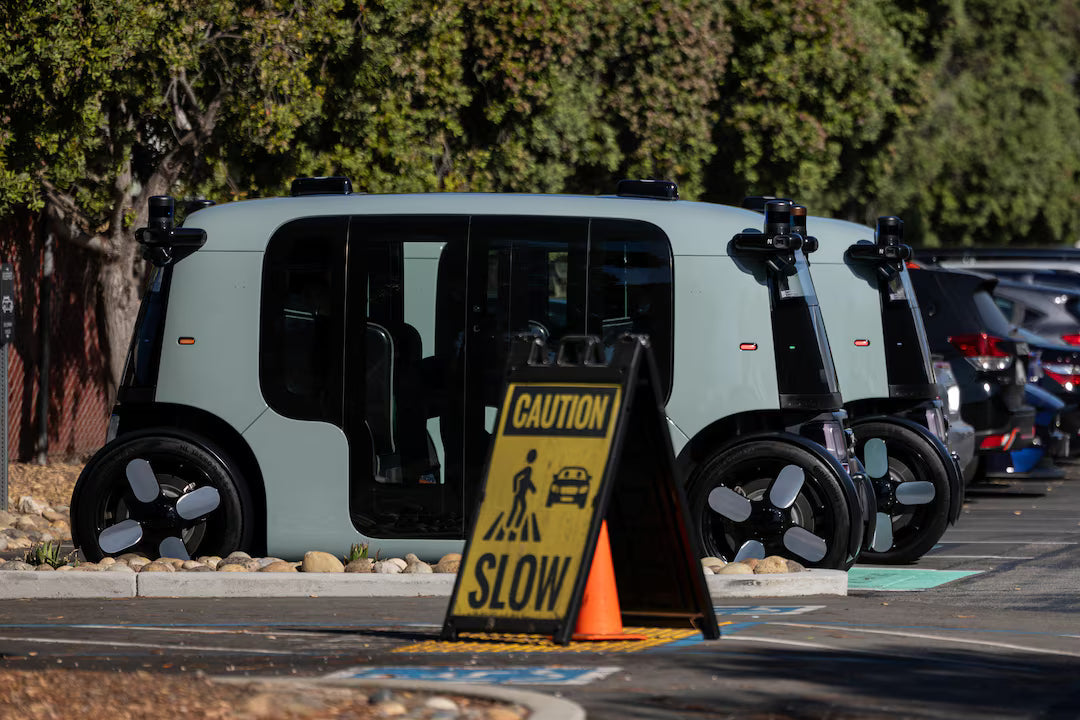
Zoox has begun offering public robotaxi rides in San Francisco, marking a major step forward for the Amazon-owned company’s autonomous mobility ambitions. While Tesla’s Cybercab remains in development, Zoox is now operating one of the first fully driverless, purpose-built shuttles in a major U.S. city—complete with no steering wheel or pedals.

The service launched on Tuesday and is initially free of charge. Early riders are selected through Zoox’s “Explorers” program, which gives waitlisted passengers the chance to experience the shuttle and provide feedback. According to Zoox, the goal is to refine the service before expanding operations across the city.

Zoox Launches Wheel-Free Robotaxi Service in San Francisco


A Tightly Regulated Path to Public Deployment

California maintains some of the strictest rules in the country for autonomous-vehicle operations. Zoox currently holds a Driverless Pilot permit, which authorizes the company to run fully autonomous vehicles on public roads—but does not allow charging passengers yet.

Zoox has been developing its self-driving technology since its founding in 2014 and has tested extensively in San Francisco since 2017. The company’s long testing history helped it navigate California’s regulatory process and secure approvals required for public rides.


A Purpose-Built Robotaxi With a Unique Design

What distinguishes Zoox from competitors like Waymo, Tesla, and Cruise is its vehicle. Instead of modifying an existing production car, Zoox built a completely new platform from the ground up. The result is a compact, electric, bidirectional shuttle designed specifically for autonomous ride-hailing.

The vehicle features:

  • No steering wheel or pedals

  • No conventional front or rear, thanks to its ability to move in either direction

  • Four-wheel steering for maneuverability in dense urban areas

  • Sliding doors and an open cabin layout

  • Face-to-face bench seating suited for shared mobility

Earlier this year, Zoox received a federal exemption from the National Highway Traffic Safety Administration, allowing it to deploy a vehicle that doesn’t conform to traditional design rules—something essential for its steering wheel-free pod.


Competition in the Growing Robotaxi Market

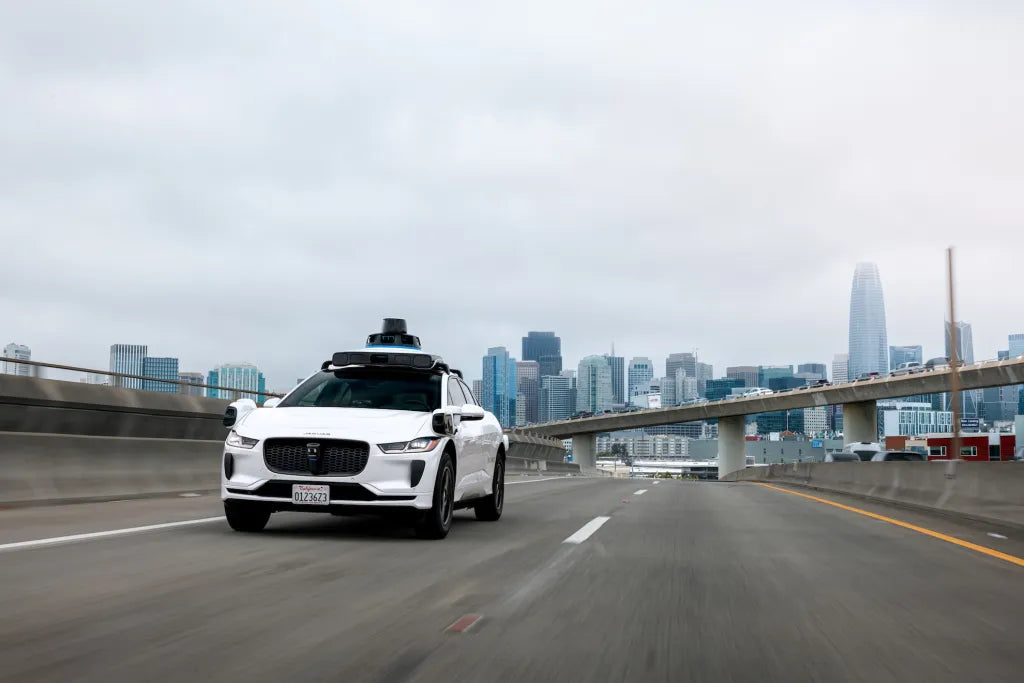
Zoox enters a rapidly evolving autonomous mobility landscape. Tesla is developing the two-seat Cybercab, which it aims to begin producing next year, and is already running autonomous Model Y taxis in Austin. Waymo continues to operate in multiple cities using Jaguar I-Pace vehicles and is testing a custom shuttle built by Zeekr. It also plans to remove the steering wheel from the Hyundai Ioniq 5 units it will soon deploy, though no timeline has been shared.

Zoox’s approach—launching with a fully custom robotaxi rather than transitioning from retrofitted production cars—sets it apart strategically. The shuttle’s symmetrical layout and lack of manual controls emphasize its identity as a vehicle designed solely for autonomous operation.

Zoox Launches Wheel-Free Robotaxi Service in San Francisco


Expansion Beyond San Francisco

San Francisco is now the second city where Zoox is publicly operating. The company opened its first public route in Las Vegas in September, offering autonomous trips around select stops on and near the Strip. Zoox says it plans to add more destinations in Las Vegas in the coming months, and similar expansions are expected in San Francisco once the early testing phase is complete.

The company’s gradual rollout—first in Las Vegas, now in San Francisco—suggests a step-by-step strategy focused on controlled deployment, rider feedback, and regulatory coordination before scaling up.

Recommend Reading: Waymo Expands Self-Driving Taxi Service to 12 U.S. Cities by 2026
FAQs - Tesla FSD (Full Self-Driving)

What is Tesla FSD (Full Self-Driving)?

Tesla FSD (Full Self-Driving) is an advanced driver-assistance system that goes beyond Tesla’s standard Autopilot. It uses cameras, neural networks, and onboard computing to enable features like automatic lane changes, traffic light recognition, highway navigation, and city street driving.

How much does Tesla FSD cost in 2025?

The Tesla FSD price in 2025 is around $12,000–$15,000 for a one-time purchase, or $199/month for a subscription in the U.S.. Tesla frequently adjusts pricing based on software improvements and new features.

What’s the difference between Tesla Autopilot, Enhanced Autopilot, and FSD?
  • Autopilot (standard): Includes lane keeping and adaptive cruise control.
  • Enhanced Autopilot (EAP): Adds automatic lane changes, Navigate on Autopilot, and Smart Summon.
  • Full Self-Driving (FSD): Includes everything above plus city street driving, traffic light recognition, and the FSD Beta program.
Is Tesla Full Self-Driving legal to use everywhere?

Tesla FSD legality depends on local regulations. While the FSD Beta is widely available in the U.S. and parts of Canada, it is restricted in Europe and other regions due to safety and regulatory approval. Drivers must remain attentive at all times regardless of jurisdiction.

Is Tesla FSD safe?

Tesla claims that FSD improves safety by reducing human error, the leading cause of accidents. However, critics argue that FSD is still in Level 2 autonomy, meaning it requires constant driver supervision. Safety depends on software maturity, driver attentiveness, and road conditions.

Can you add FSD to a Tesla after purchase?

Yes. Tesla FSD can be added later via an over-the-air software update. Owners can either pay for the full package or subscribe monthly. However, certain FSD features require Tesla’s Hardware 3 or newer (HW4 for 2023+ models), so hardware upgrades may be needed for older Teslas.

Does Tesla FSD increase resale value?

Generally, a Tesla equipped with Full Self-Driving tends to have higher resale value, especially if FSD was purchased outright (not subscribed). However, resale impact varies depending on FSD adoption, regional laws, and Tesla’s future updates.

How does Tesla FSD compare to competitors like Waymo or GM Super Cruise?

Yes. The Tesla Model S MSRP has fluctuated significantly since its launch in 2012. In recent years, Tesla has adjusted pricing multiple times annually due to battery cost changes, market demand, and competition. The same applies to the Model X cost.Tesla FSD vs. Waymo / Super Cruise differs mainly in approach:

  • Tesla relies on vision-based AI and fleet learning, available on consumer cars.
  • Waymo uses LiDAR and geo-fenced robotaxis.
  • GM’s Super Cruise and Ultra Cruise allow limited hands-free driving on mapped highways. Tesla’s edge is wider availability, but competitors may lead in hands-off safety certification.
Does Tesla FSD qualify as Level 5 autonomy?

No. Despite its name, Tesla FSD is not yet Level 5 autonomous driving. It is currently classified as Level 2 autonomy under SAE standards, meaning the driver is fully responsible at all times. Tesla’s long-term goal is Level 4–5 autonomy, but timelines remain uncertain.

What is the future of Tesla Full Self-Driving?

Tesla aims to evolve FSD into a fully autonomous system, enabling robotaxis, subscription revenue models, and reduced ownership costs. With continuous over-the-air updates, AI training, and Dojo supercomputing, Tesla expects FSD to improve rapidly. However, regulatory approval and technical hurdles remain the biggest challenges.

EV News

View all

This New Battery-Powered DC Fast Charger Can Be Installed in Hours

This New Battery-Powered DC Fast Charger Can Be Installed in Hours

ElectricFish unveils its 400squared DC fast charger at CES 2026. Battery-backed and dual-port capable, it can be installed in hours, bypassing expensive grid upgrades and supporting rapid EV infrastructure growth.

Read more

Americans Worry More About EV Range Than Cost, Survey Shows

Americans Worry More About EV Range Than Cost, Survey Shows

A Deloitte survey finds that U.S. buyers worry more about EV range and charging time than cost. Loss of the federal tax credit slowed adoption, but interest remains, especially for affordable, long-range models.

Read more

Tesla’s Cybercab Could Get Regulatory Boost From Congress

Tesla’s Cybercab Could Get Regulatory Boost From Congress

Tesla’s Cybercab aims to be a $30,000 fully autonomous ride-hailing vehicle. Congressional approval could raise production limits, but software, charging infrastructure, and branding challenges still remain.

Read more