





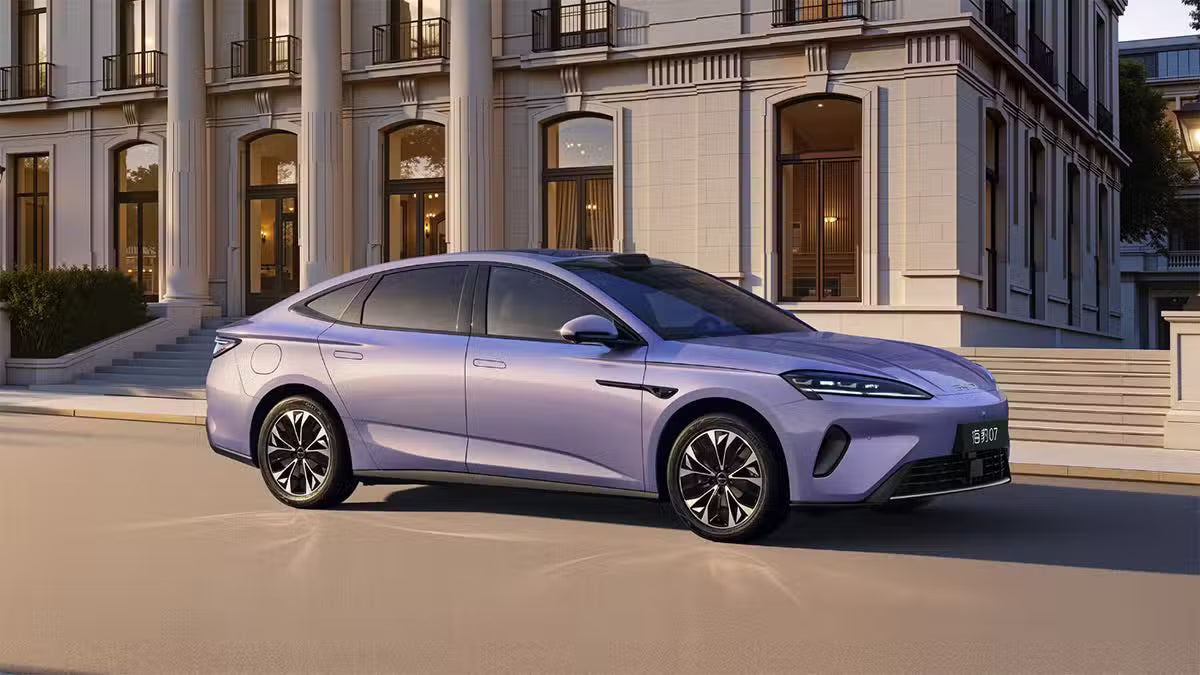
Overseas Ambitions Amid Domestic Challenges
Chinese automaker BYD, a leading player in the global electric vehicle market, is maintaining an ambitious growth plan even after reporting weaker earnings. During a post-earnings discussion with analysts, the company expressed confidence in selling 1.5 million units outside China in 2026, a 15% increase over its January projection of 1.3 million, according to Reuters.
The firm noted that foreign markets could soon account for roughly half of its total vehicle sales, signaling a shift toward a more globally balanced business model.

Recent Financial Performance
Despite its expansion goals, BYD is navigating a challenging financial period. The company recorded a 38% drop in net income for the fourth quarter, exceeding market expectations, and a 19% decline in annual profits, marking its first yearly decrease in four years. Factors contributing to this slowdown include intensified competition, reduced domestic demand, and aggressive pricing pressures in China.
Adding to the pressure, rival Geely surpassed BYD in global sales during the first two months of 2026, highlighting the increasingly competitive EV landscape.
Export Growth as a Bright Spot
International markets have provided a notable boost for BYD. In 2025, its overseas sales more than doubled to nearly 1.1 million vehicles, representing 22.7% of overall revenue. Early figures for 2026 indicate that exports now comprise approximately 50% of total sales, reflecting the company’s strategic focus on foreign growth.
Expanding into new regions is not without challenges. BYD must navigate complex factors such as local dealership networks, regulatory compliance, tariffs, logistics, and consumer confidence in unfamiliar markets.
Factory Expansion and Strategic Moves
To support its global ambitions, BYD is investing in manufacturing capacity abroad. Current plans include factories in Hungary and Turkey, with a third site under consideration. Additionally, the company has suggested that acquiring an established automaker could accelerate its international presence and simplify market entry.
These moves indicate a long-term strategy to secure production flexibility and brand recognition in key markets, potentially reducing reliance on domestic sales.
Competitive Pressure on Legacy Automakers
Although BYD has yet to enter the U.S., its success in Europe, Latin America, and other regions is already reshaping competitive dynamics. Established automakers in the West face increasing pressure, as trade barriers alone are insufficient to offset BYD’s growth.
The company exemplifies how Chinese EV brands can scale operations rapidly and efficiently, often outpacing traditional Western manufacturers. Analysts suggest that if BYD continues its trajectory, it may pose a significant test for the global automotive industry, particularly in the EV sector.

Outlook for the Global EV Market
BYD’s strategy highlights the shifting balance of automotive influence from traditional Western markets toward Eastern manufacturers. By prioritizing exports, local production abroad, and potential strategic acquisitions, the company is positioning itself to capitalize on global EV demand while mitigating domestic headwinds.
For legacy brands, the implication is clear: even without entering every market, BYD’s expansion can influence pricing, market share, and investment strategies worldwide. Its performance in 2026 will likely serve as a benchmark for how quickly and efficiently emerging EV companies can challenge established players.
Recommend Reading: BYD Seal 07 Sets a New Benchmark for Fast-Charging EVs in China








Share:
How Chinese EV Makers Have Turned Profit and What It Means Globally
Tesla Ends Production of Model S and Model X After More Than a Decade