





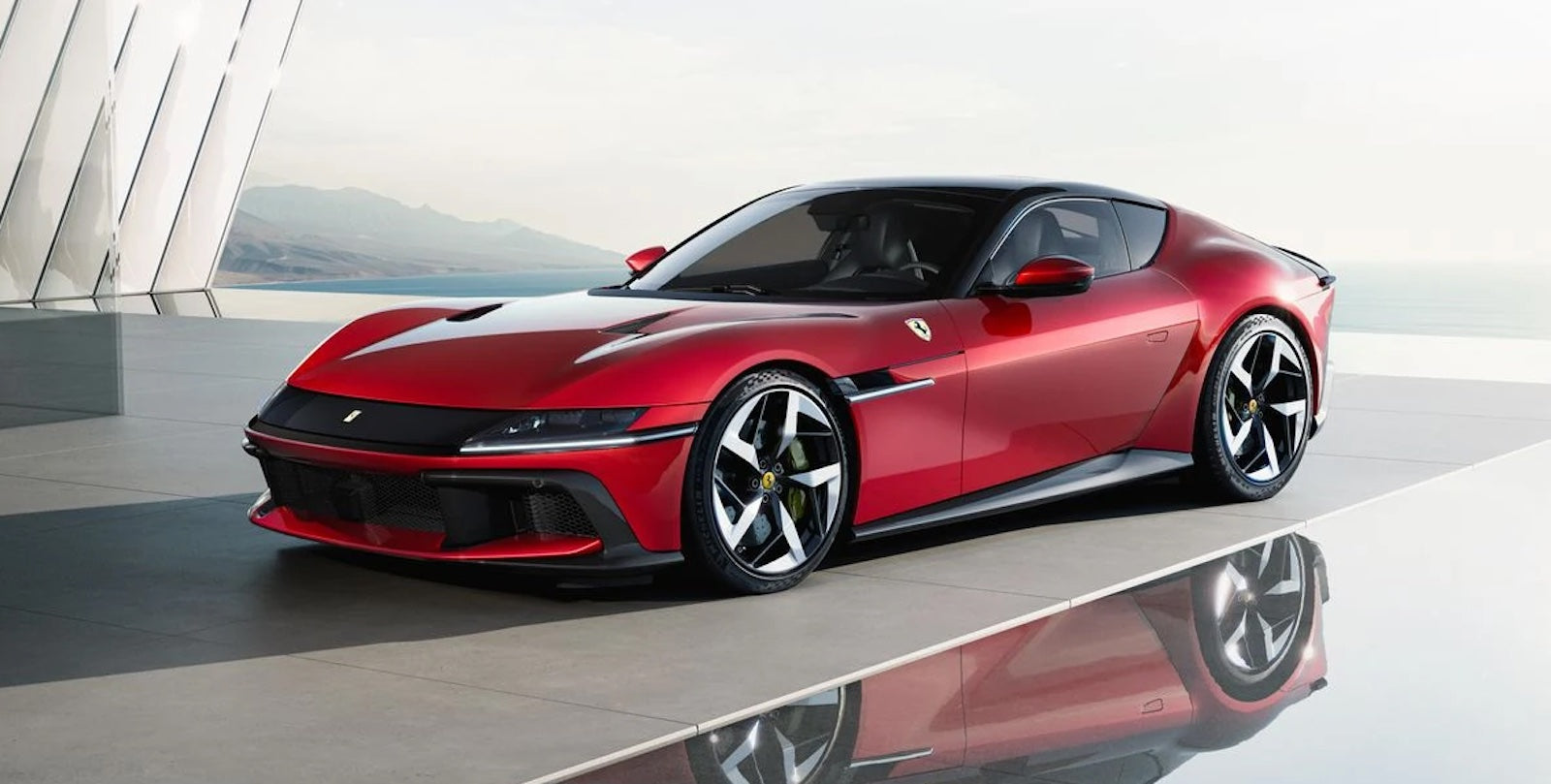
A Different Starting Point for Ferrari’s EV Era
Ferrari’s upcoming electric model has been controversial long before its full reveal, largely because it challenges long-held assumptions about what a Ferrari should be. Rather than translating an existing gasoline-powered formula into an electric format, the company appears to be using its first EV as a conceptual reset. That approach is especially visible inside the cabin, where Ferrari has chosen restraint, symmetry, and historical references over the dramatic complexity seen in many recent models.

A Design Influence Far Outside Maranello
A key reason the interior feels unfamiliar is Ferrari’s collaboration with LoveFrom, the design firm founded by Jony Ive, formerly Apple’s chief design officer. Known for shaping products like the original iPhone, Ive’s influence is evident in the EV’s interior philosophy. Instead of visual density or aggressive ornamentation, the cabin emphasizes clarity, repetition, and a sense of order. Ferrari describes the space as intentionally simplified to prioritize driving focus, signaling a deliberate shift away from visual excess.
Steering Wheel as the Visual Anchor
At the center of the interior is a distinctive three-spoke steering wheel that immediately draws attention. The design references classic Ferrari wheels while updating them with modern materials and integrated controls. Most of the buttons are grouped into two separate modules that appear visually detached from the wheel itself, preserving the purity of the core shape. Only essential functions, such as turn signals, are embedded directly into the wheel’s metallic structure, reinforcing the minimalist theme.
Retro Cues Through Digital Instruments
Behind the steering wheel sits a fully digital instrument cluster that borrows heavily from analog traditions. The display presents three primary circular readouts: a central speed indicator, a power output gauge, and a performance-oriented G-force display. Importantly, the entire cluster moves in unison with steering wheel adjustments, ensuring consistent visibility regardless of driver position. Surrounding these dials is an additional digital layer that provides contextual driving data without overwhelming the primary visuals.
Screens Balanced With Physical Controls
While digital displays are prominent, Ferrari has avoided turning the cabin into a touchscreen-dominated environment. A central screen angled toward the driver handles navigation and vehicle settings, while a secondary display is positioned for rear passengers. Crucially, essential climate and seat comfort functions retain physical switches, including temperature adjustment, fan speed, and seat heating or cooling. An analog clock mounted high on the dashboard adds a subtle nod to traditional luxury.
Overhead and Center Console Functions
Additional controls are distributed across the cabin in unconventional ways. An overhead panel houses functions such as lighting and defrost, along with a prominent activation button likely used to initiate vehicle startup or performance modes. Between the seats, a central console contains the transmission selector and window switches, allowing access from either side. This layout departs from Ferrari’s usual driver-centric bias and suggests a more balanced approach to cabin ergonomics.
Performance Targets Remain Unmistakably Ferrari
Despite the calm interior aesthetic, the underlying hardware is anything but restrained. Ferrari has confirmed that its electric model will deliver more than 1,000 horsepower, supported by a quad-motor drivetrain enabling independent torque control at each wheel. The car is expected to support 350 kW DC fast charging and achieve approximately 329 miles (530 km) of WLTP-rated range. Even with an estimated curb weight exceeding 5,000 pounds, Ferrari claims the vehicle will retain sharp handling characteristics.
A Phased Reveal Strategy
Ferrari has intentionally limited how much of the vehicle it has shown at any one time. After previously presenting elements of the chassis, battery system, and powertrain, the interior reveal appears to represent the second stage of a multi-step introduction. According to the company, the final design—inside and out—will be unveiled in full during the second quarter of this year, completing a carefully controlled rollout.

Why the Interior Matters More Than the Exterior
For Ferrari, this interior may ultimately be more important than exterior styling. Electric propulsion removes many of the traditional sensory elements that defined the brand, placing greater emphasis on design, interface, and emotional connection. By drawing from both historical references and consumer electronics design, Ferrari seems to be testing how far its audience is willing to follow as the brand enters a fundamentally new era.
Recommend Reading: How Porsche Improved the Taycan’s Range and Charging Speed











Share:
Extended-Range Electric Vehicles Headed to the U.S. Market
Rivian R2 First Drive Review: Size, Speed and Strategy