



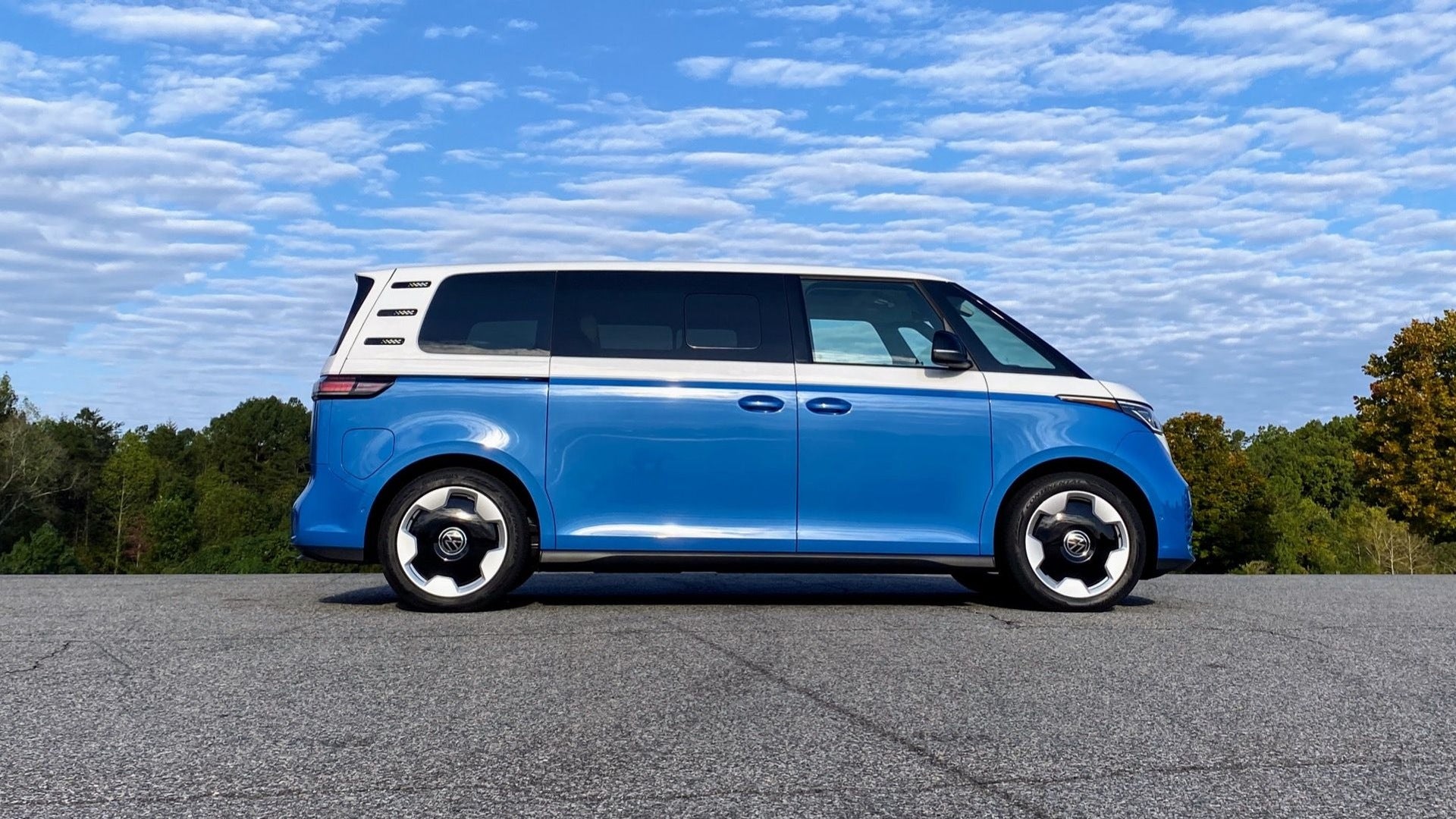
The electric vehicle industry is entering a period of correction. After years of rapid expansion and ambitious product launches, several high-profile EVs—including Ford’s F-150 Lightning and Volkswagen’s ID. Buzz—have recently been canceled, paused, or scaled back. While such decisions may appear alarming at first glance, they reflect a broader and arguably necessary recalibration of the EV market.
Rather than signaling a retreat from electrification, these cancellations suggest that automakers are reassessing which electric vehicles truly fit consumer expectations, economic realities, and long-term sustainability.

What “Unsuccessful” EVs Really Represent
It is important to distinguish between a bad car and a poor market fit. Vehicles like the F-150 Lightning and the ID. Buzz are widely regarded as comfortable, refined, and technologically impressive. As individual products, they perform well in daily use and offer many of the advantages associated with electric drivetrains.
However, both models were conceived under an earlier assumption: that simply electrifying iconic vehicles would naturally result in strong, sustained demand. That assumption—common in the late 2010s—has since proven overly optimistic.
The initial wave of EV adoption was driven largely by early adopters who actively sought electric powertrains. Once that group was served, demand became more sensitive to price, convenience, and use-case flexibility. For many mainstream buyers, powertrain type alone is not a decisive factor, especially when vehicles cost $50,000 to $90,000.
Why Benefits Alone Are Not Enough
Electric vehicles offer undeniable advantages, including lower fueling costs, reduced maintenance, smooth acceleration, and quiet operation. Over time, these benefits can significantly improve ownership satisfaction.
Yet for first-time buyers, these long-term advantages often struggle to outweigh more immediate concerns. Range anxiety, charging availability, charging speed, and high purchase prices remain dominant considerations, particularly for buyers transitioning from gasoline vehicles.
As a result, successful EVs tend to fall into one of two categories: those that closely match the price of comparable gas vehicles, or those that deliver such a compelling experience that compromises feel justified. Large electric trucks, vans, and SUVs have difficulty achieving either goal under current battery cost structures.
Where the F-150 Lightning and ID. Buzz Fell Short
Among the two, the F-150 Lightning arguably came closer to redefining expectations. Its vehicle-to-load (V2L) capability allowed it to power tools, homes, and emergency facilities, proving its value during natural disasters and grid support pilots. These features demonstrated how EVs could offer functionality beyond transportation.
However, despite these strengths, the Lightning struggled with highway range under load, slow DC fast charging, and a price premium that limited mass appeal. For many truck buyers, long-distance towing and predictable refueling remain critical, and the Lightning did not fully resolve those edge cases.
The ID. Buzz faced a different challenge. While it offered fast charging and distinctive design, its EPA-rated range of roughly 230 miles was difficult to justify in a family-oriented vehicle costing over $60,000. Configurations with all-wheel drive and premium styling pushed prices closer to $70,000, without delivering corresponding improvements in range.

Structural Economics of Large EVs
The underlying issue is structural rather than brand-specific. Large, heavy vehicles require large battery packs, and battery costs remain the single most expensive component of an EV. This makes it difficult to offer competitive pricing while meeting consumer expectations for range.
As a result, the economic argument for these vehicles often collapses when compared to gasoline alternatives. Without either emotional appeal or clear functional superiority, many buyers simply opt to stay with familiar internal-combustion options.
Both the Lightning and the Buzz may find strong followings in the used market, where pricing better aligns with their capabilities. But as new vehicles, they struggled to reach sustainable sales volumes.
Why Market Corrections Can Be Healthy
While cancellations are disruptive, they can ultimately benefit the broader EV market. An oversupply of poorly aligned products risks reinforcing the perception that electric vehicles are undesirable or only sell with heavy discounts.
By contrast, the success of models like the Tesla Model Y, Model 3, Hyundai Ioniq 5, and Chevrolet Equinox EV demonstrates that well-priced, well-executed EVs can thrive. These vehicles align range, charging performance, and cost with consumer expectations more effectively.
Reducing the number of compromised offerings allows automakers to redirect resources toward next-generation platforms, informed by real-world data and customer feedback.

Lessons for Automakers and Dealers
For manufacturers and dealerships alike, maintaining uncompetitive EVs can distort both pricing and consumer confidence. Selling electric models at deep discounts alongside profitable gasoline vehicles creates internal contradictions and weakens brand positioning.
Past examples—including early compliance EVs and first-generation models with charging or battery limitations—have left lasting impressions on buyers. Negative ownership experiences, even if statistically limited, can slow adoption across the entire category.
These outcomes are not failures of electrification itself, but rather growing pains in a rapidly evolving market.
A Strategic Crossroads for the Industry
Automakers now face a clear choice: continue investing in products that struggle to meet market realities, or pause, reassess, and return with better-aligned designs. Redirecting capital toward clean-sheet EV platforms may be the more sustainable path, even if it requires short-term retreat.
At the same time, there is risk in overcorrecting. A wholesale return to gasoline power would ignore long-term global trends. Internal combustion vehicle sales peaked globally in 2018, and regulatory, economic, and technological pressures continue to favor electrification over time.
The transition may be uneven, but its direction remains clear.

The EV Market Enters a Survival Phase
The early strategy of flooding the market with electric options has given way to a more selective phase. The next stage of EV adoption will likely be defined by iteration, refinement, and consolidation, rather than sheer volume.
In this environment, not every model will survive. That outcome is neither surprising nor inherently negative. As with any technological shift, weaker or mismatched products tend to fall away, making room for stronger successors.
If the industry applies these lessons effectively, future electric vehicles will be more affordable, more capable, and better suited to how people actually drive. In the long run, that evolution benefits manufacturers, consumers, and the transition to electrified transportation as a whole.
Recommend Reading: New Generation of EVs Set to Reshape Global Competition in 2026
Aktie:
Ford’s EV Retreat Signals Opportunity for Chinese Automakers
2026’s Most Anticipated Electric Vehicles