



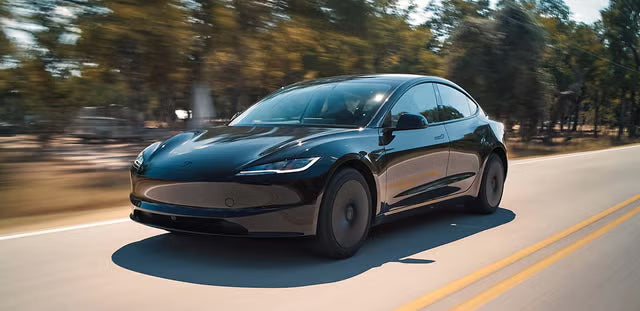
Lower Prices, Higher Expectations
When Tesla introduced lower-priced Model Y Standard and Model 3 Standard trims in October, the goal was clear: reignite slowing U.S. sales after the expiration of the federal EV tax credit and generate cash to support the company’s broader ambitions in autonomy, AI, and robotaxis. The strategy appeared logical on paper, but early results suggest the impact has been limited.
Despite arriving with prices roughly $5,000 below higher-end trims, the new variants have failed to deliver the sales momentum Tesla was counting on. More than two months after launch, the response from buyers has been muted, raising questions about whether pricing alone can solve Tesla’s current challenges.

Sales Data Points to Weak Demand
According to industry data cited by Reuters and compiled by Cox Automotive, November marked Tesla’s weakest U.S. sales month in four years. Total deliveries fell nearly 23% year over year, dropping to around 39,800 vehicles.
Analysts expected the Standard trims to help stabilize demand after the loss of the $7,500 tax credit. Instead, they appear to have had minimal effect. Demand for the lower-cost models has not meaningfully expanded Tesla’s customer base, and in some cases, it may simply be shifting buyers away from more profitable versions.
Industry analysts note that sales of Standard trims are cannibalizing Premium models, particularly within the Model 3 lineup, rather than attracting a new wave of cost-conscious buyers.
Feature Cuts Undermine the Value Proposition
While the Model 3 Standard still lands in the high-$30,000 range and remains relatively competitive, the Model Y Standard’s price—around $42,000—has drawn criticism. Tesla achieved its lower price point through aggressive decontenting, which has noticeably altered the ownership experience.
The Model Y Standard removes several features buyers have come to expect, including lane centering, upgraded suspension components, and exterior light bars. Even basic amenities like FM and AM radio are absent. One of the more controversial changes is the addition of a fabric liner beneath the glass roof, a cost-saving measure that has raised eyebrows among longtime Tesla fans.
For many shoppers, the trade-offs appear too steep, especially as competitors increasingly offer well-equipped EVs at similar prices.
A Tough Market Makes Things Worse
Tesla’s struggles are not happening in isolation. The broader U.S. EV market is under pressure as incentives fade, interest rates remain high, and regulatory signals shift. Overall EV sales fell sharply in November, reflecting consumer hesitation rather than brand-specific weakness alone.
That said, Tesla’s dominant market share masks a deeper issue. While its share of U.S. EV sales rose, that gain was influenced by earlier demand pulled forward before tax credits expired. Analysts caution that true post-incentive demand will not be clear until mid-next year.
Why Incremental Changes May Not Be Enough
Industry experts increasingly agree that Tesla needs more than trimmed-down versions of existing models. With several automakers preparing affordable EVs that still emphasize comfort and features, Tesla’s current approach looks increasingly constrained.
A genuinely new, lower-cost vehicle could help restore momentum. Alternatively, Tesla could unlock new revenue through meaningful advances in Full Self-Driving, either via subscriptions or autonomous services. So far, neither path has materialized at the scale required.

Core Car Sales Still Matter
Despite its focus on AI and autonomy, Tesla remains fundamentally a car company, and vehicle sales still fund its long-term ambitions. Without a stronger product response or a breakthrough in software-driven revenue, sustaining investment in robotaxis and AI will become increasingly difficult.
For now, Tesla’s budget Models Y and 3 suggest that price cuts alone are not enough—especially when they come at the cost of features buyers still value.
Recommend Reading: Tesla’s Holiday Update Delivers New Features and Smarter In-Car Tools


Aktie:
Why 2026 Could Be the Smartest Year to Buy a Used Electric Vehicle
GM Expands In-Car Streaming With Native Apple Music and Free Data Access