


The Shift Toward Practical Solid-State Batteries
Solid-state batteries have long been framed as the next major leap for electric vehicles, offering higher safety, greater energy density and significantly faster charging. While the promise has lingered for nearly a decade, the industry is finally closing in on commercial deployment. Several automakers have demonstrated early prototypes, and limited semi-solid systems are already available in select markets.

Global Automakers Accelerate Their Timelines
Major international brands are pushing to be among the first with commercially viable solid-state batteries. Stellantis and Factorial Energy, for example, plan to deploy a demonstration fleet of solid-state-equipped Dodge Charger Daytona EVs next year. These test vehicles will help validate performance, durability and mass-production feasibility in real-world conditions.
Even with these efforts underway, progress has been incremental—until now. One of China’s largest automakers has announced a more aggressive launch schedule.
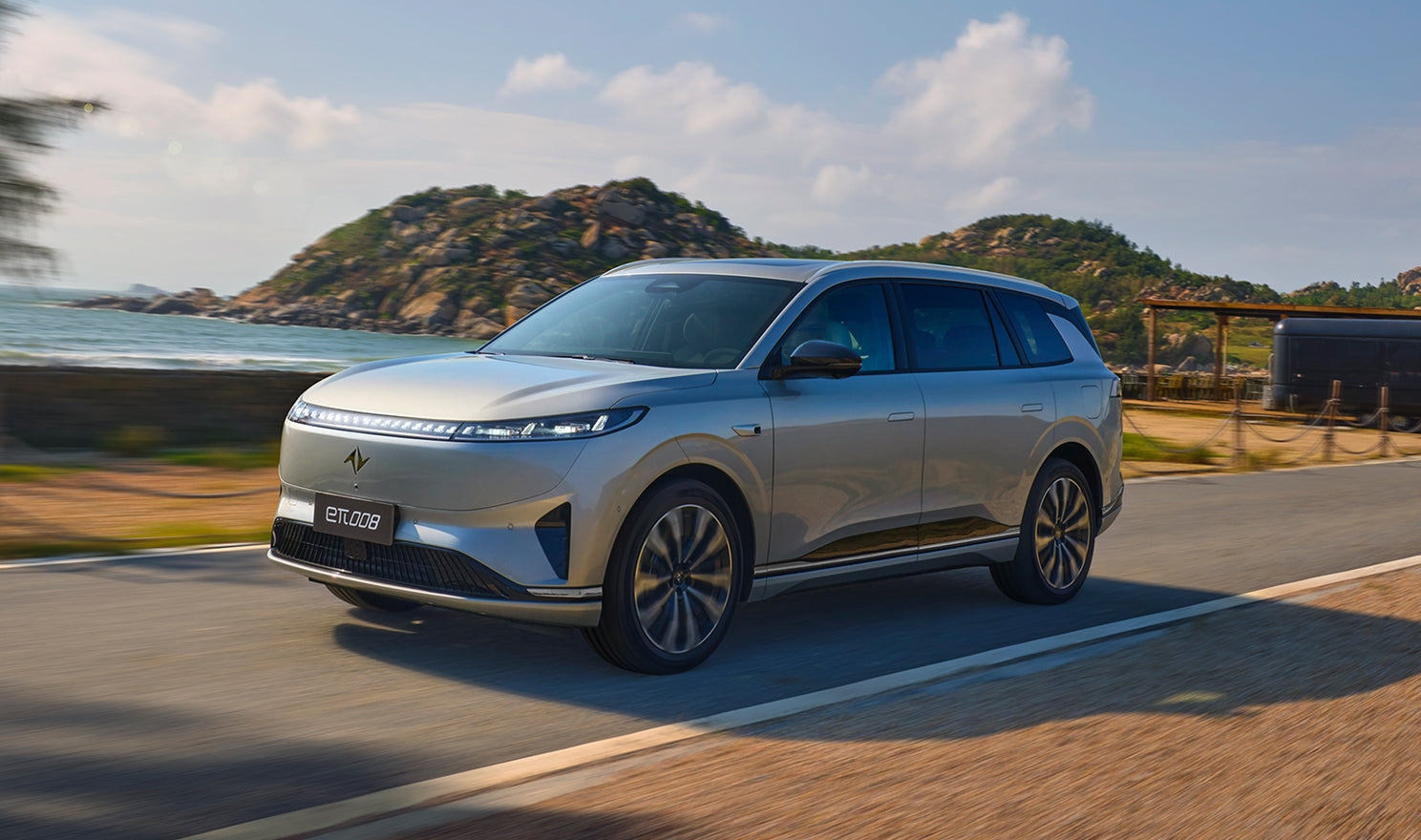
Dongfeng Sets 2026 Goal for First Solid-State EV
Dongfeng, one of China’s major state-owned manufacturers, now aims to bring its first solid-state-powered electric vehicle to market in September 2026, a timeline notably earlier than many global competitors. Although American drivers are unlikely to see Dongfeng-branded vehicles in the United States, breakthroughs in battery technology often transcend borders, eventually influencing suppliers and automakers worldwide.
Battery Chemistry and Energy Density Targets
The company’s new battery reportedly achieves 350 watt-hours per kilogram, slightly below Stellantis’ stated 375 Wh/kg target but still a substantial improvement over most conventional lithium-ion packs.
Dongfeng says the pack uses a multi-component architecture, consisting of:
-
A high-capacity ternary cathode
-
A silicon-carbon anode
-
An oxide–polymer composite solid electrolyte
According to CarNewsChina, this design supports an estimated driving range of more than 621 miles (1,000 kilometers) under the CLTC test cycle. While the CLTC tends to produce optimistic range results, a U.S. EPA estimate would likely still exceed 400 miles, placing it among the longest-range EV batteries in development.
Performance Across Extreme Temperatures
One of the most critical challenges for solid-state batteries—thermal stability—appears to be part of Dongfeng’s testing focus. The manufacturer reports that the battery maintained over 72% capacity at -22°F (-30°C). It also endured temperatures as high as 266°F (130°C) without requiring liquid cooling.
Such results, if validated, would position the pack as a strong candidate for regions with harsh winter climates or high-heat environments that typically degrade EV performance.
Charging Speeds and High-Voltage Architecture
While Dongfeng has not yet specified the precise charging rate of its solid-state pack, the company confirmed it is developing a 1,200-volt platform capable of supporting up to 2 megawatts of peak charging power. This is made possible by an in-house 1,700-volt silicon-carbide power module, a component designed to handle extreme electrical loads efficiently.
The platform—referred to as the Mach Super-kV Pure-Electric Platform—is said to enable charging rates equivalent to 1.5 miles (2.5 km) of range added per second, or roughly 280 miles (450 km) in five minutes. These figures, if achieved in production, would far exceed the charging capabilities of today’s fastest EVs.

Cautious Optimism as the Race Continues
Despite the bold claims, solid-state batteries remain one of the most challenging technologies in the EV sector. Manufacturers must still overcome hurdles related to material durability, cost, and large-scale production. Still, China currently leads global battery innovation, and Dongfeng’s announcement reflects that ongoing momentum.
If the company delivers on its 2026 target, it could mark a turning point in EV development—and accelerate the global transition toward higher-performing, longer-lasting electric vehicles.
Recommend Reading: MG4 Becomes First EV with Semi-Solid-State Battery Approved for Sale in China
Aktie:
New Pricing Confirms Rivian-Backed Also’s TM-B E-Bike Starts at $3,500
Toyota Stays Committed to New EV Launches in 2026 Despite Market Slowdown