





The United States Remains a Major EV Producer, but Not a Leader
Despite its scale and industrial capacity, the United States no longer sits near the top of global electric vehicle manufacturing. In the most recent full year of data, American factories produced approximately 1.04 million battery-electric vehicles, placing the country third worldwide. That output reflects a strong domestic industry, but it also highlights how quickly other regions are accelerating their transition to electric mobility.

China’s Output Remains in a Category of Its Own
At the top of the global ranking is China, whose production volume far exceeds that of any other country. Chinese manufacturers assembled about 16.1 million so-called new-energy vehicles, a category that includes battery-electric cars, plug-in hybrids, range-extended EVs, and hydrogen fuel cell vehicles. This figure alone surpasses the combined EV output of several major automotive markets, underscoring China’s dominant position across both manufacturing scale and supply chains.
Germany Claims Second Place With Record EV Manufacturing
More surprising to many observers is the country in second place. Germany, home to some of the world’s most established automotive brands, produced around 1.22 million electric vehicles during the same period, according to figures published by the German Association of the Automotive Industry (VDA). This represented a 15% year-over-year increase, setting a new national record for EV production.
The growth reflects a broader shift in Europe’s auto sector. Electric vehicle registrations across Europe rose by nearly 30%, reaching close to 2.6 million new registrations in a single year. Germany’s manufacturing surge aligns closely with this demand trend, indicating that production is increasingly tracking consumer adoption rather than lagging behind it.
Automakers Emphasize Electrification as a Strategic Pivot
Industry leaders in Germany have framed these results as evidence of a long-term structural change rather than a short-term spike. Hildegard Müller, President of the VDA, stated that domestic EV output has reached historic highs, describing it as proof that Germany’s automotive sector is positioning itself at the forefront of electric and climate-aligned mobility.
While public statements emphasize sustainability, the numbers also reflect competitive necessity. With stricter emissions standards across Europe and growing competition from Chinese manufacturers, German automakers have little choice but to accelerate electrification across their portfolios.
EVs Now Represent a Large Share of German Auto Output
Looking beyond EVs alone, Germany assembled about 4.15 million new passenger vehicles in total last year, a modest 2% increase compared with the previous year. What stands out is not overall volume, but the mix of powertrains.
Nearly 30% of all vehicles built in Germany were fully electric. When plug-in hybrids are included, the share of electrified vehicles rises to roughly 40% of total production. This level of electrification is significantly higher than in many other major manufacturing countries and suggests that internal combustion engines are no longer the default choice in Germany’s factories.
The Gap Between U.S. Sales and European Demand
On the demand side, the contrast between regions is also notable. U.S. consumers purchased just under 1.3 million new EVs, based on estimates from Cox Automotive. That figure is roughly half of Europe’s total EV registrations, despite the United States having a much larger population than any single European country.
Germany alone has around 84 million residents, compared with approximately 340 million in the United States. When considering the European Union, the United Kingdom, and European Free Trade Association countries, the combined population exceeds 530 million, helping explain the region’s stronger overall EV demand.

Volkswagen Surpasses Tesla in Europe
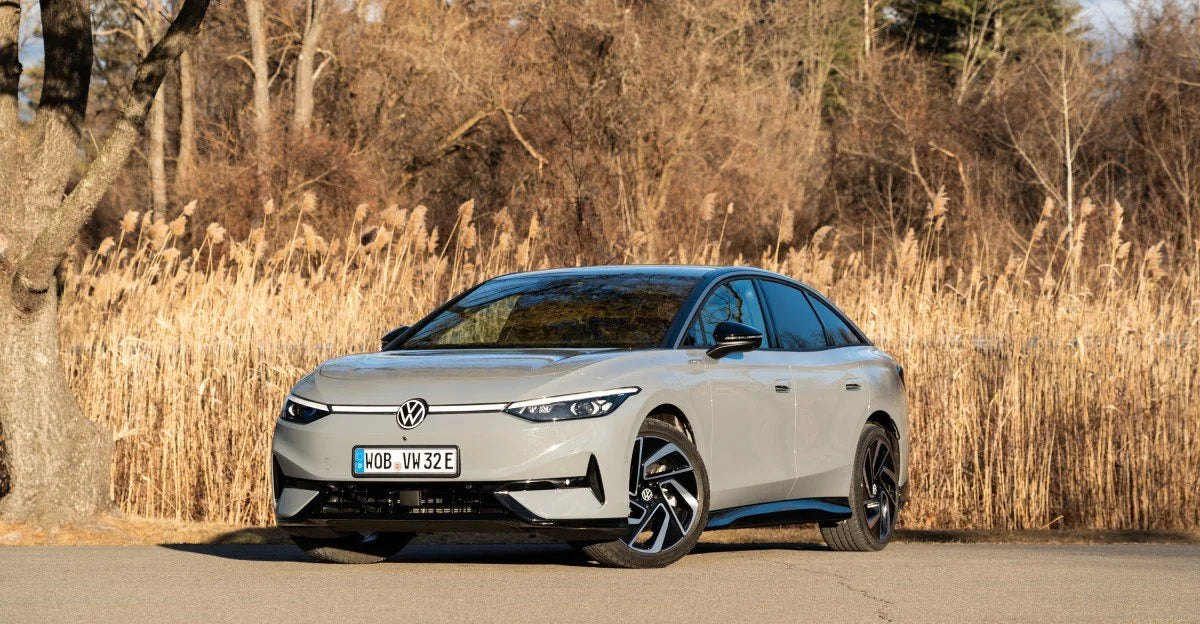
Among manufacturers, Volkswagen Group emerged as a clear beneficiary of Europe’s shifting market. The German automaker led EV sales across the region, driven by the expanding ID family of electric models. In contrast, Tesla’s European performance declined over the same period.
Volkswagen delivered nearly 275,000 electric vehicles in Europe, marking a 56% increase year over year. Tesla, meanwhile, sold about 238,765 units, a 27% drop compared with the previous year. The reversal highlights how legacy automakers, when aligned with regional policy and consumer preferences, can still outperform EV-first challengers.
Recommend Reading: BYD Seal U Tops Europe’s Plug-In Hybrid Sales in 2025










Share:
Volkswagen ID.4 Review: Progress Made, but Challenges Remain
Toyota Confirms Electric Highlander as Its First Three-Row EV SUV