



Overview: A Lower-Cost Gravity With Compromises
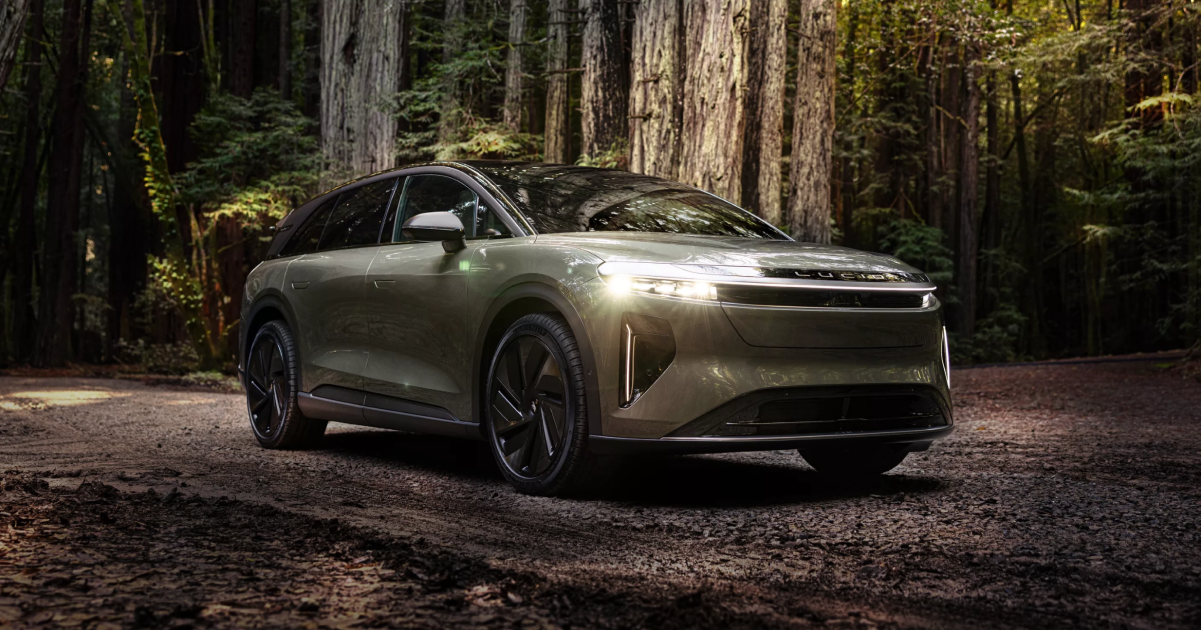
Lucid has expanded its SUV lineup with the new Gravity Touring, a lower-priced alternative to the Gravity Grand Touring. Starting at $79,990, the Touring model undercuts the higher trim by $15,000 and aims to attract more buyers until Lucid’s future mid-size SUV arrives. To hit this price, Lucid equips the Touring with a smaller battery and lower peak charging power—but early data shows it still performs well in the right conditions.

Battery Specs and Charging Capability
The Gravity Touring uses an 89-kWh, ~700-volt battery pack capable of accepting up to 300 kW from a compatible DC fast charger. Lucid says drivers can add 200 miles of range in 15 minutes, with an EPA-rated total range of 337 miles on a full charge.
By comparison, the Gravity Grand Touring carries a 123-kWh pack running at more than 900 volts and can peak at 400 kW. Lucid claims it can add the same 200 miles in under 11 minutes, supported by a longer 450-mile range rating.
Real-World Test: 0% to 100% Charging Session
Because Lucid does not publish state-of-charge (SOC) percentages for its charging claims, Out of Spec Testing’s Kyle Conner performed a full 0%–100% charging session on the Gravity Touring using a charger capable of delivering the model’s full 300-kW limit. The battery was preconditioned beforehand for optimal results.
The data reveals a strong charging curve up to 70%, followed by the familiar steep taper seen in many EVs. The car added nearly 98 kWh during the session—more than the pack’s stated usable capacity—indicating measurement differences common in DC fast-charging tests.
Lucid Gravity Touring 0%–100% Charging Test
| Minutes elapsed | State of charge | Power from DC charger |
|---|---|---|
| 0 minutes | 0% | 310 kW |
| 2 minutes | 10% | 305 kW |
| 4 minutes | 20% | 280 kW |
| 6 minutes | 30% | 250 kW |
| 9 minutes | 40% | 215 kW |
| 12 minutes | 50% | 180 kW |
| 15 minutes | 60% | 140 kW |
| 20 minutes | 70% | 113 kW |
| 25 minutes | 80% | 80 kW |
| 34 minutes | 90% | 50 kW |
| 75 minutes | 100% | — |
Charging Behavior: When to Unplug for Best Efficiency
The test suggests that keeping the Gravity Touring plugged in past 70%–80% SOC brings diminishing returns. Charging to 50% took only 12 minutes, and 70% was reached in 20 minutes, but the final stretch to 100% expanded the session to 74 minutes total.
For drivers who prioritize quick stops, the 0%–70% window offers the best mix of speed and usable range. Power input drops sharply after 70%, and the last 20% is particularly slow, mirroring behavior seen across many EVs.
Range Considerations and Real-World Use
Lucid’s official numbers suggest solid efficiency, but Conner reported that during highway testing with aero wheels, he rarely exceeded 2.9 miles per kWh. Based on that figure, the Touring’s real-world full-pack range may fall closer to 258 miles.
Under these conditions, drivers can expect roughly 180 miles of usable range between 10% and 80% SOC—or from 0% to 70%. This places additional weight on fast-charging performance for long-distance travel. While the Touring offers strong initial charging speeds, buyers should be aware that the smaller pack requires more frequent stops compared to the Grand Touring.

Conclusion: A Capable SUV With Notable Trade-Offs
The Gravity Touring delivers respectable charging performance for its class, especially in the lower half of the battery. However, the real-world efficiency findings and the rapid taper above 70% indicate that the smaller battery pack comes with meaningful compromises. The Grand Touring’s larger, higher-voltage pack may still offer a more practical long-range experience for drivers who routinely travel long distances.
Lucid’s own full test results will provide further clarity, and additional independent testing is underway.
Recommend Reading: Lucid Extends $7,500 Incentive for Gravity SUV Buyers Despite Tax Credit Cutoff

Aktie:
Concerns Rise Over Performance of China-Made LG Batteries in Tesla Vehicles
Where Should EV Drivers Store All Their Charging Adapters?