



Lucid’s Bold Plan for Autonomous Driving
Lucid Motors has announced a major step toward its dream of creating a fully self-driving electric vehicle, one that could rival or even surpass Tesla’s ambitions in autonomy. The EV startup revealed a new partnership with Nvidia, the world’s leading AI and chip company, to power its next-generation vehicles with advanced computing and autonomous driving software.
The collaboration will center on Nvidia’s Drive AGX Thor platform, which combines AI computing, advanced sensors, and full-stack software—including DriveOS and Drive AV. Together, they will form the foundation for Lucid’s upcoming midsize EV lineup, set to debut in late 2026.
Lucid says this partnership will eventually enable Level 4 autonomy, a stage of self-driving where cars can operate without human supervision in specific conditions—a milestone no automaker has yet reached.
“Together with Lucid, we’re accelerating the future of autonomous, AI-powered transportation,” said Nvidia CEO Jensen Huang."

From DreamDrive to Nvidia-Powered Intelligence
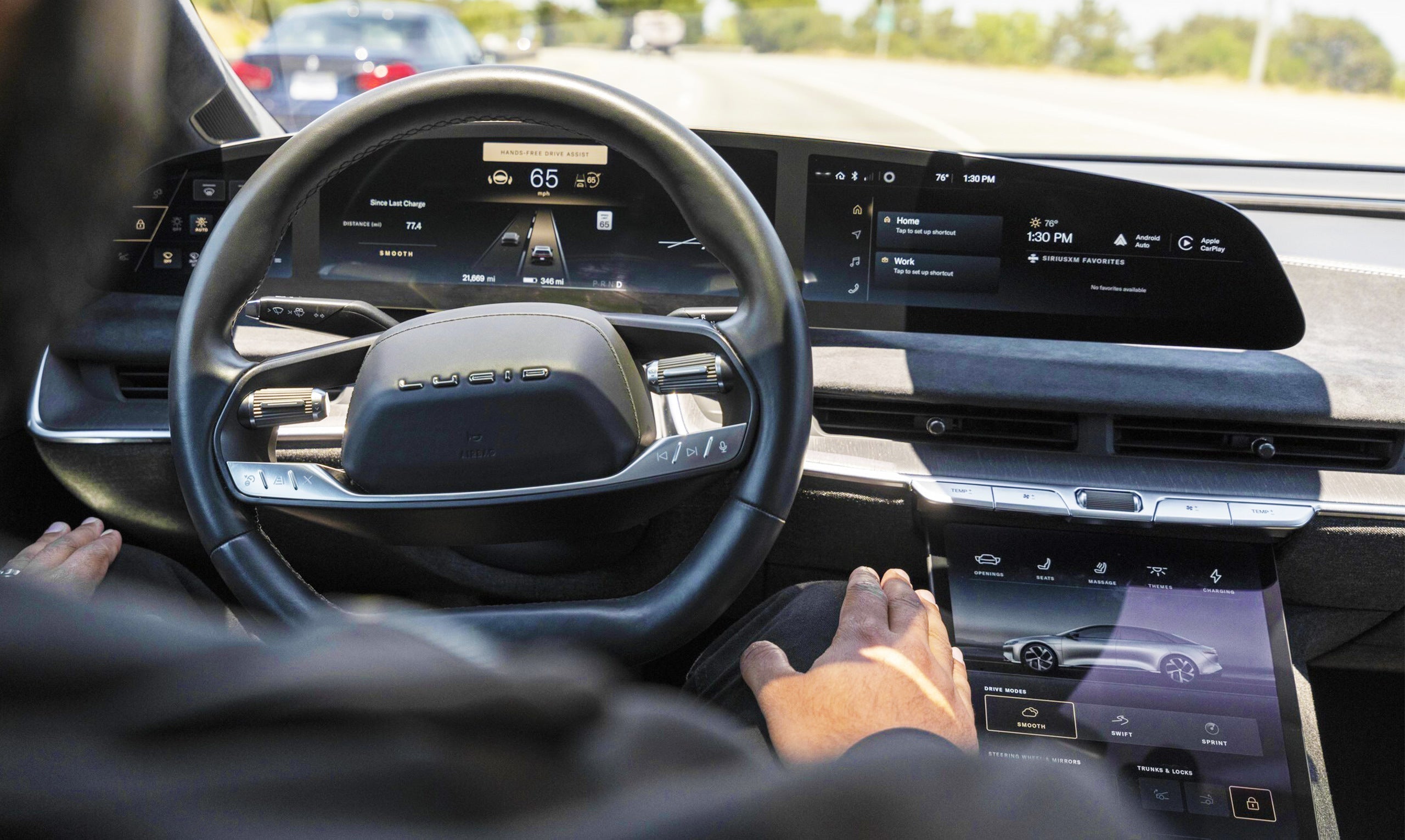
Lucid’s existing driver-assistance system, DreamDrive, has so far been developed entirely in-house. It already supports hands-free highway driving and adaptive cruise control, but Lucid aims to go much further. The company confirmed that its next midsize EVs will be equipped with dual Drive AGX Thor computers and Nvidia’s multi-sensor architecture, which includes lidar, radar, and cameras for better situational awareness.
At launch, these cars will offer Level 2+ autonomy, allowing for supervised, point-to-point navigation similar to Tesla’s “Full Self-Driving (Supervised)” system. Over time, Lucid plans to upgrade the software via over-the-air updates, pushing toward Level 4 capability within a few years after launch.
Meanwhile, the Lucid Gravity SUV—expected at the end of 2026—will also receive Nvidia software upgrades, bringing improved driver-assist features to the luxury SUV lineup.
This marks a strategic shift for Lucid, which had previously emphasized internal technology development. By partnering with Nvidia, Lucid hopes to accelerate innovation and reduce time-to-market for higher levels of autonomy.
Why Level 4 Autonomy Matters
To understand the significance, it’s worth defining Level 4 autonomy. According to the SAE International scale, Level 4 vehicles can drive themselves without human input or monitoring, but only in specific, mapped environments or weather conditions. Waymo’s robotaxis in Phoenix are a prime example—they operate entirely autonomously, though only in limited service areas.
Lucid’s goal is to bring a similar level of autonomy to privately owned vehicles, something that has eluded every major automaker so far. A Level 5 car, which could handle all roads and weather without restrictions, remains an even more distant goal.
Lucid’s midsize EVs are already seen as essential to the company’s long-term survival, as the brand moves beyond its expensive, low-volume Air and Gravity models. Now, those same vehicles could also serve as the launchpad for Lucid’s autonomous driving ambitions.
The Race to Build the First True Self-Driving Car
Lucid isn’t alone in chasing the dream of full autonomy. Mercedes-Benz currently leads the industry with its Level 3 Drive Pilot, which allows hands-off, eyes-off driving—but only at low speeds on certain highways in Nevada and California. General Motors, Ford, and Toyota are each developing eyes-off systems, while Rivian plans to launch hands-free driving by 2026.
Even Tesla, whose “Full Self-Driving” (FSD) software has been in development for years, is only now offering limited driverless rides in Austin, Texas through its early robotaxi service. Despite its progress, Tesla has yet to achieve fully autonomous consumer vehicles.
Lucid’s advantage could lie in its decision to fully integrate Nvidia’s AI technology, rather than building piecemeal systems like many of its rivals. This deep integration could help Lucid close the gap faster and push the boundaries of what’s possible in personal vehicle autonomy.

What’s Next for Lucid
Lucid’s midsize EVs, priced around $50,000, are expected to go into production by late 2026, serving as the brand’s entry point into the mainstream EV market. Combining accessible pricing with cutting-edge Nvidia-powered autonomy could make Lucid one of the most formidable Tesla challengers yet.
Still, the road to full autonomy remains uncertain. Regulatory hurdles, software validation, and public trust are all significant challenges. But if Lucid and Nvidia succeed, the result could redefine what drivers expect from their cars—and from the future of mobility itself.
Recommend Reading: Tesla Robotaxi Expansion Plans Move Forward, But Full Autonomy Still Years Away


Aktie:
The Slate Truck Gains Tesla Supercharger Access — Expanding Its Everyday Range
Las Vegas Police Unveil Nation’s First Tesla Cybertruck Patrol Fleet