





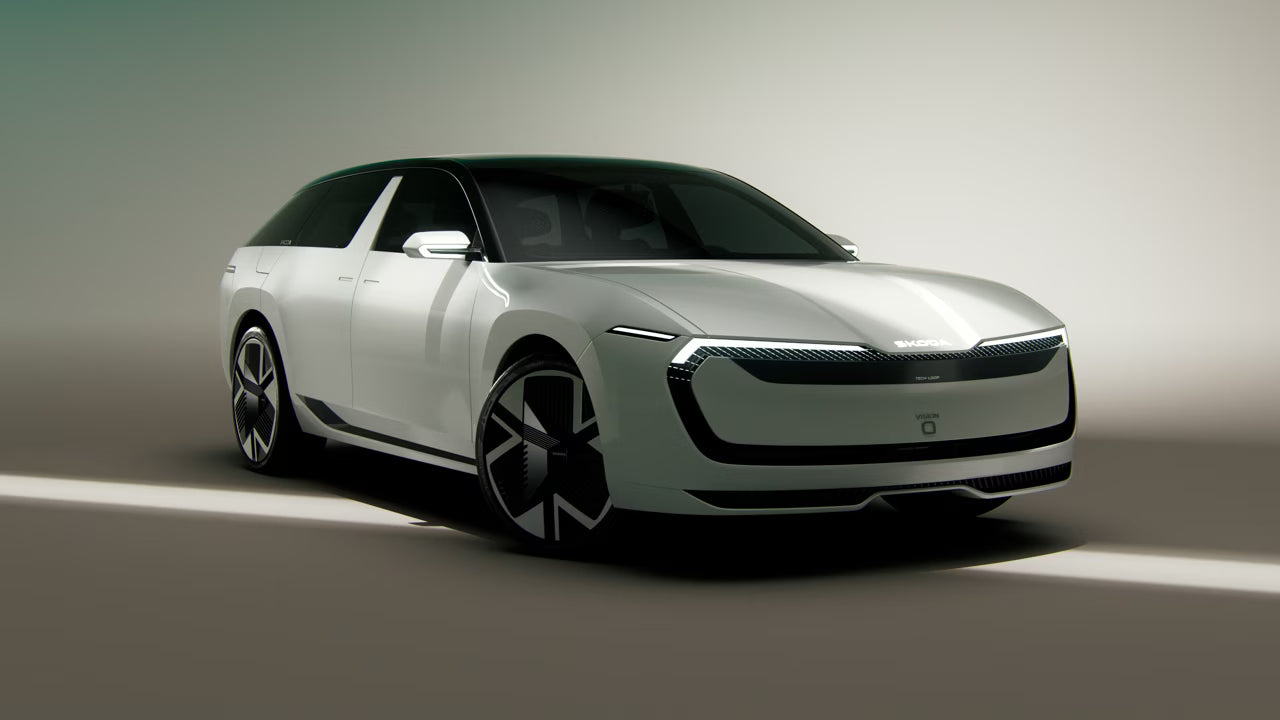
Skoda has offered a clear preview of its electric future with the Vision O concept, a wagon-shaped EV study that hints at what the next-generation Octavia could become later this decade. While the brand has expanded rapidly into crossovers and SUVs, the Octavia Combi remains one of Skoda’s most important models in Europe. Electrifying it could significantly broaden its appeal in an increasingly competitive EV market.

Why the Octavia Wagon Still Matters in Europe
The Octavia Combi has long been a cornerstone of Skoda’s lineup. Built on the same underpinnings as the Volkswagen Golf, it delivers greater interior space, better cargo capacity, and a more practical body style—qualities that continue to resonate with European buyers.
The current combustion-powered Octavia wagon offers 22.6 cubic feet (640 liters) of cargo space, expanding to around 60 cubic feet (1,700 liters) with the rear seats folded. That figure places it at the top of its segment for load-carrying capability, making it popular with families and fleet buyers alike.
A Familiar Formula With a Premium Feel
Beyond practicality, the Octavia Combi has earned a reputation for strong driving dynamics and solid perceived quality. Interior materials, build precision, and ride comfort closely mirror those of the Volkswagen Golf, while offering more room at a similar price point.
Skoda has also historically offered a wide range of powertrains, from efficient gasoline and diesel engines to plug-in hybrid versions and performance-oriented RS trims using Volkswagen GTI-derived hardware. What has been missing so far is a fully electric Octavia.
Electric Octavia Planned for the End of the Decade
That gap is expected to close around 2028, when Skoda plans to introduce an electric Octavia. Unlike the Volkswagen ID.3, which rides on the current MEB platform, the Octavia EV is expected to be based on the new SSP architecture, a more advanced, software-defined platform under development within the Volkswagen Group.
This move signals that the electric Octavia will not be a simple conversion, but rather a next-generation EV designed from the ground up.
What the SSP Platform Brings to the Table
The SSP platform is designed to support 800-volt electrical architecture, placing the Octavia EV firmly in the “Gen 3” EV category. This enables faster charging, improved efficiency, and more advanced software integration compared to today’s mainstream EVs.
Despite being similar in overall length to the current model, the electric Octavia is expected to be wider, allowing for a more spacious cabin and a stronger road presence. Skoda has also emphasized that it intends to retain physical buttons and controls, a choice likely to appeal to drivers frustrated by touch-only interfaces.
Competing With a New Wave of EV Rivals
The timing of an electric Octavia is significant. Chinese automakers such as BYD and Geely are expanding rapidly across Europe, offering competitively priced EVs with strong range and technology—even after import tariffs.
To remain competitive, European brands must deliver efficient, well-packaged, and technologically advanced EVs without pricing themselves out of the market. Skoda’s combination of practicality, restrained design, and value-focused positioning could give it an advantage if executed correctly.
Vision O as a Design and Technology Preview
The Vision O concept provides a clear look at how Skoda sees its electric wagon future. It previews not only an electric Octavia Combi, but also the next evolution of Skoda’s design language heading into the latter half of the decade.
Previously released images offered limited insight, but a recent video from Electrifying provides a closer examination. Presenter Tom Ford explores the exterior and interior details and even drives the concept at low speeds. While the drivetrain is not production-ready, the concept offers a realistic sense of proportions, materials, and overall direction.

A Realistic Look at Skoda’s Electric Future
While the Vision O is still a concept, it represents one of the clearest signals yet of what a Volkswagen Group electric wagon could look like in the near future. If the production version retains its practicality, understated styling, and next-generation EV hardware, the electric Octavia could become a key player in Europe’s evolving EV landscape.
Recommend Reading: BYD Expands Its European Lineup With a Strategic New Plug-In Hybrid










Share:
Stellantis Expands U.S. Recall Over Brake Pedal Failure Risk in PHEV Models
Lexus Revives the LFA Nameplate as a Potential Electric Supercar