

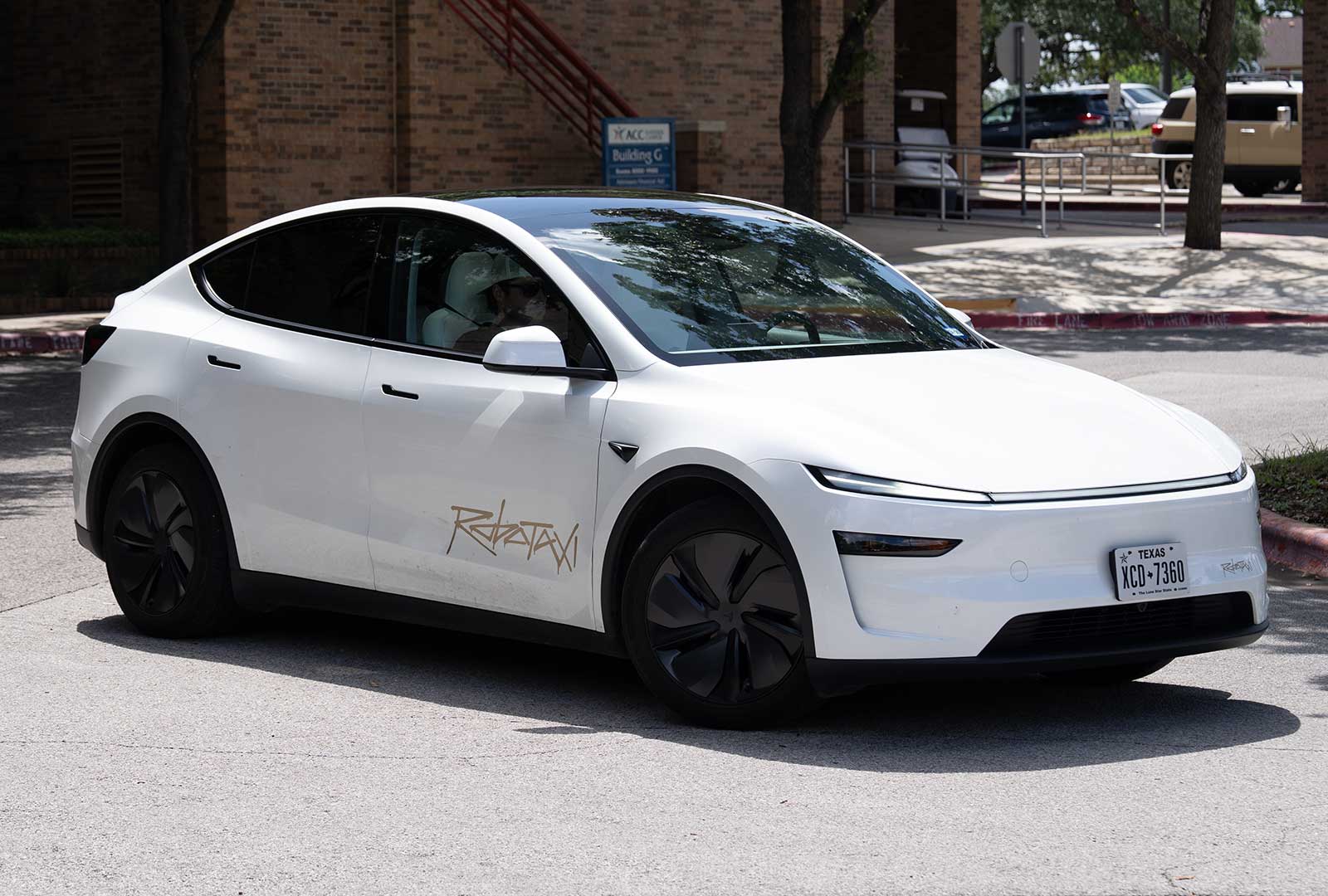
Tesla has taken a meaningful step toward fully autonomous ride-hailing by beginning unsupervised robotaxi testing in Austin, Texas. While paying passengers are still accompanied by human supervisors, the company has now allowed select Model Y vehicles to operate on public roads without anyone inside, marking a major milestone in its long-running autonomy push.
The move underscores how central self-driving technology has become to Tesla’s future, even as competition intensifies and regulatory scrutiny remains high.

First Public Signs of Driverless Testing
Evidence of Tesla’s unsupervised testing surfaced after a video circulated online showing a black Model Y navigating Austin streets with no driver or passengers. The footage quickly gained attention among Tesla supporters, prompting Elon Musk to confirm that driverless robotaxi testing was underway.
For now, these empty vehicles are not offering rides to customers. Tesla’s paid robotaxi service in Austin still includes a human supervisor inside the vehicle. Even so, removing the safety monitor entirely—even in limited testing—represents a shift from earlier deployments and signals growing confidence in Tesla’s software.
Full Self-Driving Faces a Real-World Test
Tesla’s robotaxis rely on its Full Self-Driving (FSD) system, the same software sold to private owners. The Austin and San Francisco programs have so far operated under human supervision, allowing Tesla to intervene when the system struggles with complex scenarios.
In most cases, the vehicles handle braking, turning, lane changes, and traffic flow smoothly. However, the system has also demonstrated weaknesses. Videos shared online show robotaxis missing traffic rules or hesitating in unusual situations, raising questions about reliability without human oversight.
Tesla disclosed that since supervised robotaxi operations began in Austin earlier this year, it reported seven crash-related incidents to the National Highway Traffic Safety Administration. None appear to have resulted in serious injuries, but the reports highlight the risks involved as Tesla moves toward fully unsupervised operation.
Waymo’s Expanding Lead Adds Pressure
While Tesla pushes forward, Waymo remains the clear volume leader in U.S. robotaxi services. The Alphabet-owned company currently delivers around 450,000 fully driverless rides per week across cities including Austin, Phoenix, San Francisco, Los Angeles, and Atlanta.
That figure represents an 80% increase compared to six months ago, and Waymo plans to enter 11 additional U.S. cities by the end of 2026. Its vehicles already operate without safety drivers, giving Waymo a practical edge in large-scale deployment.
Still, Waymo’s record is not flawless. A recent incident in San Francisco involved three autonomous vehicles blocking one another after a minor collision, demonstrating that even mature systems can fail in edge cases.

Musk’s Optimism Meets Reality
During a recent video conference tied to an xAI hackathon, Elon Musk claimed that unsupervised robotaxis would arrive in Austin within weeks, adding that validation was the final hurdle. He described unsupervised FSD as “pretty much solved,” though he has previously acknowledged a tendency toward optimistic timelines.
Investors and regulators alike are likely to treat such claims cautiously. Tesla’s autonomy promises stretch back more than a decade, and while progress is now visible, scaling safely remains the real challenge.

Why This Moment Matters for the Industry
This year has been pivotal for autonomous vehicles. Tesla is finally moving beyond demonstrations toward real-world, driverless operation, even if its footprint remains small. At the same time, Waymo continues to prove that autonomous ride-hailing can function at scale in select markets.
What happens next could define the future of self-driving technology. 2026 may determine whether robotaxis become a profitable, scalable business—or remain an expensive experiment. Success would not only reshape urban mobility but also validate years of investment in AI-driven transportation.
For now, Tesla’s unsupervised testing in Austin marks progress—but also the beginning of its toughest phase yet.
Recommend Reading: Tesla Robotaxi Expansion Plans Move Forward, But Full Autonomy Still Years Away


Aktie:
GM Expands In-Car Streaming With Native Apple Music and Free Data Access
Ford Plans Extended-Range F-150 Lightning as It Reconsiders Full EV Strategy