





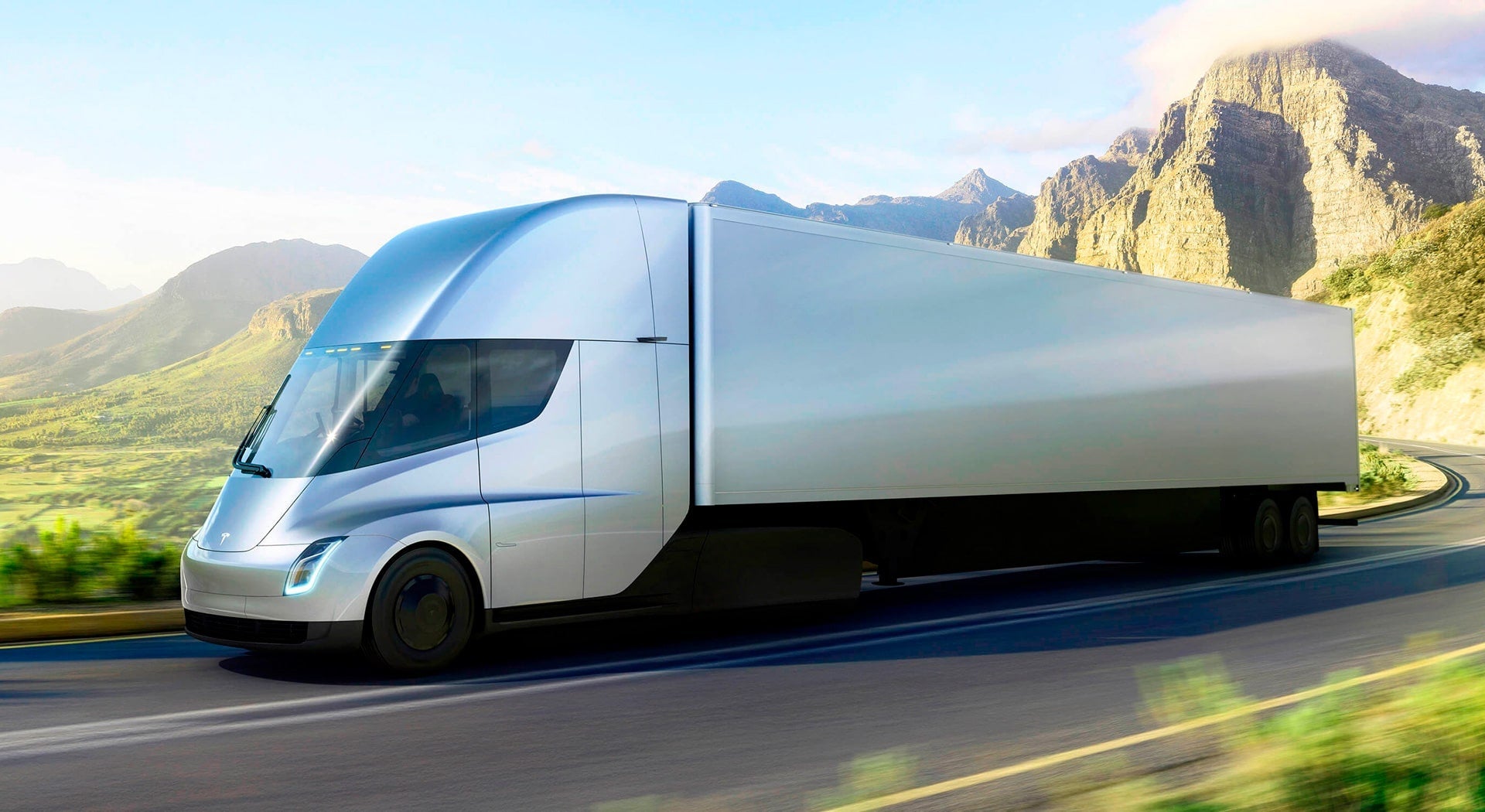
A Closer Look at the Production Model
The long-awaited Tesla Semi has now reached its production form, and television host Jay Leno recently explored the updated truck alongside Dan Priestly, who leads the Semi program, and Franz von Holzhausen, Tesla’s chief designer. The visit included a detailed walkaround and a test drive, offering one of the most comprehensive public looks at the finalized vehicle.

From Prototype to Final Version
Although Leno had previously tested an earlier version on his show, that unit was not representative of what customers will receive. Since that earlier drive in October 2023, the truck has undergone multiple refinements.
Tesla now positions the Semi as a long-haul electric solution with improved specifications. The latest version delivers a maximum range of up to 500 miles, supported by high-power charging capability rated at 1.2 megawatts. Under optimal conditions, the system can restore approximately 60% of battery capacity in about 30 minutes, helping reduce downtime during routes.
Efficiency and Performance Details
Beyond range figures, Tesla emphasizes operational efficiency. The Semi is reported to consume roughly 1.7 kWh per mile while carrying cargo, a metric that directly affects cost calculations for fleet operators.
Performance is another focus area. The truck uses three electric motors to drive its dual rear axles, generating over 1,000 horsepower at peak output. A secondary configuration with a smaller battery offers a range of around 325 miles and weighs more than 3,000 pounds less, which could translate into quicker acceleration and improved payload flexibility.
Design Choices Shaped by Aerodynamics
One of the Semi’s most distinctive features is its centrally positioned driver’s seat. According to Tesla’s engineering and design teams, this layout was chosen primarily to enhance airflow around the vehicle. By narrowing the upper section of the cab, the company achieved a drag coefficient of 0.4, which is relatively low for a truck of this size.
This unconventional seating arrangement also allowed for a redesigned interior. The cabin offers increased vertical space, enabling the driver to stand upright, while the overall layout creates a more open environment compared to traditional trucks.
Driving Experience and Practical Impressions
Despite the unusual seating position, Leno reported that operating the Semi feels intuitive. The absence of gear changes and the continuous delivery of torque contribute to a smoother driving experience. He noted that the truck behaves in a predictable manner, which may ease concerns for drivers transitioning from diesel vehicles.
Electric propulsion also eliminates engine noise, further differentiating the Semi from conventional heavy-duty trucks. However, Leno did not highlight these characteristics as the most important factors.
The Economic Argument for Adoption
According to Priestly, the primary case for switching from diesel to electric lies in long-term savings. While Tesla has not formally confirmed pricing, estimates suggest the long-range version could start at around $290,000, a figure significantly higher than earlier projections made when the model was first introduced in 2017.
For fleet operators, upfront cost is only part of the equation. Leno emphasized that the decisive factor will likely be the cost per mile. If the Semi can consistently deliver lower operating expenses compared to diesel trucks, it could become a compelling option despite the higher purchase price.

Broader Context: Energy Costs and Market Pressures
The discussion around operating efficiency comes at a time of ongoing volatility in global energy markets. Fluctuations in oil supply and fuel pricing continue to affect transportation costs worldwide. In this environment, vehicles that reduce dependence on diesel may offer financial and strategic advantages.
Leno concluded that while the Semi’s quiet operation and strong performance are notable, they are not the primary reasons fleets might adopt it. Instead, the truck’s potential to reduce ongoing expenses could play a more decisive role in influencing purchasing decisions.
Recommend Reading: Tesla Semi Unveils Futuristic Redesign Ahead of Delayed Mass Production










Share:
How Ionna Built an EV Fast Charging Station in Just Five Days
US Safety Review Finds One-Pedal Driving Not a Risk