





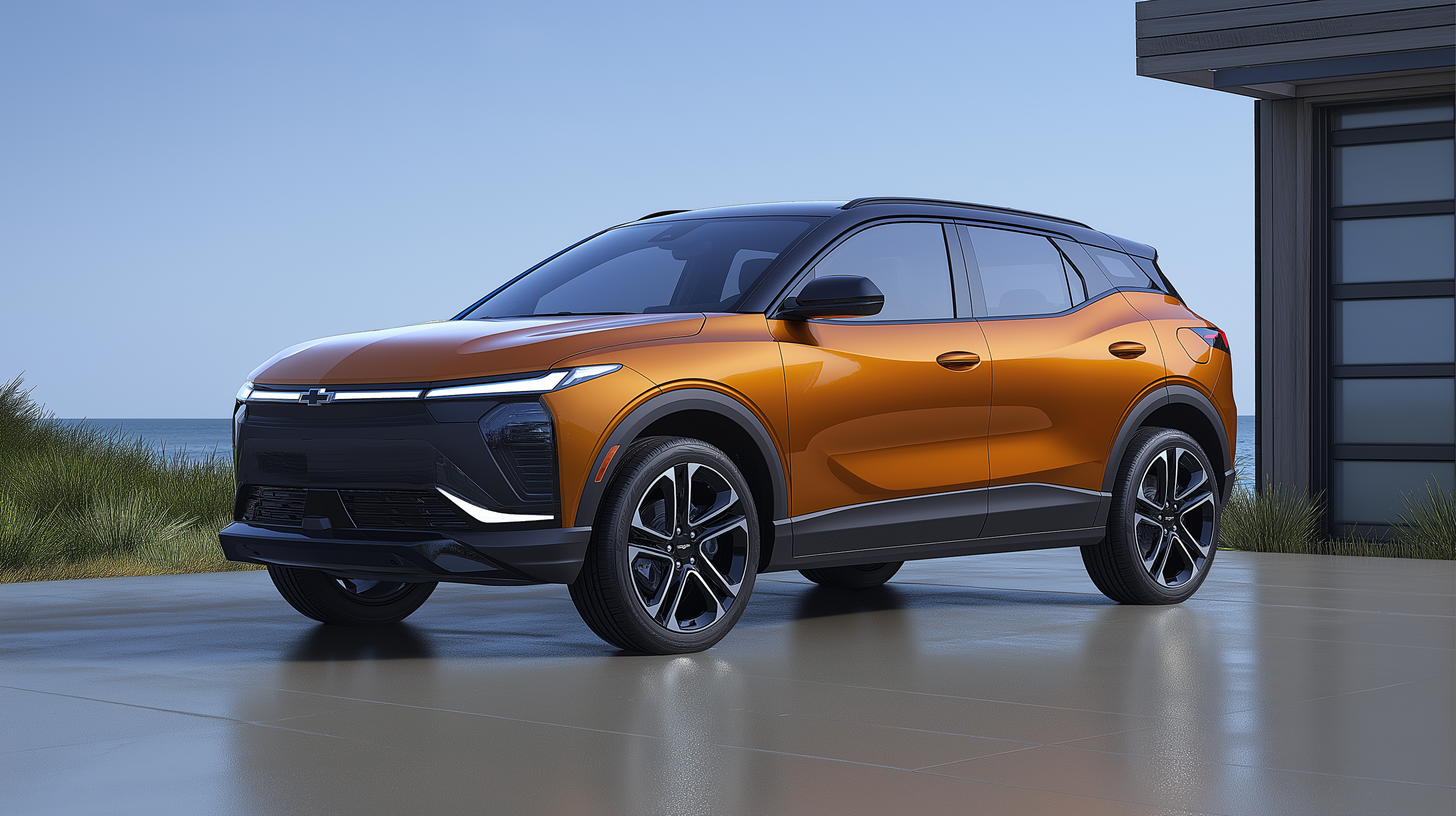
The Chevrolet Bolt has long been valued as a budget-friendly EV for city commuting, but its limitations on long drives were notable, mainly due to a slower charging rate. With the 2027 model, General Motors has overhauled the Bolt EV with key improvements aimed at making it more capable for sustained highway travel while retaining its affordability.

Updated Battery and Charging
The 2027 Bolt EV now comes with a lithium iron phosphate (LFP) battery, a chemistry that offers increased durability and allows for full 100% charging without harming battery longevity. The new battery retains a 65 kWh capacity, the same as the previous Bolt EUV, but its improved chemistry and energy management enhance highway efficiency. Charging speed has also been significantly increased, with a peak rate of 150 kW, enabling the battery to reach 80% in just 26 minutes—a substantial reduction compared with the older Bolt, which took over twice as long.
Base Model Pricing and Efficiency
Starting at $28,995 including destination, the 2027 Bolt EV offers an EPA-rated range of 262 miles. While EPA estimates mix city and highway conditions, real-world highway speeds often lead to lower range figures. For those considering this vehicle as a daily highway commuter, actual performance depends on driving speed, ambient temperature, and road conditions.
75 MPH Highway Test
Joe from the EV Motoring YouTube channel conducted a hands-on test with a base-spec 2027 Bolt EV LT, traveling at a constant 75 miles per hour, slightly higher than the typical 70 mph used in many highway range evaluations. Ambient temperature was near 72°F, with calm wind conditions. After covering 96 miles, the battery displayed an estimated remaining range of 117 miles.
End-of-Charge Results
By the time the battery reached 7%, the Bolt EV had covered 183.5 miles at an average efficiency of 2.9 mi/kWh. Additional driving on side streets added 13.5 miles, bringing the total distance on a full charge to 197 miles. This result was about 25% below the EPA estimate, which is reasonable considering the sustained higher speed and absence of city-driving efficiency gains.
Comparison With Previous Generation
The prior Bolt EUV, equipped with a nickel-rich 65 kWh battery, achieved 231 miles at 70 mph during a 2022 range test, averaging 3.6 mi/kWh. Adjusting for speed, the new Bolt EV’s 197-mile range at 75 mph aligns with expectations and shows the updated model performs efficiently despite faster highway travel.
Highway Advantages of the 2027 Bolt
Besides improved efficiency, the LFP battery chemistry allows owners to use the full battery capacity without damage, unlike older lithium-ion types that are generally charged to 80% to preserve cell health. Additionally, the faster charging capability reduces downtime on longer trips, making the 2027 Bolt EV more practical for weekend road trips or extended commutes.

Limited Production Window
Despite these improvements, General Motors plans a relatively short production run for the 2027 Bolt EV, approximately 18 months. Early adopters looking for an affordable, capable highway EV may want to act quickly before availability diminishes.
In summary, the 2027 Chevrolet Bolt EV offers a solid combination of affordability, updated battery technology, and improved highway efficiency. While the EPA range remains a guideline, real-world testing at sustained speeds provides a realistic picture for potential buyers. Enhanced charging speeds and the LFP battery chemistry position the Bolt EV as a practical urban and occasional long-distance electric vehicle.
Recommend Reading: 2027 Chevy Bolt EV Fast-Charging Test Shows Major Upgrade


Share:
Toyota Warns of Industry Crisis and Pushes Cost Overhaul
Do Range-Extender EVs Still Make Sense for BMW Today?