



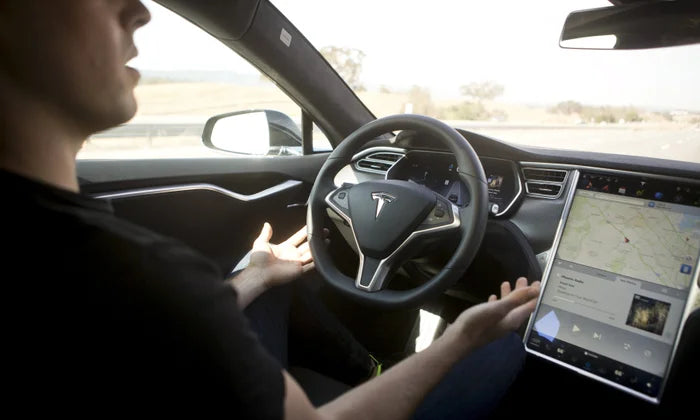
A Rapid Shift in the Self-Driving Landscape
After several years of stalled progress, abandoned projects, and public skepticism, the automotive industry is once again pushing hard toward autonomous driving. Earlier attempts saw companies burn through billions of dollars while discovering that scaling full self-driving systems was far more complex than initial projections. Projects such as Ford and Volkswagen’s Argo AI and General Motors’ Cruise became the most visible examples of how costly—and risky—the pursuit of autonomy could be.
Today, however, momentum has returned with a level of speed and confidence the sector has not seen in years. Automakers, tech companies, and mobility operators are all signaling that the next era of autonomous driving is beginning, with progress that appears faster, broader, and more practical than before.
New Developments Highlight a Renewed Industry Push
One sign of this shift is the sudden surge of announcements emerging within just a single week. A series of updates compiled by TechCrunch illustrates how broadly—and how rapidly—the sector is moving:
-
Waymo has expanded testing to Philadelphia and begun collecting data through manual driving in Baltimore, St. Louis, and Pittsburgh, laying groundwork for future autonomous operations.
-
Uber and Avride have launched a Dallas-based robotaxi service that initially uses a safety operator while preparing for wider driverless deployment.
-
The California DMV has issued new rule proposals that would allow autonomous trucks to operate on state highways, opening the door for one of the most consequential use cases of automation.
These developments show that robotaxis and driverless freight trucking continue to be major pillars of the autonomy movement. What is different, however, is that many carmakers are no longer sitting on the sidelines. Instead, they are starting to integrate autonomy into their long-term product strategies with a seriousness not seen since the mid-2010s.

Automakers Reenter the Race With Ambitious Plans
Companies across the industry now recognize that autonomous driving will play a central role in the future of vehicle design and consumer expectations. Rivian, for example, is preparing to outline its autonomy roadmap at its upcoming Autonomy and AI Day. CEO RJ Scaringe emphasized in a recent interview that while robotaxis attract most of the media attention, the true long-term impact lies elsewhere.
According to Scaringe, personally owned autonomous vehicles represent the overwhelming majority of real-world demand, since “ninety-nine percent of all miles driven on U.S. roads are done in personal vehicles.” For automakers, that makes autonomy not just a feature but a foundational shift in the business model.
“The next few years will look entirely different than the last few years,” Scaringe said. “Not just for Rivian, but for the automotive industry in general.”
Rivian is far from alone. General Motors, Ford, Lucid, and several other legacy and startup automakers are developing their own advanced driver-assistance and autonomous systems. Some companies continue to focus on supervised autonomy—systems that require active driver attention—while others aim for fully unsupervised capability over time. Regardless of their chosen approach, the industry consensus is clear: no major manufacturer can afford to be left behind.

Why Autonomy Matters More Now
Several factors are pushing the sector forward again:
1. Improved AI and Sensor Technology
Advancements in perception models, edge computing, neural networks, and cheaper sensor hardware have significantly reduced both the cost and latency of autonomous systems. These improvements make it more feasible to deploy autonomy in mainstream vehicles.
2. Strong Consumer Interest in Assisted Driving
Features such as lane-centering, automated lane changes, and highway pilot systems have seen broad adoption in premium and mid-priced vehicles. As consumers grow more comfortable with assisted driving features, the step toward higher-level autonomy becomes more natural.
3. A Competitive Race Among Global Automakers
Chinese automakers have aggressively pushed into automated driving features, raising pressure on American and European companies to accelerate their own development. Global competition is forcing automakers to treat autonomy as a core differentiator.
4. Expanding Commercial Use Cases
Freight operators, delivery companies, and ride-hailing platforms see autonomy as a way to reduce operational costs. These commercial pressures create a parallel incentive structure that fuels innovation.

The Challenge: Moving Fast Without Failing Publicly
Despite the renewed optimism, companies face a difficult balancing act. High-profile accidents, even isolated ones, can instantly trigger public backlash and regulatory scrutiny. These incidents have shaped the narrative for years, and even as systems improve, the industry is aware that it has very little margin for error.
The tech sector’s old mantra—“move fast and break things”—is incompatible with life-critical systems operating on public roads. Deploying prematurely can cause setbacks that slow the entire industry. At the same time, being overly cautious risks allowing competitors to establish dominance.
Striking the balance between safety, speed, and scalability will determine which companies emerge as leaders.

The Road Ahead
The next phase of autonomous driving will likely be defined by a combination of these elements:
-
Incremental deployment of supervised autonomy in personal vehicles
-
Targeted rollouts of robotaxis in tightly controlled urban markets
-
Gradual integration of self-driving freight trucks on major highways
-
Increasing regulatory involvement as states and federal agencies update safety standards
Most importantly, the progress of the next few years will differ from the last decade’s boom-and-bust cycle. Instead of hype followed by disappointment, the industry is steadily building autonomy into real vehicles, real fleets, and real business plans.
The shift is not merely technological. It represents an evolution in philosophy: autonomy is no longer viewed as a moonshot experiment but as a practical, essential component of future mobility.
If current momentum continues, the landscape of driving in the early 2030s may be fundamentally different from today.
Recommend Reading: Europe Pushes Back on Tesla’s FSD Approval Timeline


Share:
Subaru Unveils the 2026 Uncharted as a New Affordable Long-Range EV Option
How Porsche Improved the Taycan’s Range and Charging Speed