


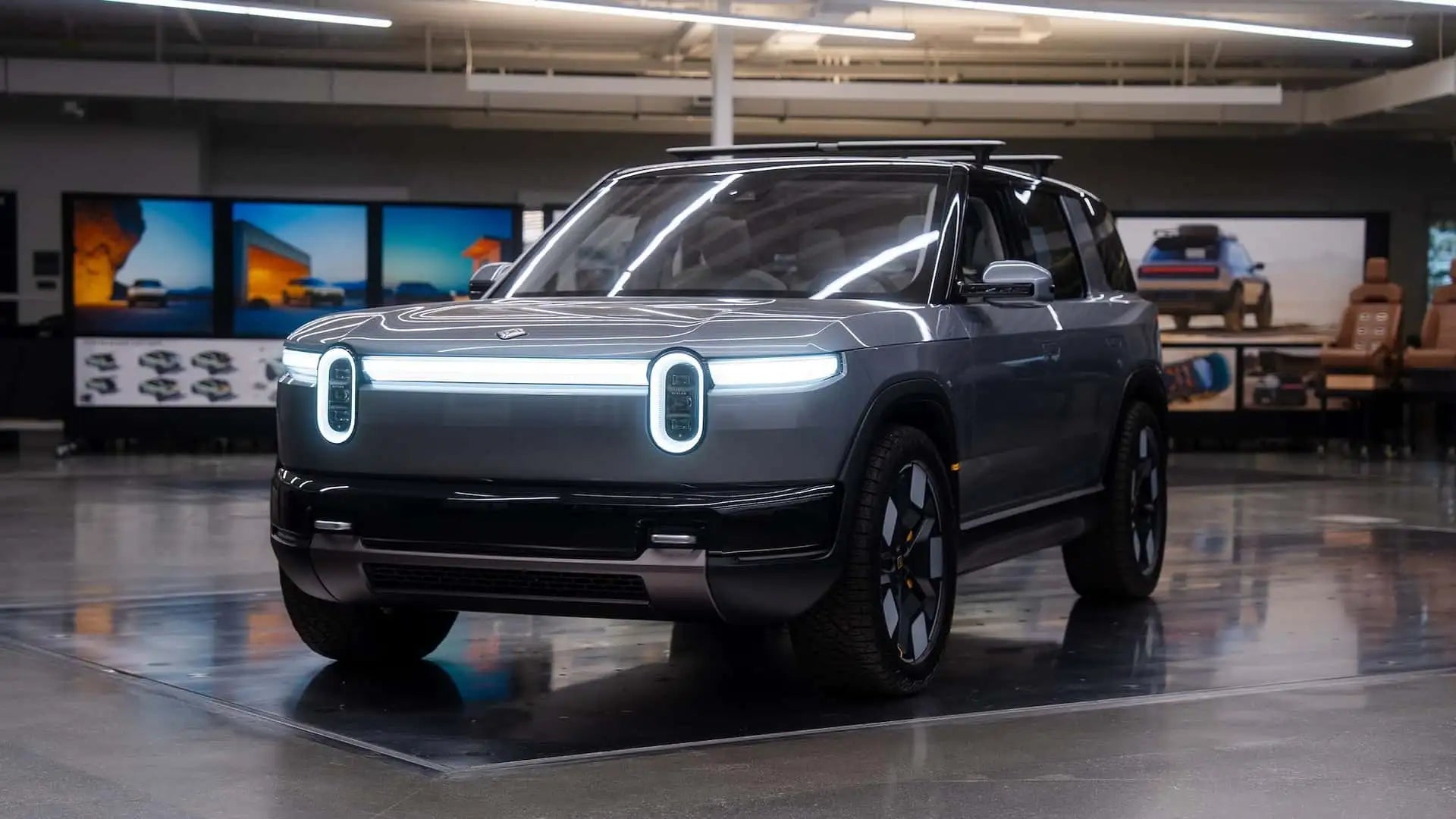
Rivian’s Long-Term Autonomy Vision
As the automotive industry races toward fully autonomous mobility, each manufacturer is defining its own path. Robotaxis are already providing driverless rides in select U.S. cities, while advanced driver-assistance systems (ADAS) are becoming more sophisticated in consumer vehicles. The central question now is when these two tracks—robotaxis and personal-car autonomy—will meaningfully converge.
Consumer-facing autonomy is improving quickly. Hands-free highway systems like GM’s Super Cruise and Ford’s BlueCruise offer convenience but still demand continuous supervision. Tesla’s Full Self-Driving (Supervised) system can navigate complex environments, yet it still requires attentive oversight. Meanwhile, companies like Waymo provide driverless public service but only in defined geofenced areas.
Against this backdrop, Rivian CEO RJ Scaringe believes the line between supervised assistance and true self-driving may blur sooner than many expect. In a recent interview, he described an ambitious progression that could make unsupervised operation possible before the end of this decade.

Rivian’s Step-by-Step Autonomy Roadmap
Scaringe outlined a multi-phase development path leading toward full autonomy. The first phase is a “hands-off everywhere” capability, expanding beyond limited mapped highways. This would allow Rivian vehicles to handle general driving tasks with minimal driver input, though still requiring human awareness.
The next planned step is point-to-point navigation, similar in concept to Tesla’s FSD approach. This system would allow a Rivian vehicle to follow a planned route across a variety of environments, managing turns, intersections, lane changes, city streets, and more. The driver would still need to supervise, but the car would handle most of the workload.
According to Scaringe, once these pieces are in place, Rivian expects rapid progress toward a no-driver-required system. This is where things become transformative.
A Bold Claim: Cars That Don’t Need Occupants
Scaringe’s headline-making statement was that Rivians could eventually operate autonomously without anyone in the vehicle, potentially as early as 2028 or 2029. In this scenario, owners could dispatch their vehicles to run errands, pick up a family member, or move around independently while the owner stays home.
“The next step is allowing you not to be in the vehicle,” Scaringe said. “Our view is that’s going to happen well before the end of the decade.”
If Rivian achieves this, it would shift the role of personal vehicles from passive assets to active agents—capable of performing tasks autonomously, perhaps even generating revenue in shared-mobility networks.
A Familiar Vision With a New Timeline
Rivian is not the first automaker to envision this. Tesla CEO Elon Musk has made similar predictions for years, promising a future where Teslas act as autonomous ride-hail vehicles and perform chores without supervision. But despite repeated assurances going back to 2016, full autonomy has remained elusive.
This historical context is important. The journey to self-driving capability has been far more challenging than early predictions. However, major advances in artificial intelligence have helped accelerate progress in the last several years. Traditional rule-based systems—built around explicit “if-then” logic—have largely given way to AI-driven models capable of reasoning more flexibly.
Scaringe has emphasized that these newer AI architectures are essential for unlocking higher levels of autonomy, as they allow software to generalize better across unfamiliar scenarios. In earlier interviews, he explained that Rivian’s next-generation autonomy stack will rely heavily on these modern approaches.

The State of Autonomous Technology Today
By 2025, autonomous driving is more real than ever, though still limited in scope. Waymo, for example, is running millions of paid trips each month in Phoenix, San Francisco, Los Angeles, and other markets. The company is also expanding into highway routes and preparing launches in additional cities. Robotaxis from other players—Avride, Cruise (when operational), May Mobility, Motional, and others—continue to evolve.
But transitioning from geofenced robotaxi services to consumer-owned vehicles that operate anywhere is a far more complex challenge. Consumer vehicles must function reliably under:
-
unpredictable traffic conditions
-
diverse climates
-
variable road markings
-
inconsistent infrastructure
-
wide-ranging driving styles
-
lower sensor redundancy than commercial robotaxis
This is why the leap Rivian is describing is both ambitious and meaningful.

Why Rivian Thinks It Can Move Faster
Several factors support Rivian’s confidence:
1. Rapid AI Progress
Modern neural networks, particularly vision-based systems, are improving at a rate previously unseen in the industry. These models can be trained with massive real-world datasets collected from customer vehicles, speeding system refinement.
2. Rivian’s New Platform Designs
Rivian’s upcoming midsize platform includes hardware pathways designed for higher levels of autonomy, including enhanced compute, sensors, and redundancy. This gives the automaker a foundation flexible enough for future upgrades.
3. Industrywide Demand for Consumer Autonomy
Companies such as GM, Volvo, Mercedes-Benz, and BMW are all pursuing eyes-off systems by the late 2020s. GM even aims to equip Super Cruise with eyes-off capability by 2028. Rivian’s timeline aligns with this broader industry movement.
4. A Structured Development Ladder
By focusing first on “hands-off everywhere,” then on point-to-point supervised autonomy, Rivian can refine each layer before reaching the fully driverless stage.
The Massive Barriers Still Ahead
Despite the optimism, several challenges remain formidable:
1. Regulatory Approval
Even if Rivian builds a technically capable system, government approval for no-occupant operation will require extensive validation, safety cases, and real-world proof.
2. Sensor and Compute Costs
Fully unsupervised systems require high sensor redundancy, high-accuracy perception, and powerful onboard computing. Reducing these costs for a mass-market vehicle is a significant hurdle.
3. Insurance and Liability
New frameworks will be needed to determine liability when no human is present to supervise.
4. Public Trust
Even if the technology works, consumers must feel comfortable sending a vehicle out alone—something that may take time.

What Comes Next for Rivian
Rivian will share more details at its upcoming Autonomy and AI Day, where it is expected to outline hardware updates, software architecture, and its deployment roadmap. The company has already hinted that its next-generation midsize vehicle will be designed with eyes-off capability in mind, supported by Nvidia-powered compute systems.
The key takeaway is that Rivian believes fully driverless personal vehicles are achievable this decade, not just within specialized robotaxi services but for everyday consumer use. Whether the company—and the industry—can overcome the technical, financial, and regulatory obstacles in time remains to be seen. But the vision marks a significant step in the evolving landscape of autonomous mobility.
Recommend Reading: Uber Turns to Lucid Gravity for Its Next Wave of Autonomous Ride Services
Share:
Should You Choose Level 1 Charging? A Complete Guide to When, Why, and How Level 1 EV Charging Works Best
New Generation of EVs Set to Reshape Global Competition in 2026