





Independent Charging Tests Released After CES Skepticism
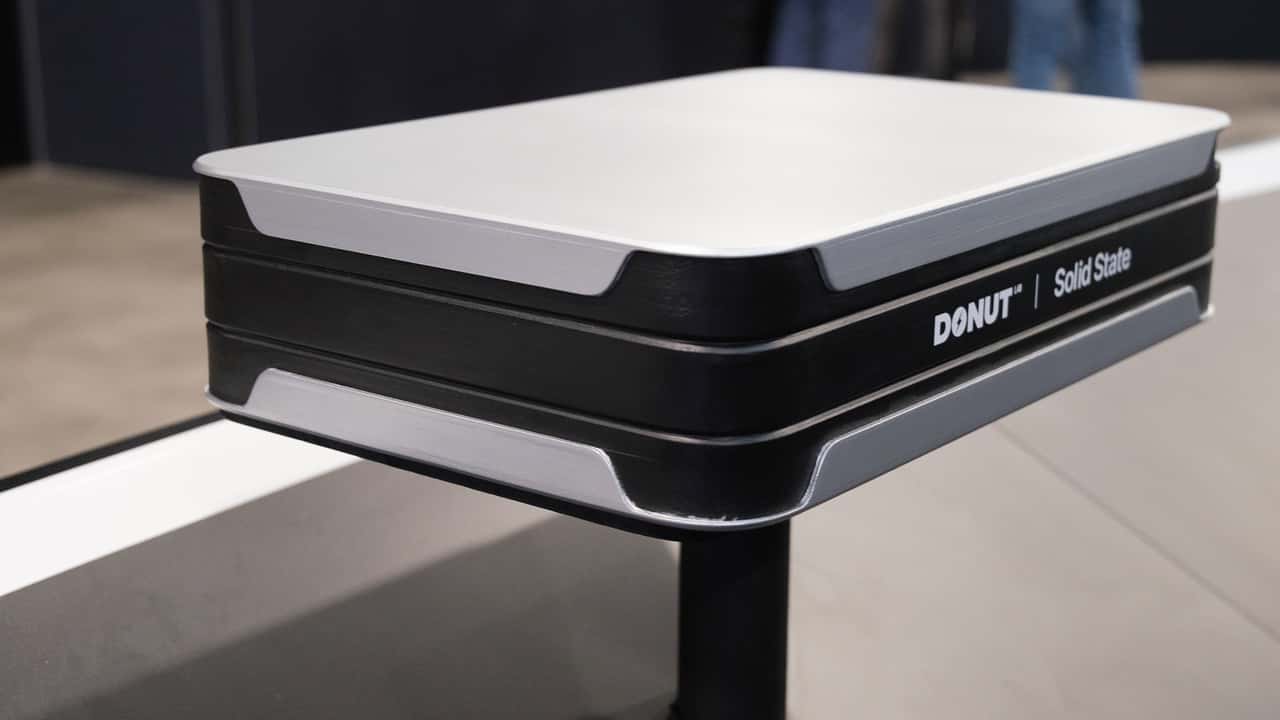
Finnish startup Donut Lab is attempting to validate bold claims about its electric vehicle battery technology following a skeptical reception at CES earlier this year. The company has now published third-party test results conducted by Finland’s state-owned VTT Technical Research Centre to support its assertion that it has developed a production-ready solid-state battery.
The announcement in January drew doubt from industry observers, largely because Donut Lab has not previously manufactured batteries at scale. In response, the firm commissioned VTT to evaluate the charging behavior of one of its prototype cells. While the data confirms extremely rapid charging under laboratory conditions, it leaves several important technical questions unanswered.
Notably, the company has not disclosed the chemical composition of its cell. Shirley Meng, a professor at the University of Chicago’s Pritzker School of Molecular Engineering, expressed concern about that omission, stating that without transparency around chemistry, claims of a breakthrough are difficult to verify.

What the Lab Results Actually Show
VTT examined a 94-watt-hour pouch cell and performed seven charging experiments. Four of those tests involved high charging rates of 5C and 11C. In battery terminology, 1C corresponds to a full charge in one hour; higher values indicate proportionally faster charging.
During the 5C evaluation, the cell was charged at 130 amps and 4.3 volts, reaching 80% capacity in under 10 minutes and full charge in approximately 13 minutes. Peak temperature was recorded at 47°C (116.6°F).
At the more aggressive 11C rate, the results were even more striking. The battery reached 80% in 4.6 minutes and achieved full charge in less than eight minutes, with temperature climbing to 63°C (145°F). These figures align with Donut Lab’s headline claim that its technology can support near five-minute charging to high state-of-charge levels.
To manage heat during testing, VTT used single- and dual-sided heat sinks to mimic basic thermal control. Commercial EV battery packs typically rely on more advanced liquid-cooling systems, meaning the lab setup could be considered a simplified or even conservative environment for evaluating heat dissipation.
Bold Claims Beyond Charging Speed
Donut Lab has stated that its battery offers 400 watt-hours per kilogram of energy density, can withstand 100,000 charge cycles, and is resistant to thermal runaway. The cell is reportedly scheduled for deployment in electric motorcycles from Verge Motorcycles in the first quarter of this year.
However, the VTT report focused narrowly on charging performance. It did not address long-term durability, discharge rates, energy density verification, or safety behavior under stress conditions. As a result, only a portion of the startup’s broader claims have been independently examined.
Industry analysts caution that demonstrating rapid charging in a single laboratory cell is not equivalent to validating performance at pack level in a production vehicle. Scaling up from one pouch cell to a multi-module battery system introduces new challenges in heat management, structural integrity, and consistency across hundreds or thousands of cells.
Meng noted that high C-rate demonstrations are not unprecedented in research settings. She pointed out that laboratory experiments can achieve extremely fast charging, but translating that success into reliable real-world products is a separate hurdle.
Durability and Real-World Viability Remain Open Questions
A key uncertainty concerns longevity. Fast charging is valuable only if it can be sustained over many cycles without substantial degradation. Donut Lab’s claim of 100,000 cycles would far exceed typical lithium-ion performance, but no publicly released data currently substantiates that figure.
Jiayan Shi, an associate at BloombergNEF specializing in electrochemistry, emphasized that both discharge capability and capacity retention are critical metrics. Charging speed alone does not determine overall usability; how the battery performs under repeated stress and varying operating conditions is equally important.
Another notable finding from the tests involved temperature behavior. When cooling was reduced to a single heat sink, the cell’s temperature rose to 90°C (194°F). According to VTT, the higher temperature lowered internal resistance, allowing even faster charging. This behavior contrasts with conventional lithium-ion batteries, which generally operate most efficiently between 25°C and 40°C (77°F to 104°F) and can degrade or become unstable at elevated temperatures.

Cautious Optimism in the Industry
If Donut Lab’s technology proves viable at scale, ultra-fast charging could address one of the most persistent barriers to EV adoption: lengthy charging stops. Reaching 80% capacity in roughly five minutes would approach the convenience of refueling a gasoline vehicle.
Yet experts stress that laboratory validation of a single prototype does not confirm commercial readiness. The absence of disclosed chemistry, limited cycle-life data, and lack of full-pack testing leave substantial gaps in the public record.
For now, the VTT findings confirm one aspect of Donut Lab’s narrative—exceptionally rapid charging under controlled conditions. Whether that performance can be replicated in large-format battery packs and maintained over years of use remains to be demonstrated.
Recommend Reading: Donut Lab Says Solid-State Battery Test Results Are Imminent


Share:
Does the Volvo EX30 Now Support Vehicle-to-Load Charging?
What Is Rivian RAD and What Does It Mean for R1 Models?