


A Volatile Year Reshapes the EV Market

The U.S. electric vehicle market experienced sharp swings over the past year, setting the stage for a slowdown in 2025. After a surge in purchases during the summer and early fall—driven largely by the looming expiration of the federal EV tax creditdemand dropped quickly once incentives ended on September 30.

New estimates from Cox Automotive suggest that this volatility will translate into a modest but meaningful decline in EV sales next year, marking a pause after several years of rapid growth.

Kia EV6 2025 Review: A Stronger, Smarter EV Ready for Mainstream Buyers


Q4 Decline Signals a Turning Point

According to preliminary data from Cox Automotive, approximately 230,000 EVs were sold in the fourth quarter, representing a 46% drop from Q3 and a 37% decline year over year. As a result, EVs accounted for just 5.7% of total U.S. vehicle sales during the quarter.

This sharp pullback followed a record-breaking third quarter, when buyers rushed to lock in tax credits before they expired. While the Q3 surge temporarily boosted annual figures, it also pulled demand forward, leaving Q4 significantly weaker than expected.


Full-Year Sales Expected to Dip Slightly

For the full year, Cox Automotive projects a 2.1% decline in U.S. EV sales. After reaching a record 1.3 million units last year, total sales in 2025 are expected to fall to roughly 1.275 million vehicles.

Stephanie Valdez Streaty, director of industry insights at Cox Automotive, described the year as one defined by instability rather than steady momentum. She noted that policy changes played a central role, creating abrupt shifts in consumer behavior and dealer strategies.

While the decline is relatively small in absolute terms, it represents a clear departure from the consistent upward trend the EV market has followed since 2020.


Rapid Growth Comes to a Pause

Over the past several years, EV adoption in the United States accelerated at an extraordinary pace. In 2020, roughly 250,000 EVs were sold nationwide. That figure nearly doubled to 488,000 in 2021, then climbed to 810,000 in 2022 and 1.2 million in 2023, according to Cox Automotive data.

Even amid supply chain disruptions and pricing pressures, EV sales still grew by more than 7% last year, reinforcing expectations that expansion would continue. The projected decline in 2025 therefore represents not a collapse, but a market reset following years of unusually fast growth.


Pricing Pressure Without Federal Incentives

One of the biggest challenges facing the EV market is the absence of federal purchase incentives. Without tax credits, many EVs now appear significantly more expensive than comparable gas-powered models, especially as interest rates remain elevated.

Cox Automotive expects consumers and dealers alike to recalibrate to this new pricing reality, while automakers reassess product plans, production volumes, and discount strategies. For some brands, this may mean slowing EV rollouts or shifting focus toward more affordable models.

2026 tesla model y


What 2025 May Look Like for EV Buyers

Looking ahead, analysts expect continued adjustments across the industry. Automakers are likely to prioritize profitability and inventory control over aggressive expansion, while buyers may take a more cautious approach to EV adoption.

Despite the projected slowdown, long-term fundamentals such as charging infrastructure growth, expanding model availability, and regulatory pressure remain in place. However, 2025 is shaping up to be a year of stabilization rather than acceleration for electric vehicles in the United States.

Recommend Reading: Tesla U.S. Sales Expected to Decline in 2025 After EV Tax Credit Ends

FAQs - Best-Selling EVs in the U.S. (2025)

Which electric vehicles are the top-selling models in the U.S. market in 2025?

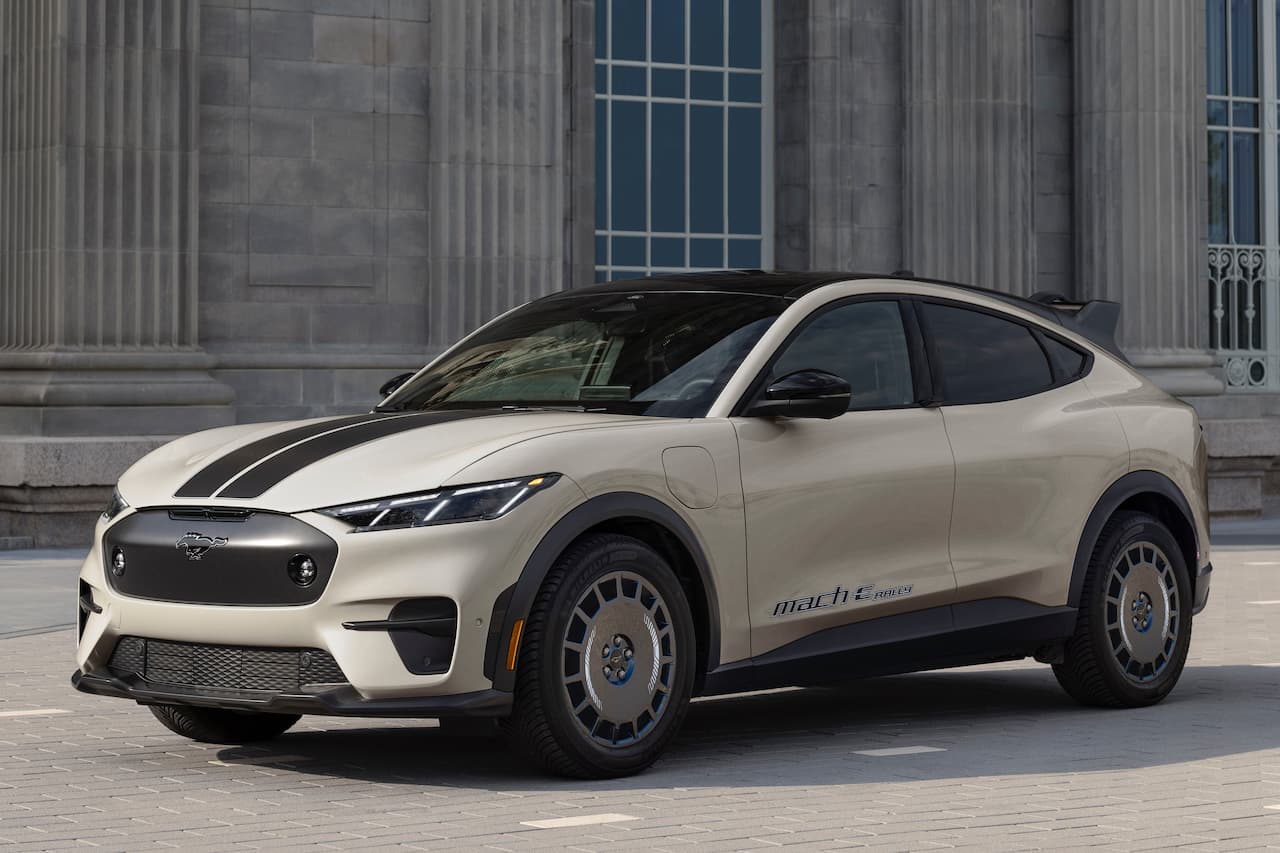
The most popular EVs in 2025 include the Tesla Model Y, Model 3, Ford Mustang Mach-E, Chevrolet Bolt EV, Hyundai Ioniq 5, and Kia EV6. These models dominate U.S. sales charts thanks to their combination of range, pricing, and availability.

What is the range and price of the Tesla Model Y?

The Tesla Model Y offers an EPA range between 318–330 miles (Long Range AWD) at a starting price around $46,000. The Performance version provides dual motor acceleration while maintaining a strong range, typically above 300 miles depending on driving conditions.

How much does the Ford Mustang Mach-E cost and how far can it go?

The Mustang Mach-E starts near $40,000–$45,000 for the standard range RWD version, with EPA-estimated range of 230–270 miles. The extended-range AWD and GT Performance variants offer improved range (up to 320 miles) and acceleration, justifying their higher price.

Is the Chevrolet Bolt EV still a good choice in 2025?

Yes. Priced under $30,000 after federal incentives, the Bolt EV offers a solid EPA range of ~260 miles, making it a budget-friendly, reliable compact EV ideal for urban and suburban commuters.

What makes the Hyundai Ioniq 5 stand out among EVs?

The Ioniq 5 is praised for its ultra-fast charging (800V architecture, 10-80% in ~18 minutes), spacious interior, stylish design, and EPA range of 220–303 miles depending on battery and drive combination. Pricing starts around $44,000 after incentives.

How does the Kia EV6 compare with the Ioniq 5?

The Kia EV6 shares many components with the Ioniq 5 but emphasizes a sportier look and driving experience. Range varies between 240–325 miles depending on trim, with pricing similar—typically in the $44,000–$55,000 range after incentives.

Which EV among the top models offers the best value for long-distance travel?

The Tesla Model Y Long Range offers the best all-around value for long trips due to its extensive Supercharger network, ~330 miles range, and advanced driving assistance. Hyundai Ioniq 5 and Kia EV6 also offer excellent efficiency with fast charging, making them strong alternatives.

How do these EVs compare in terms of charging compatibility and charging time?

Most models—Tesla (NACS), Mach-E / Bolt EV / Ioniq 5 / EV6 (CCS1)—are brightening compatibility. The Ioniq 5 and EV6 stand out with 800V fast charging up to 233 kW, allowing 10–80% in about 18 minutes. Mach-E and Bolt EV charge at slower rates (~150 kW). Tesla offers up to 250 kW via NACS Superchargers.

What is the total cost of ownership (TCO) like for these top-selling EVs?

Although prices vary, EVs like the Bolt EV and Ioniq 5 have some of the lowest TCO due to lower maintenance and energy costs. While Model Y and Mach-E have higher upfront costs, resale value and long-term savings on fuel can offset the initial expense over 5–10 years.

How do federal and state incentives impact the MSRP of these EVs?

Federal tax credit of up to $7,500 can significantly reduce the up-front purchase price. Additionally, many states offer rebates, HOV lane access, and utility discounts. For example, a Trim-level Mach-E or Model Y effectively costs $40–45k after combined incentives, increasing affordability.

EV News

View all

2027 Dodge Charger EV Adds Tesla NACS Port and Slight Price Cut

2027 Dodge Charger EV Adds Tesla NACS Port and Slight Price Cut

The 2027 Dodge Charger Daytona Scat Pack EV adds a factory-installed Tesla NACS charging port, enabling Supercharger access, slightly lowers its price, and keeps its 630-hp dual-motor setup unchanged.

Read more

2026 Kia EV4 Focuses on Comfort and Efficiency Over Performance

2026 Kia EV4 Focuses on Comfort and Efficiency Over Performance

The 2026 Kia EV4 shifts focus toward comfort and efficiency with front-wheel drive, slower charging, and a softer ride, delivering a calm daily EV experience while sacrificing performance and premium feel compared to rivals.

Read more

U.S. EV Sales Expected to Level Off in 2025 After Years of Growth

U.S. EV Sales Expected to Level Off in 2025 After Years of Growth

Cox Automotive forecasts a slight decline in U.S. EV sales for 2025 after years of rapid growth, citing post-incentive demand weakness, Q4 sales drops, and ongoing market adjustments by automakers and consumers.

Read more