



Xpeng’s Big Bet on Becoming More Than a Carmaker
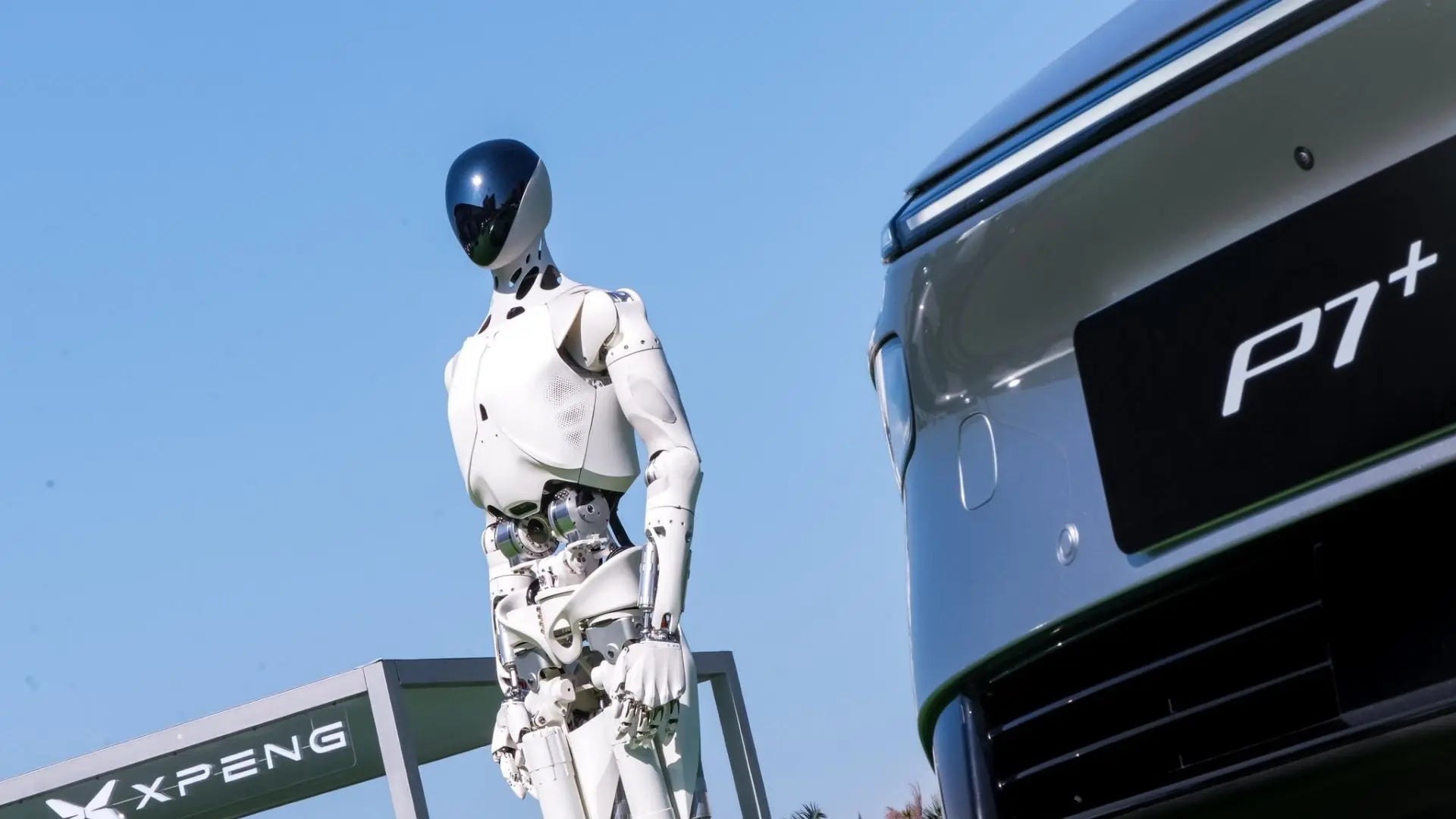
Xpeng’s recent AI Day in Guangzhou signaled a major shift: the company wants to move beyond selling cars and position itself as a global tech player. The spotlight of the event was its humanoid IRON robot, which drew widespread attention for its surprisingly human-like proportions and walk. While the robot’s exact purpose remains unclear, its debut highlights a central idea—Xpeng is following the broader playbook pioneered by Tesla, but aiming to execute faster and more convincingly.

Xpeng’s Identity and Market Position
Though often labeled a “startup,” Xpeng has been around for over a decade and has already produced more than a million vehicles worldwide. Its lineup of EVs, PHEVs, and extended-range models targets a near-premium segment similar to Tesla’s positioning in China, emphasizing software, refinement, and advanced driver assistance features.
Sales have been growing internationally as well. The company has achieved modest but meaningful traction in Europe, and its budget-friendly Mona M03 sedan—priced around $18,000—has already sold over 200,000 units in China, with global expansion planned.
How Xpeng Approaches Autonomy
Xpeng believes that autonomy—not hardware gimmicks—will define the next phase of competition. Most Chinese automakers already offer some form of advanced assisted driving, but Xpeng aims to separate itself through its focus on AI-driven reasoning, not just sensor-heavy systems.
Its new “Physical AI” concept is meant to describe how AI interacts with the physical world using streamlined inputs. Central to this is VLA 2.0 (Vision–Language–Action), an updated model designed to interpret visual information more like a human driver while reducing unnecessary data processing. According to the company, its system is trained on 100 million hours of driving videos, giving it broad exposure to complex real-world scenarios.
During supervised ride-alongs in Guangzhou, Xpeng vehicles demonstrated competent point-to-point navigation, parking, and obstacle handling—solid performance, though not yet unique among Chinese brands. Still, Xpeng sees this as the foundation for global expansion.

Why VLA 2.0 Matters for Global Expansion
A key differentiator is that Xpeng’s future autonomous systems are designed to run entirely on the vehicle, improving compliance with international privacy and data-handling rules. This is significant in markets like Europe, where many Chinese automakers must disable LIDAR-based features due to regulatory constraints.
Xpeng plans to deploy its in-house Turing chips, using three processors per vehicle to support future robotaxis and Level 4 autonomous capability. The company hopes to launch its first robotaxi service in 2026, with consumer vehicles offering similar functionality under a new “Robo” trim.
If successful, this approach could give Xpeng an advantage over both domestic competitors and global brands still navigating regulatory and data barriers.
Can Xpeng Deliver on Its Promises?
The road ahead is ambitious. Xpeng still faces uncertainty on the commercial viability of the IRON humanoid robot, and the timeline for true Level 4 autonomy remains aggressive. Tesla has spent years pursuing similar goals without reaching them at scale.
Yet Xpeng’s strengths are clear:
-
Its current software already performs well in real traffic.
-
Its vehicles offer strong build quality and competitive pricing.
-
Volkswagen China has chosen VLA 2.0 as its first external client—an endorsement with real weight.
To thrive in China’s increasingly cutthroat EV landscape, Xpeng must succeed not only as an automaker but as a broader technology company. If its AI-driven strategy works, it could become one of the few Chinese brands with genuine global influence.
Recommend Reading: Xpeng Expands Its EV Ambitions in Europe With Affordable Models and Bold Tech


Share:
California Reassesses Its 2035 Gas-Car Sales Ban Amid EV Market Shifts
U.S. EV Makers Turn to LFP Batteries for Lower Costs and Wider Adoption