





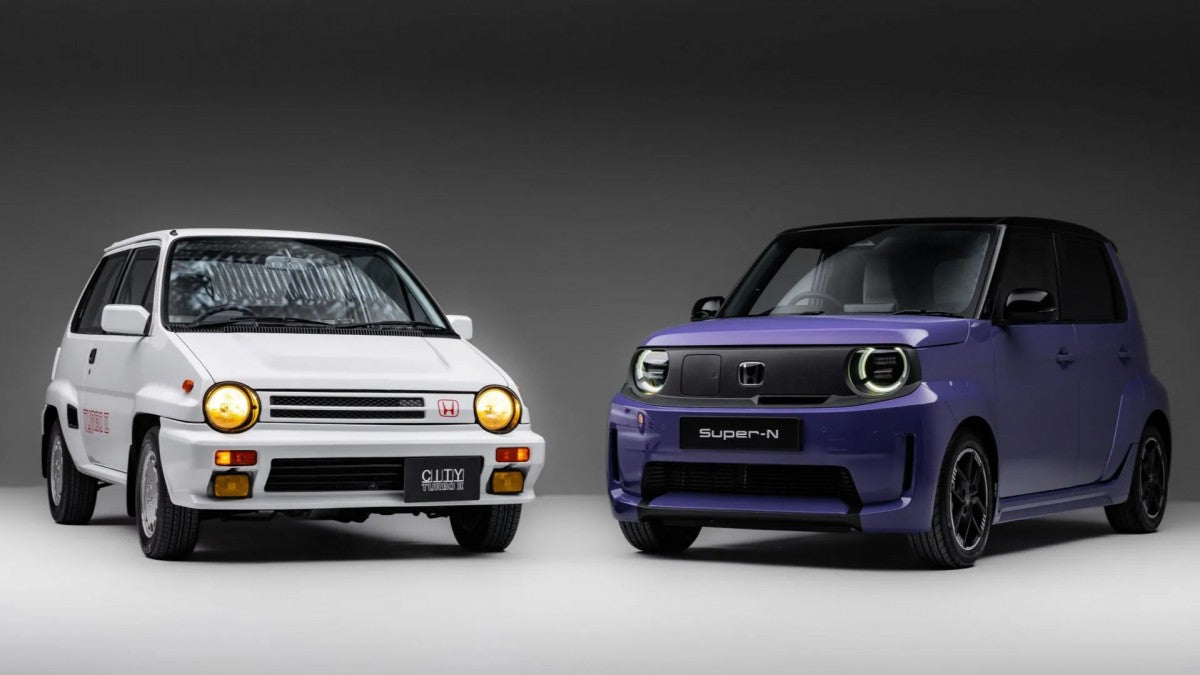
A Small EV Designed for Cost-Conscious Buyers
Honda has introduced a compact electric vehicle aimed at budget-focused customers, signaling that its electrification efforts continue outside North America. The newly unveiled Super-N is scheduled to arrive first in the United Kingdom, with availability expanding to additional international markets afterward.
Pricing is positioned as one of the model’s key selling points. Honda expects the entry-level version to start below £20,000, placing it among the most accessible electric cars in its segment. This approach reflects a broader industry push to lower entry barriers as demand for affordable EVs grows.

From Kei Car Origins to Electric Conversion
The Super-N is derived from the long-running Honda N-One, a kei car originally built for Japan’s urban market. For its electric iteration, engineers widened the body slightly to improve stance and stability while integrating a battery-electric drivetrain.
Performance figures suggest modest output. The motor produces 63 horsepower under normal conditions, with a temporary boost function raising output to 94 horsepower when needed. Detailed acceleration and top-speed data have not yet been officially disclosed, indicating that efficiency and usability—rather than outright performance—remain the primary focus.
Simulated Gear Changes Add Driving Character
One of the more unusual aspects of the Super-N is its attempt to replicate traditional driving sensations. Honda has equipped the car with a system that mimics gear changes, paired with synthetic engine sounds designed to resemble internal combustion vehicles.
This feature aims to create a more engaging experience for drivers transitioning from gasoline-powered cars. Early demonstrations suggest the effect is relatively convincing, offering tactile and auditory feedback that is uncommon in most entry-level EVs. Whether multiple selectable sound profiles will be included in production versions remains unclear.
Range and Battery Expectations
In terms of efficiency, the Super-N is estimated to travel 128 miles (WLTP) on a full charge. Real-world expectations in stricter testing cycles could be closer to 100 miles, depending on driving conditions.
While Honda has not confirmed official battery specifications, earlier prototype information points to a pack of approximately 29 kWh mounted beneath the cabin floor. This relatively small capacity helps keep costs down but also limits long-distance usability, reinforcing the vehicle’s role as an urban commuter.
Retro Design With Modern Adjustments
Visually, the Super-N blends classic styling cues with updated proportions. The design draws heavily from the original N-One, which has been on sale since 2011, while incorporating wider body elements that evoke performance-oriented compact cars from past decades.
The result is a vehicle that feels both nostalgic and contemporary. Its compact dimensions, upright profile, and distinctive front-end treatment make it stand out in a market increasingly dominated by generic crossover shapes.
Limited Appeal in the U.S. Market
Despite its strengths, the Super-N is unlikely to be offered in the United States. Its small size, relatively low power output, and limited range would place it at a disadvantage in a market that favors larger vehicles with greater capability.
Comparable models have struggled to gain traction in the U.S., suggesting that consumer preferences remain focused on crossovers and SUVs. As a result, Honda appears to be prioritizing regions where compact urban vehicles are more widely accepted.
Competing in Europe’s Entry-Level EV Segment
In Europe, however, the Super-N will face direct competition from a growing number of affordable electric models. Vehicles such as the Renault Twingo and BYD Dolphin Surf occupy a similar price bracket while offering modern features and urban-friendly dimensions.
This segment has gained momentum as governments and manufacturers push for wider EV adoption. Lower-cost models are increasingly seen as essential to reaching mainstream buyers, particularly in dense urban areas where range requirements are less demanding.

A Strategic Move in a Changing Market
Honda’s decision to focus on smaller, lower-cost EVs in select regions highlights a shift in strategy. Rather than pursuing a one-size-fits-all global approach, the company is tailoring its offerings to regional demand patterns.
The Super-N may not redefine performance or range expectations, but it addresses a clear gap in the market: affordable, characterful electric transportation for city use. If successful, it could signal a broader return to compact EV development across the industry.
Recommend Reading: 2026 Honda Prologue Price Drop: New EV Pricing Explained










Aktie:
Why Tesla’s U.S. Sales Fell in Q1 2026 but Market Share Grew
EV Charging Expansion: Ionna and Circle K Announce Nationwide Rollout