



Introduction
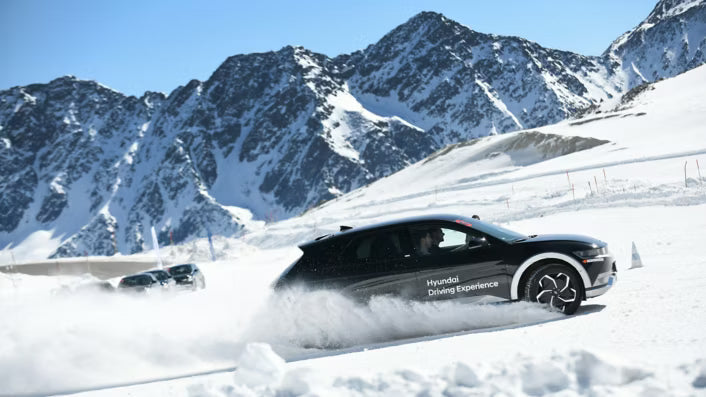
Electric vehicles often face skepticism about cold-weather performance, but real-world experience continues to challenge that assumption. Among today’s options, the Hyundai Ioniq 5 stands out as one of the most capable EVs in severe snow, thanks largely to its traction-focused drive programming. A recent winter storm in Ohio offered a clear demonstration of how its Snow Mode transforms the vehicle into a confident and composed winter performer.

Why Snow Mode Matters
Modern EVs deliver instant torque and high power output—great for dry roads, but potentially problematic on snow and ice. Managing traction, not power, is the determining factor in winter safety, and Hyundai’s system is designed with that reality in mind.
How Hyundai’s Snow Mode Works
Snow Mode is available on vehicles from Hyundai, Kia, and Genesis, and its function goes beyond a simple traction button.
Key characteristics include:
-
Softened throttle response: The system dulls pedal sensitivity to prevent wheel spin during launches.
-
Reduced regenerative braking: Regen is dialed back to avoid unintended deceleration or wheel lock when slowing down.
-
Locked AWD torque split (50:50 when equipped): Ensures predictable traction rather than reactive distribution.
-
Stable power delivery: The car avoids sudden torque surges that could compromise grip on slippery surfaces.
These adjustments work together to create a calmer, more controlled driving experience, especially in deep snow or during sudden weather shifts.
Performance in Real Snow
During the recent heavy snowstorm in Central Ohio—severe enough to shut down much of the region—the Ioniq 5 demonstrated remarkable stability. Despite being equipped only with all-season tires, the vehicle maintained control on compacted snow and ice, responded predictably to driver inputs, and avoided the traction losses that plague many powerful EVs.
In slippery conditions where other cars struggled, the Ioniq 5 behaved like a well-sorted winter vehicle, maintaining consistent grip and confident directional stability. With proper snow tires, the performance would likely be even stronger.
How Other Automakers Approach Winter Modes
Hyundai is not alone in offering a dedicated system, though its execution remains one of the most refined:
-
General Motors EVs: Most models include a winter-oriented drive mode that moderates throttle response and traction control.
-
Nissan EVs: Similarly employ winter logic to soften torque delivery.
-
Tesla: Offers “Slip Start,” which is designed to help the vehicle break free when stuck, rather than maintain stable traction during normal winter driving.
While the names differ, the underlying strategy is consistent: optimize power delivery and limit abrupt torque changes.
Why EVs Can Be Excellent in Snow
Beyond software, EVs possess inherent physical advantages in winter:
-
Low center of gravity from floor-mounted battery packs
-
Precise control of power delivery through electric motors
-
Balanced weight distribution for stability
When paired with purpose-built driving modes, these traits help EVs outperform many gas vehicles in difficult winter scenarios.

The Bottom Line
Claims that electric vehicles are ineffective in snow simply do not reflect reality. The Hyundai Ioniq 5 demonstrates that with smart traction programming and the right hardware, EVs can be among the best winter performers on the road.
Drivers should still follow best practices—use winter tires when appropriate, understand drive modes, and adapt speed to conditions—but the technology is already proving itself. For many households in snowy climates, a well-equipped EV now ranks among the safest and most capable options available.
Recommend Reading: Winter EV Travel: Cold Weather Charging Tips

Aktie:
Kia EV2 Set for January Reveal as Europe’s Next Entry-Level Electric SUV
Trump’s Fuel-Economy Rollback Will Raise Drivers’ Costs