


Tesla’s Cybertruck was meant to be a bold statement about the future of electric pickups. With its unconventional design and ambitious production targets, the vehicle was positioned as a technological and commercial breakthrough. While the Cybertruck has not disappeared from Tesla’s lineup, its slower-than-expected ramp has had serious financial consequences beyond Tesla itself, particularly for suppliers that bet heavily on its success.

One of the most striking examples is unfolding in South Korea, where a battery materials company has seen a multibillion-dollar supply agreement effectively evaporate.

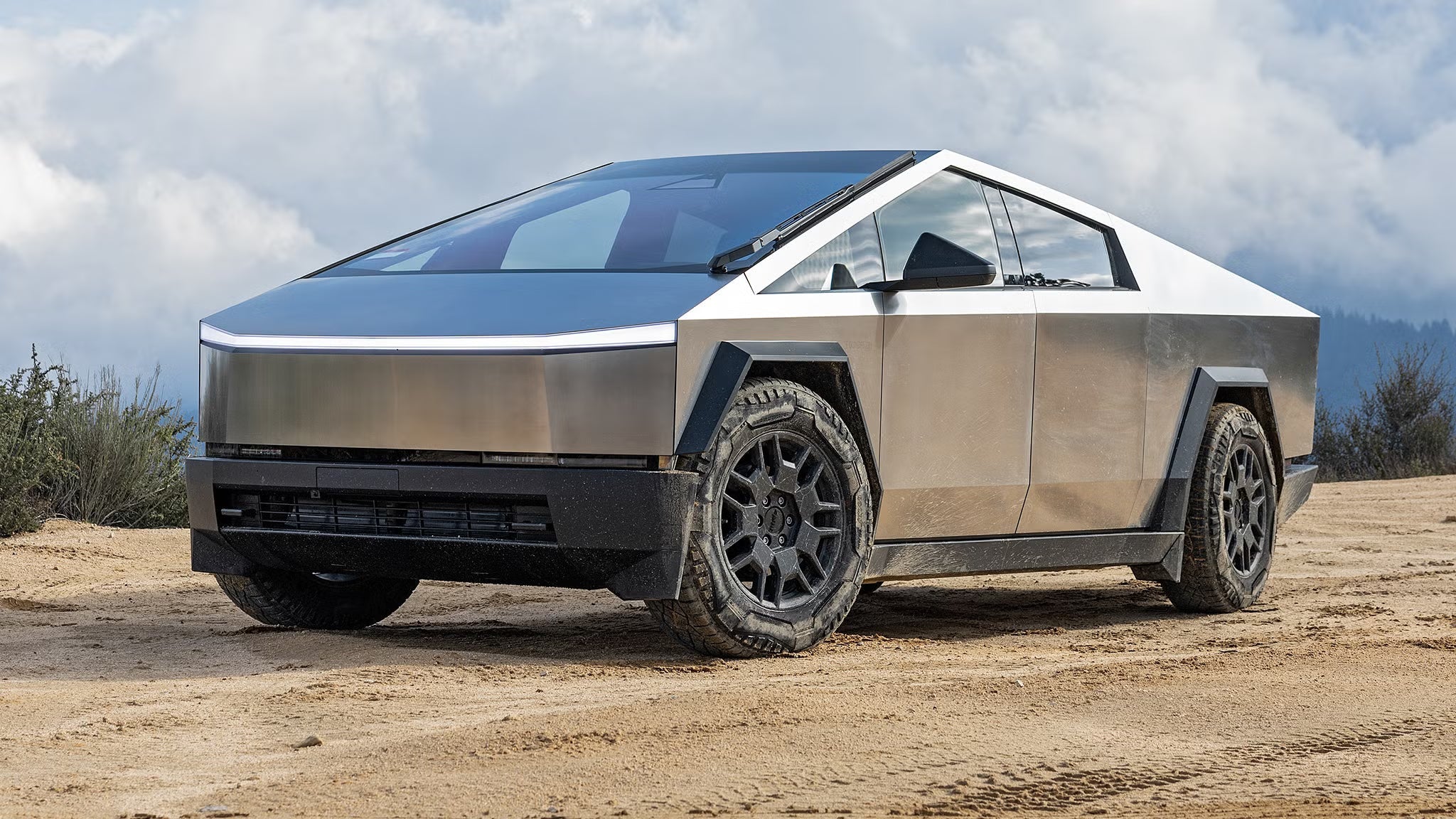
CyberTruck driving on the road.


Supplier Exposure in Tesla’s Ecosystem

Despite Tesla’s reputation for vertical integration, the company still relies on external partners for critical components and materials. Battery supply chains are especially complex, involving specialized cathode materials, long-term contracts, and heavy upfront investment.

South Korean firm L&F Co., a supplier of advanced battery cathode materials, entered into what appeared to be a transformative agreement with Tesla. The contract, awarded months before the first Cybertruck deliveries, was initially valued at approximately $2.9 billion and was widely seen as a vote of confidence in both the Cybertruck and Tesla’s next-generation battery strategy.

That confidence has since faded.


A Contract Reduced to a Fraction of Its Original Value

According to disclosures cited by Bloomberg, L&F revealed that the Tesla supply contract has been cut by nearly 99%, leaving the company with revenue equivalent to roughly $6,800 by the time the agreement expires at the end of December.

The dramatic reduction represents an estimated $2 billion financial hit, making it one of the most severe supplier setbacks linked to Tesla’s recent product challenges. The cathode materials provided by L&F were designed for Tesla’s much-discussed 4680 battery cells, which were expected to underpin vehicles like the Cybertruck.

For L&F, the contract revision was not a minor adjustment but a fundamental reversal of growth expectations.


The 4680 Battery Program Falls Short of Expectations

Tesla’s 4680 battery cells were introduced as a breakthrough in both performance and manufacturing efficiency. However, the program has struggled to scale as planned, facing technical hurdles, yield issues, and increased competition from established global battery manufacturers.

At the same time, Cybertruck production volumes have not reached the levels originally anticipated. Lower output reduces demand for internally produced cells and, by extension, the specialized materials supplied by partners like L&F.

Together, these factors significantly weakened the commercial rationale behind the original supply agreement.


Policy Shifts and Global Trade Pressures Add to the Strain

Cybertruck demand alone does not fully explain the contract collapse. L&F acknowledged that broader policy and market forces also played a role. Changes to global EV incentives, including adjustments related to the U.S. Inflation Reduction Act, have reshaped battery sourcing strategies and disrupted long-term planning.

In a statement, L&F said the contract revision reflected shifting global EV demand and evolving battery supply conditions, rather than any change in the quality of its products. The company emphasized that shipments of its flagship high-nickel cathode materials to major Korean battery manufacturers remain stable.


Investors Absorb the Fallout

While Tesla can absorb the Cybertruck’s uneven performance with limited financial impact, L&F’s investors have borne the brunt of the consequences. Following the disclosure, the company’s stock fell more than 11% in a single week and is now down roughly 64% compared to levels seen when the Tesla contract was first announced.

The reversal underscores the risks faced by suppliers that align too closely with a single automaker’s roadmap, particularly when that roadmap depends on unproven technologies and volatile policy environments.

Tesla Cybertruck


A Cautionary Lesson for the EV Supply Chain

For Tesla, the Cybertruck remains a niche product that continues to generate attention and incremental sales. For suppliers, however, this episode serves as a clear warning. Building a business around Tesla’s future plans can deliver outsized rewards—but those rewards are highly conditional.

If demand shifts, technology timelines slip, or policy conditions change, contracts that once looked transformational can be rewritten almost overnight.

Recommend Reading: Tesla U.S. Sales Expected to Decline in 2025 After EV Tax Credit Ends

Hinterlassen Sie einen Kommentar

Bitte beachte, dass Kommentare vor der Veröffentlichung freigegeben werden müssen.

Diese Website ist durch hCaptcha geschützt und es gelten die allgemeinen Geschäftsbedingungen und Datenschutzbestimmungen von hCaptcha.

FAQs - Tesla Cybertruck

Wie hoch ist der Preis für den Tesla Cybertruck in den USA im Jahr 2025?

Die Preise für den Tesla Cybertruck beginnen bei etwa 60.990 US-Dollar für das Allradmodell , leistungsstärkere Versionen wie der Cyberbeast kosten über 99.990 US-Dollar . Die Preise können je nach Konfiguration, Software-Add-ons wie Full Self-Driving (FSD) und verfügbaren Anreizen oder Steuergutschriften variieren.

Wie groß ist die Reichweite des Tesla Cybertruck pro voller Ladung?

Der Tesla Cybertruck bietet je nach Variante eine geschätzte Reichweite von 400 bis 540 Kilometern . Der Allradantrieb mit Doppelmotor schafft rund 480 Kilometer, während die Cyberbeast-Ausstattung mit rund 510 Kilometern die gleiche Leistung bietet. Ein optionaler Range Extender könnte die Gesamtreichweite auf über 750 Kilometer erhöhen.

Wie schnell kann der Tesla Cybertruck mit NACS und Supercharger V4 laden?

Der Cybertruck unterstützt Teslas NACS-Ladestandard und ermöglicht so den Zugang zum Supercharger-Netzwerk . Mit einem Supercharger V4 kann er je nach Batteriegröße und -zustand in 15 Minuten rund 206 Kilometer zurücklegen. Damit ist er konkurrenzfähig mit anderen Elektro-Trucks wie dem Ford F-150 Lightning und dem Rivian R1T.

Wie hoch ist die Anhängelast des Tesla Cybertruck?

Der Cybertruck verfügt über eine Anhängelast von bis zu 5.000 Kilogramm und kann damit mit herkömmlichen Trucks wie dem Ford F-150 und dem Chevrolet Silverado mithalten. Er ist für den Transport schwerer Lasten, Campingausrüstung, Boote und Anhänger konzipiert und somit die erste Wahl für Besitzer von Elektrofahrzeugen, die Wert auf Nutzwert legen.

Ist der Tesla Cybertruck mit einem kugelsicheren Exoskelett aus Edelstahl ausgestattet?

Ja. Der Cybertruck verwendet für sein Exoskelett ultraharten kaltgewalzten 30X-Edelstahl , der Dellen, Korrosion und sogar kleinkalibrigen Kugeleinschlägen widersteht. In Kombination mit Panzerglasfenstern erhöht dies die Haltbarkeit im Gelände und bei extremen Einsatzbedingungen.

Welche Innenausstattung hat der Tesla Cybertruck?

Der Innenraum des Cybertrucks verfügt über einen 17-Zoll-Touchscreen mit Tesla OS , eine Steuerhorn-Lenkung , Sitzplätze für bis zu sechs Passagiere und eine 120-V/240-V-Bordsteckdose für Werkzeuge und Geräte. Tesla legt Wert auf minimalistisches Design mit hochwertigen Materialien und intelligenten Aufbewahrungslösungen.

Wie schneidet der Tesla Cybertruck im Vergleich zum Ford F-150 Lightning und Rivian R1T ab?

Der Cybertruck bietet eine höhere Anhängelast, größere Reichweitenoptionen und Zugang zum Supercharger-Netzwerk von Tesla , was ihm einen Vorteil beim Aufladen verschafft. Der F-150 Lightning bietet Markenbekanntheit und umfassenderen Service-Support , während Rivian den Schwerpunkt auf Offroad-Abenteuerfunktionen legt.

Ist der Tesla Cybertruck mit Full Self-Driving (FSD) ausgestattet?

Ja, der Cybertruck unterstützt das optionale Full Self-Driving-Paket von Tesla, das die Funktionen „Navigieren mit Autopilot“, „Automatischer Spurwechsel“, „Smart Summon“ und „Autoparken“ umfasst. Obwohl Tesla FSD noch nicht vollständig autonom ist (Level 5), wird es durch Over-the-Air-Software-Updates kontinuierlich verbessert.

Kann der Tesla Cybertruck für Offroad-Abenteuer verwendet werden?

Ja. Der Cybertruck verfügt über eine adaptive Luftfederung mit bis zu 16 Zoll Bodenfreiheit , Allradlenkung für enge Manöver und ein wasserfestes Exoskelett . Diese Eigenschaften machen ihn ideal für Offroad-Camping, Overlanding und unwegsames Gelände .

Wann werden die Auslieferungen des Tesla Cybertrucks über die USA hinaus ausgeweitet?

Die ersten Auslieferungen begannen Ende 2023 in den USA. Eine Ausweitung auf Kanada, Europa und andere internationale Märkte wird schrittweise erwartet, abhängig von behördlichen Genehmigungen und der Skalierung der Produktion im Tesla-Werk Giga in Texas .

EV-Neuigkeiten

Alle anzeigen

Analysts Predict Tesla Sales Surge by 2029

Analysts Predict Tesla Sales Surge by 2029

Wall Street expects Tesla deliveries to nearly double by 2029 despite weak 2025 forecasts. Analysts cite policy changes, an aging lineup, and reliance on robotaxis as key risks to Tesla’s long-term growth strategy.


Weiterlesen

Tesla Cybertruck Slowdown Triggers Major Losses for a Key Battery Supplier

Tesla Cybertruck Slowdown Triggers Major Losses for a Key Battery Supplier

A South Korean battery supplier lost nearly $2 billion after Tesla sharply reduced a Cybertruck-related contract. The collapse highlights risks tied to the 4680 battery program, shifting EV demand, and reliance on Tesla’s production plans.

Weiterlesen

Waymo’s Robotaxi Vision Still Needs Humans to Handle Simple Tasks

Waymo’s Robotaxi Vision Still Needs Humans to Handle Simple Tasks

Waymo has removed drivers from its robotaxis, but simple issues like doors left open still require human help. The company pays gig workers to intervene, highlighting the limits of current vehicle design and passenger behavior.

Weiterlesen