


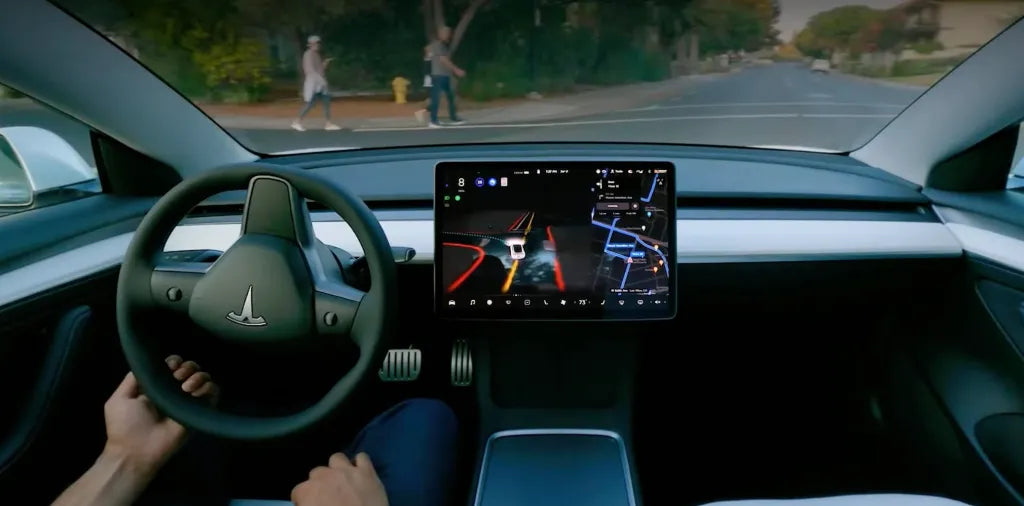
Tesla has quietly changed how driver-assistance features are packaged on its most popular vehicles in the United States. All new Model 3 and Model Y orders now ship without Autosteer, the lane-centering feature that was long considered the core of Tesla’s Autopilot system.
Instead, buyers now receive only Traffic-Aware Cruise Control (TACC) by default, alongside a short 30-day trial of Full Self-Driving (Supervised). The move signals another step in Tesla’s broader strategy to shift advanced driving features behind a subscription paywall.

What Exactly Was Removed From Autopilot
Autopilot has historically consisted of two main components:
-
Traffic-Aware Cruise Control, which manages acceleration and braking based on surrounding traffic
-
Autosteer, which actively keeps the car centered within lane markings
Under the latest configuration, Autosteer is no longer included on any Model 3 or Model Y trim, from the base version all the way up to the Performance models. TACC remains standard, but steering control is now entirely manual unless drivers activate Full Self-Driving.
This change effectively rolls Tesla’s entry-level driver assistance back to a feature set that predates modern lane-centering systems.
Confusing Signals in Tesla’s Configurator
Tesla’s website adds to the confusion. The feature comparison charts still suggest that higher trims include Autosteer, while the final checkout page for every Model 3 and Model Y only lists Traffic-Aware Cruise Control as standard equipment.
Regardless of trim level or price, the end result is the same: buyers must subscribe to Full Self-Driving at $99 per month to regain lane-centering functionality once the free trial expires.
Tesla has not issued a formal statement clarifying the discrepancy.
Elon Musk Points to Rising FSD Pricing
While Tesla itself has stayed silent, CEO Elon Musk acknowledged the update indirectly on social media. Rather than addressing the removal of Autosteer, Musk emphasized that Full Self-Driving will increase in price as its capabilities improve.
This reinforces the perception that Tesla is repositioning FSD as a premium, subscription-only product rather than a feature bundle customers can selectively access.
Industry Reaction and Customer Backlash
The reaction online has been swift and largely negative. Many owners and prospective buyers argue that removing lane-centering places Tesla behind mainstream competitors, not ahead of them.
In 2026, even entry-level vehicles like the Toyota Corolla LE include lane-centering as standard. Against that backdrop, Tesla’s decision has been described as a regression rather than an innovation.
Some customers have publicly stated they are reconsidering Tesla purchases in favor of brands that offer comparable driver assistance without ongoing fees.
Why Tesla May Be Making This Move
Industry observers widely believe the change is designed to boost Full Self-Driving adoption rates. By removing a feature customers already expect, Tesla increases the pressure to subscribe.
That theory aligns with Tesla’s long-term goals. One component of Elon Musk’s CEO performance compensation is tied to achieving 10 million active FSD subscriptions globally, alongside 20 million vehicle deliveries. Meeting both targets would require an exceptionally high FSD take rate.
From that perspective, placing lane-centering behind a paywall becomes a powerful lever.

A Risky Bet on Software Revenue
Tesla has long argued that its future value lies in software, not hardware. This latest change doubles down on that belief, but it also carries risk.
If customers perceive the move as removing value rather than adding it, Tesla may face stronger competition from automakers that bundle advanced driver assistance as standard equipment.
For now, Tesla appears willing to trade short-term goodwill for long-term subscription revenue, betting that enough buyers will ultimately pay to get back features they once took for granted.
Recommend Reading: Lemonade Cuts Tesla Insurance Costs for Drivers Who Use FSD Regularly
Aktie:
Mercedes GLC EV Demand Surges as Orders Stretch Into 2026
How Australia Shows What Cheap Chinese EVs Could Mean for Canada