



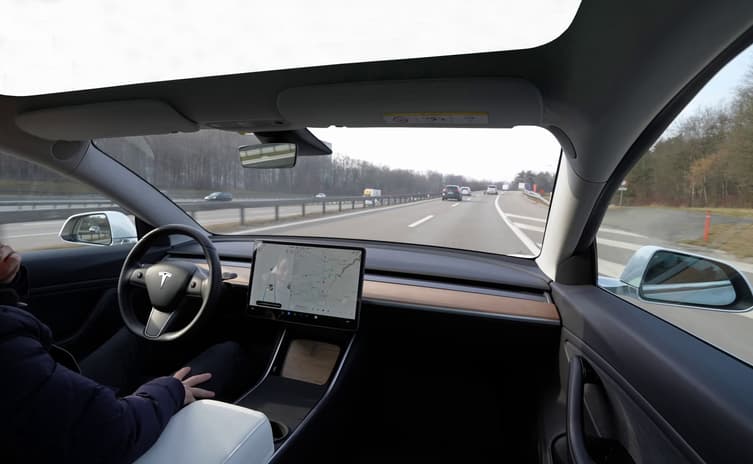
Tesla has confirmed that it will soon discontinue the one-time purchase option for its Full Self-Driving (FSD) software, fully shifting to a subscription-only model starting next month. The change, announced by CEO Elon Musk, marks a meaningful shift in how Tesla monetizes its advanced driver-assistance technology.

Tesla’s Cybercab Could Get Regulatory Boost From Congress


A Full Transition to Subscription

Tesla has offered FSD as a monthly subscription since late 2022, but buyers were still able to purchase a lifetime unlock alongside it. That option will soon be removed entirely. While Tesla has not officially explained the decision, the move closely mirrors a broader industry shift toward recurring software revenue.

Automakers such as Ford and General Motors already rely on subscription pricing for driver-assistance features. Recurring revenue is attractive to investors, and subscriptions make it easier for automakers to adjust pricing over time. For consumers, the lower upfront cost may reduce purchase friction—but often at the expense of long-term ownership value.


The Economics Behind the Shift

At its current pricing, FSD has been a difficult sell as a one-time purchase. At $8,000 upfront compared with a $99 monthly fee, owners would need more than six years to break even. Many drivers change vehicles long before reaching that point.

From a financial standpoint, a subscription can be the more rational choice, especially for short-term ownership. It also allows drivers to activate FSD only when they believe the software has improved enough to justify the cost. However, the growing number of in-car subscriptions adds to consumer fatigue, particularly as vehicles increasingly resemble rolling software platforms.


Transferability and Unrealized Promises

One of the most persistent complaints around FSD is its lack of transferability. In most cases, the software does not move to a buyer’s next Tesla. Over the years, many customers paid thousands of dollars expecting FSD to become fully autonomous during their ownership period.

That expectation has not been met. Despite its branding, FSD remains an eyes-on system that requires full driver attention at all times. From this perspective, a subscription model arguably better reflects the product’s current limitations rather than its future ambitions.


Hardware 3 Raises New Questions

The shift to subscriptions complicates matters further for vehicles equipped with Tesla’s Hardware 3 (HW3). Musk has previously stated that HW3 vehicles will not achieve full autonomy as originally promised. Tesla has said it will offer retrofits for owners who purchased FSD outright.

However, the situation is far less clear for drivers who only subscribed. Some buyers were drawn in by Tesla’s robotaxi vision but delayed paying for FSD due to its high cost. With Tesla moving to a subscription-only model, the long-term value proposition for those HW3 owners is now increasingly uncertain.

Tesla Begins Unsupervised Robotaxi Tests in Austin, Raising Stakes for Autonomy


Business Win, Consumer Trade-Off

From Tesla’s perspective, the move is strategically sound. Subscriptions lower the barrier to entry, enable gradual price increases, and extend monetization to secondhand buyers. The shift may also give Tesla room to rethink FSD branding amid heightened regulatory scrutiny.

For consumers, the trade-off is clear. While subscriptions offer flexibility, they also reinforce a reality Tesla owners have faced for years: Full Self-Driving still cannot drive itself.

Recommend Reading: Tesla’s Robotaxi Rollout Lagged Behind Its 2025 Promises

FAQs - Tesla FSD (Full Self-Driving)

1. What is Tesla Full Self-Driving (FSD)?

Tesla FSD is an advanced driver-assistance system designed to enable autonomous-like functions such as automatic lane changes, highway navigation, city-street driving, and traffic-light recognition. It builds on Tesla’s Autopilot platform, using cameras, ultrasonic sensors, and neural networks.

2. How does FSD differ from Autopilot?

Autopilot offers basic driver assistance, including adaptive cruise control and lane centering. FSD expands capabilities to include Navigate on Autopilot, Smart Summon, automatic turns at intersections, and more comprehensive urban driving support.

3. Is Tesla FSD fully autonomous?

No. As of now, Tesla FSD is classified as an SAE Level 2 system, meaning the driver must remain attentive and keep hands on the wheel. Tesla’s goal is Level 4 or Level 5 autonomy, but regulatory approval and technical maturity are still required.

4. What hardware is needed for FSD?

Currently, most Chinese EVs are not officially sold in the U.S. due to trade restrictions and 25% tariffs on imported vehicles. However, American consumers may still encounter them through independent importers or in regions like Mexico and Canada, where Chinese EV makers are expanding.

5. How much does FSD cost?

FSD can be purchased outright (price varies by market) or subscribed to monthly in select regions. Tesla periodically adjusts pricing as new features roll out.

6. Does FSD improve with over-the-air updates?

Yes. Tesla continuously refines FSD through over-the-air software updates, improving perception, decision-making, and control. Owners receive new features and safety improvements without visiting service centers.

7. Is Tesla FSD available worldwide?

Availability depends on local regulations and road data. FSD Beta is mainly offered in North America, while Europe and Asia have limited or pending access due to safety certification processes.

8. How safe is FSD compared to human drivers?

Tesla publishes quarterly safety reports comparing accident rates per mile. While FSD has shown promising results in certain conditions, it still requires driver supervision to ensure safety in complex or unpredictable environments.

9. Can FSD handle long road trips?

Yes, FSD is particularly useful for highway segments on long trips, handling lane changes, exits, and speed adjustments. However, drivers should stay alert and take control when necessary, especially in construction zones or adverse weather.

10. Will FSD make my Tesla more valuable?

Vehicles with FSD often retain higher resale value due to the added convenience and potential future upgradeability as autonomy regulations evolve.

EV News

View all

Tesla Model Y Remains America’s Best-Selling EV Despite Market Shifts

Tesla Model Y Remains America’s Best-Selling EV Despite Market Shifts

Tesla’s Model Y once again led U.S. EV sales in 2025, accounting for over a quarter of the market. While overall EV growth slowed amid policy changes, the Model Y shows demand remains strong for well-rounded electric vehicles.

Read more

Testing GM Super Cruise in Heavy Rain Reveals Its Real-World Limits

Testing GM Super Cruise in Heavy Rain Reveals Its Real-World Limits

Testing GM’s Super Cruise in heavy rain shows a conservative but capable system that performs reliably when lane markings are visible, disengages cleanly when confidence drops, and offers insight into GM’s path toward Level 3 autonomy.

Read more

Tesla to End One-Time Purchase Option for Full Self-Driving Software

Tesla to End One-Time Purchase Option for Full Self-Driving Software

Tesla plans to eliminate the one-time purchase option for Full Self-Driving and move to a subscription-only model. The decision reflects industry trends but raises questions about cost, hardware limits, and unfulfilled autonomy promises.

Read more