





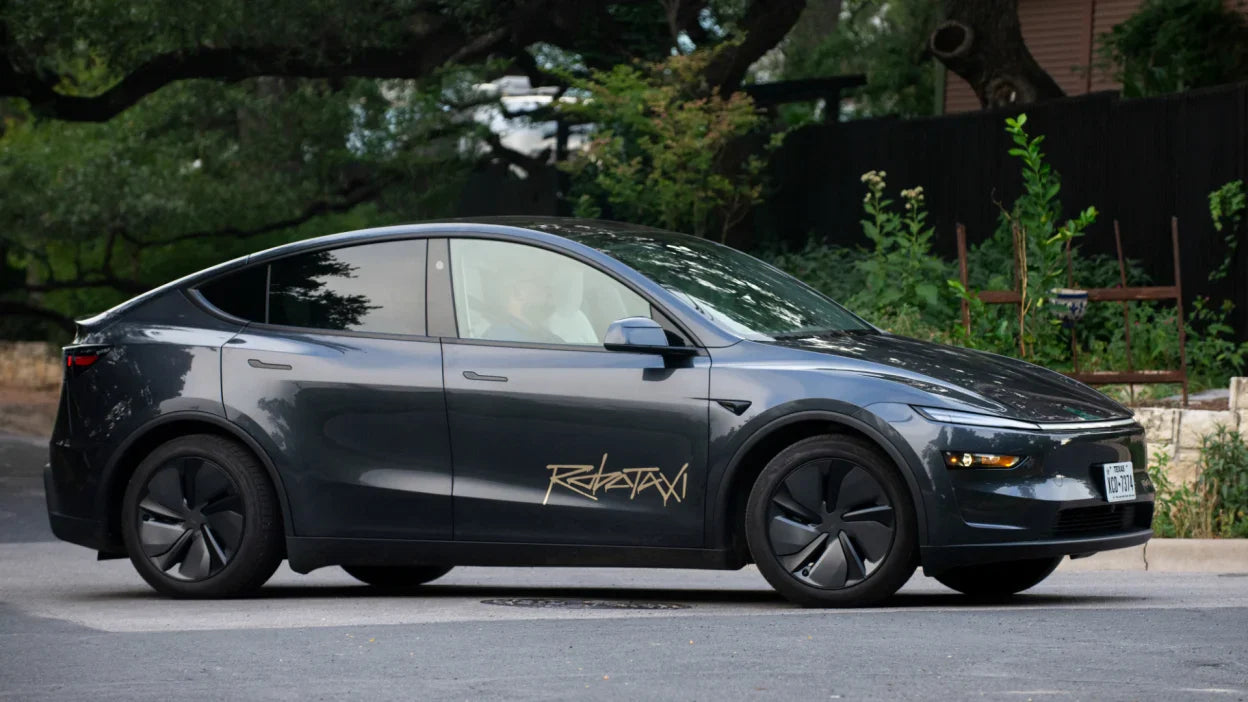
As 2025 comes to an end, Tesla’s long-promised Robotaxi revolution remains more aspiration than reality. Despite repeated assurances from CEO Elon Musk that fully autonomous Teslas would be operating at scale this year, the company’s self-driving ambitions once again fell short of their public timeline.
Tesla did make incremental progress, but the gap between bold predictions and on-the-ground deployment highlights how difficult autonomy remains—even for one of the industry’s most ambitious players.

Big Claims Set the Stage for High Expectations
At the start of the year, Musk framed Tesla’s Robotaxi plans as imminent rather than experimental. He publicly stated that driverless Teslas would be operating in Austin by mid-2025, and suggested that access would rapidly expand nationwide. At various points, he claimed that Robotaxis would reach eight to ten major U.S. metro areas and potentially serve a significant portion of the American population by year’s end.
Those statements created enormous expectations among investors and customers alike. The vision was clear: modified Model Y vehicles running an advanced version of Full Self-Driving (FSD), initially supervised by safety drivers and eventually operating without any human oversight.
That future, however, did not arrive in 2025.
A Limited Launch in Austin and the Bay Area
Tesla officially launched its Robotaxi service in Austin in June, marking an important milestone. Yet the service was far from autonomous. Human safety operators remained in the passenger seat, ready to intervene via emergency controls, even months after launch.
While Tesla has reportedly tested a small number of driverless rides, these remain exceptions rather than the norm. The service later expanded to San Francisco, but coverage is narrow and availability remains inconsistent.
Musk previously stated that Austin would host around 500 Robotaxis and the Bay Area more than 1,000 vehicles by the end of 2025. In reality, estimates suggest only a few dozen vehicles in Austin and fewer than 150 in the Bay Area, far below stated targets.
Real-World Performance Fell Short of Appearances
From social media coverage alone, Tesla’s Robotaxi program may appear robust. Influencer videos and curated demonstrations can give the impression of rapid scale. On the ground, however, the experience tells a different story.
Reports from Austin indicate wait times of 15 to 25 minutes, frequent ride denials during peak demand, and a visibly small fleet compared to competitors. Waymo’s autonomous vehicles significantly outnumber Tesla’s Robotaxis in both Austin and San Francisco, highlighting the difference between pilot programs and mature operations.
The contrast underscores that visibility does not equal volume—and that autonomy at scale requires far more than functional prototypes.
Full Self-Driving Still Isn’t Fully Autonomous
Tesla’s broader autonomy ambitions depend heavily on Full Self-Driving. Musk again predicted in 2025 that unsupervised FSD would arrive before year’s end. That milestone remains unmet.
While Tesla has expanded hands-free features in certain conditions, true unsupervised driving across diverse environments has not materialized. The long-promised coast-to-coast autonomous drive, first teased years ago, is still absent.
This reinforces a hard truth facing the entire industry: vehicle autonomy is far more complex than early timelines suggested, particularly when attempting to operate without strict geographic or environmental limitations.
Why Missed Deadlines Still Matter
Tesla’s autonomy narrative continues to play a central role in its valuation. Investor confidence remains closely tied to Robotaxi and AI-driven growth, even as delivery timelines slip. So far, markets have been forgiving—but patience is not unlimited.
For Tesla, the challenge ahead is twofold: either deliver meaningful, scalable autonomy or reset expectations with clearer communication about technical and regulatory hurdles. Trust depends not just on ambition, but on transparency.

2025 Was Not the Breakthrough Year
With the year ending, it is clear that 2025 did not deliver the Robotaxi transformation Tesla promised. Progress was made, but the vision of widespread, driverless ride-hailing remains out of reach.
Whether 2026 becomes the turning point will depend less on bold forecasts—and more on measurable execution.
Recommend Reading: Tesla Robotaxi Introduces Cleaning Fees for Rider Messes


Share:
Europe’s EV Market Grew in 2025—But 2026 Will Decide Its Future
Why 2026 Could Be the Best Year Yet to Buy a Used Electric Vehicle