





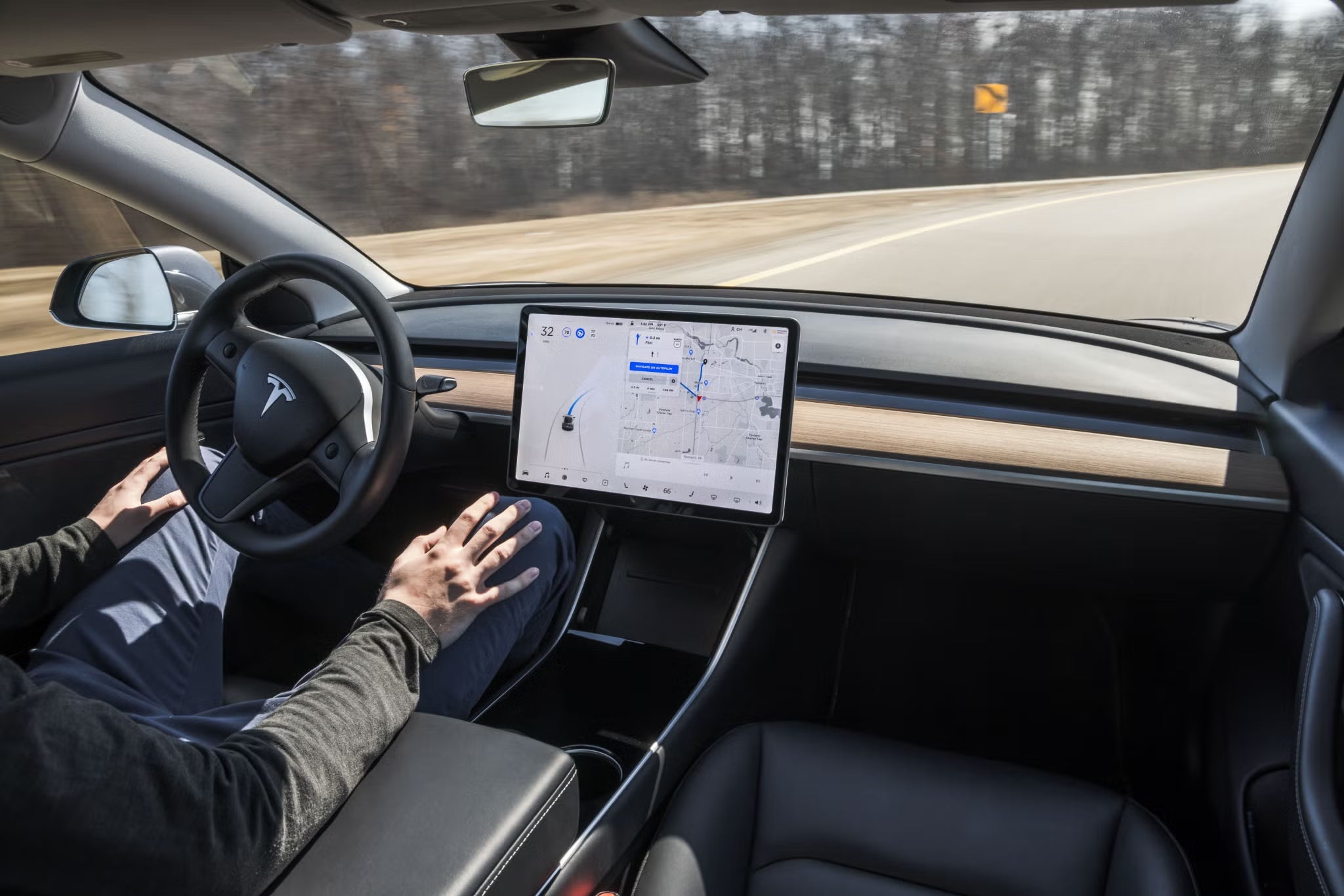
Owning a Tesla is often seen as relatively affordable compared to other new electric vehicles, but long-term ownership costs can tell a different story. Among the most significant expenses is insurance, which tends to be higher for EVs due to repair costs and risk assumptions. A new partnership between Tesla and insurance startup Lemonade aims to change that equation for certain drivers.
Lemonade announced a new insurance program that offers roughly 50% lower per-mile insurance rates for Tesla owners who actively use Full Self-Driving (Supervised). The discount applies when FSD is engaged, signaling a shift toward usage-based insurance models tied directly to driver-assistance technology.

Why Insurance Providers Are Betting on FSD
Insurance pricing is fundamentally about predicting risk. The more accurately an insurer can assess when accidents are likely to happen, the more precisely it can price coverage. Lemonade says it believes Tesla’s FSD system significantly reduces crash risk compared to human-only driving.
Through its partnership with Tesla, Lemonade now has access to vehicle telemetry data, including when FSD is enabled, which version of the software is running, and how the vehicle’s sensors are performing. This data feeds directly into Lemonade’s risk models and allows the company to differentiate between human-driven miles and FSD-assisted miles.
According to Lemonade, this capability enables it to cut per-mile rates for FSD-engaged driving by approximately half, on top of the base insurance premium that customers already pay.
How the Discount Actually Works
Lemonade’s car insurance uses a hybrid pricing model that combines a fixed base rate with a variable per-mile charge. When FSD is turned on and actively controlling the vehicle, that per-mile charge drops significantly.
Shai Wininger, Lemonade’s co-founder and president, said Teslas driven with FSD are involved in far fewer accidents. By connecting directly to the vehicle’s onboard systems, Lemonade claims it can price insurance with greater precision than traditional insurers that rely on historical averages and driver demographics.
Tesla already offers insurance discounts for FSD users through its own insurance product, but those reductions are far smaller. Tesla’s program reportedly caps discounts at around 10%, and only if FSD is used for at least half of all miles driven.
FSD Is Not Fully Autonomous
Despite the name, Full Self-Driving remains a supervised driver-assistance system, not a fully autonomous technology. FSD can handle steering, braking, acceleration, and navigation to a preset destination, but drivers are still required to monitor the road and remain ready to intervene.
Lemonade’s program does not claim otherwise. While the company refers to its offering as “Autonomous Car” insurance, it acknowledges that Tesla’s FSD does not meet the definition of full autonomy. Instead, Lemonade is pricing risk based on real-world performance trends rather than autonomy labels.
The insurer also says it expects risk to decline further as Tesla continues to roll out FSD software updates.
Rollout Timeline and Subscription Implications
The new insurance offering will begin rolling out in Arizona later this month, with Oregon following in February. Additional states are expected to be added over time.
Meanwhile, Tesla plans to eliminate the option to purchase FSD as a one-time software license starting February 14. Going forward, drivers will need to subscribe to FSD at $99 per month. That change could make Lemonade’s insurance discount more attractive, helping offset the ongoing subscription cost.
Questions Around the Data
What remains unclear is the independent validation of FSD’s safety claims. Tesla released its own FSD safety report last year, asserting lower crash rates when the system is active. However, some autonomous vehicle experts have questioned the methodology, noting that the data has not been peer-reviewed and may lack important context.
Lemonade has not yet publicly disclosed detailed statistics supporting its conclusions. Still, the move highlights a broader shift in how insurers may approach risk in an increasingly software-defined vehicle landscape.

A Signal of What’s Coming
Regardless of the unanswered questions, Lemonade’s move signals how car insurance could evolve in a future shaped by advanced driver-assistance systems. Rather than treating all miles equally, insurers may increasingly price risk based on how—and by what—the vehicle is being driven.
Recommend Reading: Tesla’s Robotaxi Rollout Lagged Behind Its 2025 Promises


Share:
Volvo EX60 Brings 400-Mile Range and New Safety Tech to the Luxury EV Segment
Renault Electric Vehicle Sales Surge Across Europe in 2025