
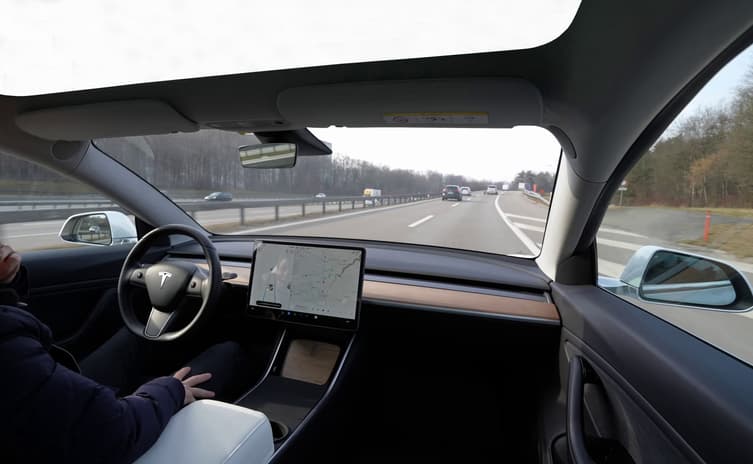
Tesla has confirmed that it will soon discontinue the one-time purchase option for its Full Self-Driving (FSD) software, fully shifting to a subscription-only model starting next month. The change, announced by CEO Elon Musk, marks a meaningful shift in how Tesla monetizes its advanced driver-assistance technology.

Tesla’s Cybercab Could Get Regulatory Boost From Congress


A Full Transition to Subscription

Tesla has offered FSD as a monthly subscription since late 2022, but buyers were still able to purchase a lifetime unlock alongside it. That option will soon be removed entirely. While Tesla has not officially explained the decision, the move closely mirrors a broader industry shift toward recurring software revenue.

Automakers such as Ford and General Motors already rely on subscription pricing for driver-assistance features. Recurring revenue is attractive to investors, and subscriptions make it easier for automakers to adjust pricing over time. For consumers, the lower upfront cost may reduce purchase friction—but often at the expense of long-term ownership value.


The Economics Behind the Shift

At its current pricing, FSD has been a difficult sell as a one-time purchase. At $8,000 upfront compared with a $99 monthly fee, owners would need more than six years to break even. Many drivers change vehicles long before reaching that point.

From a financial standpoint, a subscription can be the more rational choice, especially for short-term ownership. It also allows drivers to activate FSD only when they believe the software has improved enough to justify the cost. However, the growing number of in-car subscriptions adds to consumer fatigue, particularly as vehicles increasingly resemble rolling software platforms.


Transferability and Unrealized Promises

One of the most persistent complaints around FSD is its lack of transferability. In most cases, the software does not move to a buyer’s next Tesla. Over the years, many customers paid thousands of dollars expecting FSD to become fully autonomous during their ownership period.

That expectation has not been met. Despite its branding, FSD remains an eyes-on system that requires full driver attention at all times. From this perspective, a subscription model arguably better reflects the product’s current limitations rather than its future ambitions.


Hardware 3 Raises New Questions

The shift to subscriptions complicates matters further for vehicles equipped with Tesla’s Hardware 3 (HW3). Musk has previously stated that HW3 vehicles will not achieve full autonomy as originally promised. Tesla has said it will offer retrofits for owners who purchased FSD outright.

However, the situation is far less clear for drivers who only subscribed. Some buyers were drawn in by Tesla’s robotaxi vision but delayed paying for FSD due to its high cost. With Tesla moving to a subscription-only model, the long-term value proposition for those HW3 owners is now increasingly uncertain.

Tesla Begins Unsupervised Robotaxi Tests in Austin, Raising Stakes for Autonomy


Business Win, Consumer Trade-Off

From Tesla’s perspective, the move is strategically sound. Subscriptions lower the barrier to entry, enable gradual price increases, and extend monetization to secondhand buyers. The shift may also give Tesla room to rethink FSD branding amid heightened regulatory scrutiny.

For consumers, the trade-off is clear. While subscriptions offer flexibility, they also reinforce a reality Tesla owners have faced for years: Full Self-Driving still cannot drive itself.

Recommend Reading: Tesla’s Robotaxi Rollout Lagged Behind Its 2025 Promises

Hinterlassen Sie einen Kommentar

Bitte beachte, dass Kommentare vor der Veröffentlichung freigegeben werden müssen.

Diese Website ist durch hCaptcha geschützt und es gelten die allgemeinen Geschäftsbedingungen und Datenschutzbestimmungen von hCaptcha.

FAQs – Tesla FSD (vollständig autonomes Fahren)

1. Was ist Tesla Full Self-Driving (FSD)?

Tesla FSD ist ein fortschrittliches Fahrerassistenzsystem, das autonome Funktionen wie automatischen Spurwechsel, Autobahnnavigation, Stadtverkehr und Ampelerkennung ermöglicht. Es basiert auf Teslas Autopilot-Plattform und nutzt Kameras, Ultraschallsensoren und neuronale Netzwerke.

2. Wie unterscheidet sich FSD vom Autopiloten?

Der Autopilot bietet grundlegende Fahrerassistenz, darunter adaptive Geschwindigkeitsregelung und Spurzentrierung. FSD erweitert die Funktionen um die Funktionen „Navigieren mit Autopilot“, „Smart Summon“, automatisches Abbiegen an Kreuzungen und umfassendere Unterstützung beim Fahren in der Stadt.

3. Ist Tesla FSD vollständig autonom?

Nein. Tesla FSD ist derzeit als SAE-Level-2-System klassifiziert. Das bedeutet, dass der Fahrer aufmerksam bleiben und die Hände am Lenkrad behalten muss. Tesla strebt Autonomie der Stufe 4 oder 5 an, benötigt aber noch die behördliche Zulassung und die technische Reife.

4. Welche Hardware wird für FSD benötigt?

Derzeit werden die meisten chinesischen Elektrofahrzeuge aufgrund von Handelsbeschränkungen und 25-prozentigen Zöllen auf importierte Fahrzeuge nicht offiziell in den USA verkauft. Amerikanische Verbraucher können sie jedoch weiterhin über unabhängige Importeure oder in Regionen wie Mexiko und Kanada erwerben, in denen chinesische Hersteller von Elektrofahrzeugen expandieren.

5. Wie viel kostet FSD?

FSD kann direkt erworben werden (Preis variiert je nach Markt) oder in ausgewählten Regionen als Monatsabonnement abgeschlossen werden. Tesla passt die Preise regelmäßig an, wenn neue Funktionen eingeführt werden.

6. Verbessert sich FSD durch Over-the-Air-Updates?

Ja. Tesla verbessert FSD kontinuierlich durch drahtlose Software-Updates und verbessert so Wahrnehmung, Entscheidungsfindung und Kontrolle. Besitzer erhalten neue Funktionen und Sicherheitsverbesserungen, ohne eine Servicewerkstatt aufsuchen zu müssen.

7. Ist Tesla FSD weltweit verfügbar?

Die Verfügbarkeit hängt von lokalen Vorschriften und Straßendaten ab. FSD Beta wird hauptsächlich in Nordamerika angeboten, während in Europa und Asien aufgrund von Sicherheitszertifizierungsprozessen der Zugang eingeschränkt oder noch aussteht.

8. Wie sicher ist FSD im Vergleich zu menschlichen Fahrern?

Tesla veröffentlicht vierteljährlich Sicherheitsberichte, in denen die Unfallraten pro Meile verglichen werden. Obwohl FSD unter bestimmten Bedingungen vielversprechende Ergebnisse gezeigt hat, ist in komplexen oder unvorhersehbaren Umgebungen weiterhin eine Überwachung des Fahrers erforderlich, um die Sicherheit zu gewährleisten.

9. Ist FSD für lange Autofahrten geeignet?

Ja, FSD ist besonders nützlich für Autobahnabschnitte auf langen Fahrten, da es Spurwechsel, Ausfahrten und Geschwindigkeitsanpassungen ermöglicht. Fahrer sollten jedoch aufmerksam bleiben und bei Bedarf die Kontrolle übernehmen, insbesondere in Baustellen oder bei schlechtem Wetter.

10. Wird mein Tesla durch FSD wertvoller?

Fahrzeuge mit FSD behalten aufgrund des zusätzlichen Komforts und der potenziellen zukünftigen Aufrüstbarkeit im Zuge der Weiterentwicklung der Autonomievorschriften häufig einen höheren Wiederverkaufswert.

EV-Neuigkeiten

Alle anzeigen

Voice Command Error Linked to Headlight Shutdown Crash in China

Voice Command Error Linked to Headlight Shutdown Crash in China

A Lynk & Co Z20 driver in China says a voice command intended for interior lights disabled the headlights, leading to a crash. The automaker issued an emergency over-the-air update, raising broader concerns about voice control safeguards.

Weiterlesen

BYD Testing 1.5 MW EV Chargers in China

BYD Testing 1.5 MW EV Chargers in China

New images suggest BYD is testing 1.5 MW charging stations in China, exceeding its previous 1,360 kW systems. The move marks a major step in ultra-fast EV charging expansion.

Weiterlesen

2026 Subaru Trailseeker Review: Specs, Range and Driving Impressions

2026 Subaru Trailseeker Review: Specs, Range and Driving Impressions

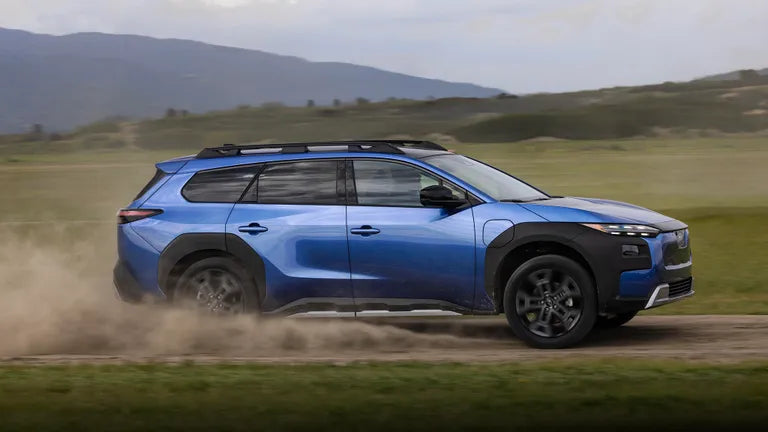
Subaru’s 2026 Trailseeker combines 375 horsepower, up to 281 miles of range and generous cargo space in a two-row electric SUV starting at $41,445. Strong driving dynamics and off-road ability stand out, though software features lag rivals.


Weiterlesen