





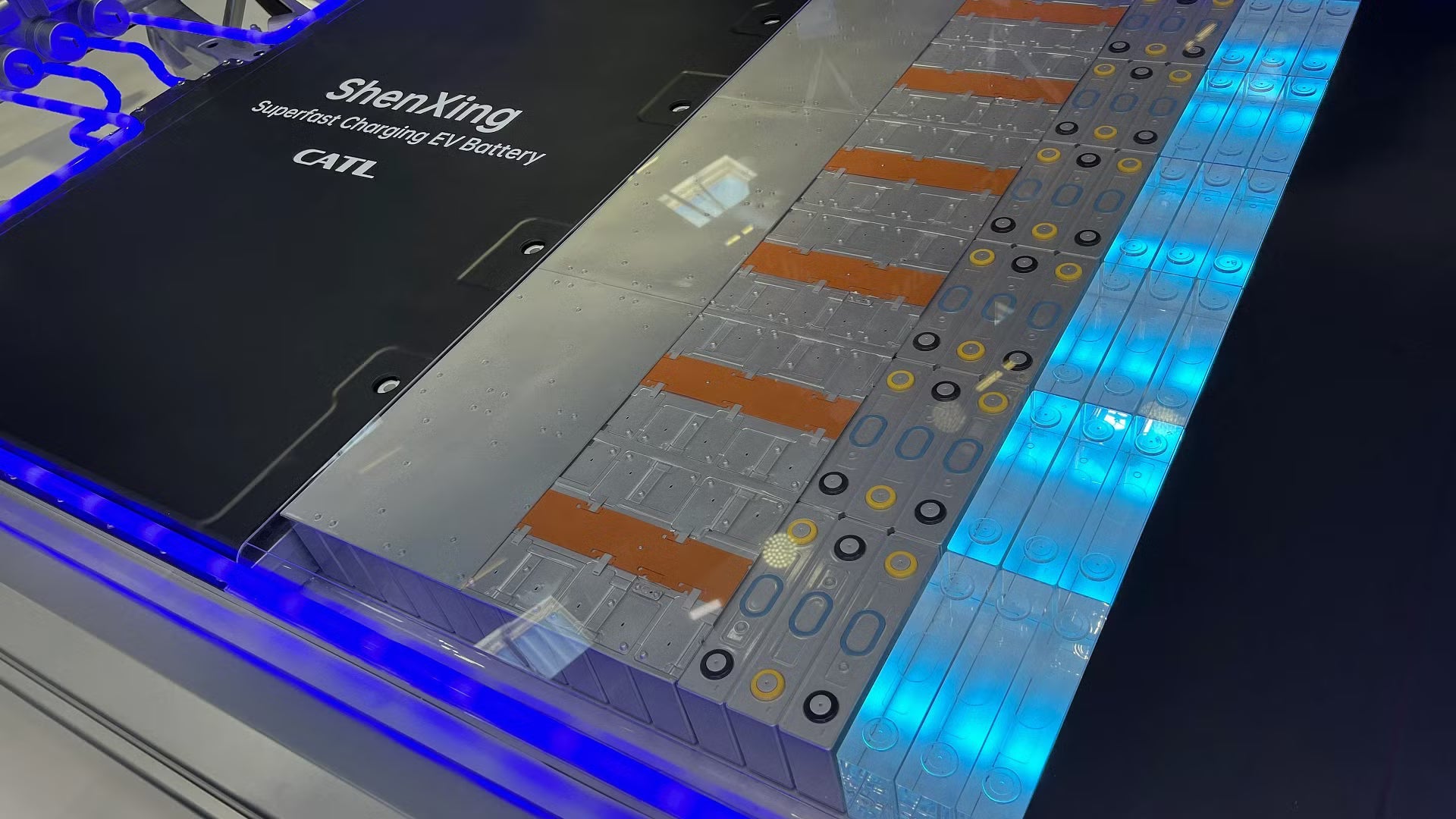
Rising EV Demand, Limited Local Supply
Europe’s electric vehicle market continues to expand at a steady pace, yet much of the technology powering that growth originates outside the continent. While policymakers and automakers have promoted domestic battery production as a pillar of industrial independence, recent developments suggest that ambition is colliding with cost pressures.
Several high-profile projects intended to anchor Europe’s battery supply chain have been delayed, scaled back or canceled. The tension lies in a basic economic challenge: building cells in Europe often costs more than importing them from China, where the supply network is deeper, more integrated and heavily supported.

Setbacks for Flagship Battery Initiatives
A series of corporate decisions over the past year illustrates the strain. Porsche reduced manufacturing activity at its Cellforce subsidiary to concentrate primarily on research and development, stating that large-scale production was no longer financially sustainable under current conditions.
In Sweden, Northvolt, once viewed as Europe’s strongest candidate to rival Asian producers, entered bankruptcy proceedings in 2024 after struggling with persistent losses and operational hurdles. The collapse dealt a symbolic blow to the continent’s push for self-reliance in advanced battery manufacturing.
Meanwhile, Automotive Cells Company (ACC)—backed by Stellantis—paused two planned gigafactories in Germany and Italy, citing unmet conditions necessary to proceed. These decisions collectively underscore the difficulty of competing against established Asian suppliers on price and scale.
The Cost Equation Behind the Challenge
Industry leaders have acknowledged the core dilemma. In a joint statement issued earlier this month, Volkswagen Group CEO Oliver Blume and Stellantis CEO Antonio Filosa emphasized the need to balance technological sovereignty with consumer affordability. They noted that maintaining competitive EV pricing often requires sourcing the least expensive battery cells available—many of which come from China.
China holds a dominant position across multiple stages of the battery value chain, from mineral refining to cell assembly. The country is especially influential in the production of lithium iron phosphate (LFP) batteries, a lower-cost chemistry widely used in mass-market electric cars. Years of state-backed incentives and large-scale manufacturing capacity have enabled Chinese firms to achieve cost advantages that European producers struggle to match.
As a result, even when vehicles are assembled within Europe, key components and production equipment frequently originate in Asia.
Policy Goals vs. Market Forces
European regulators have framed domestic battery capacity as essential for energy security and economic resilience. However, industrial policy alone has not fully offset the gap in cost competitiveness. Companies seeking to protect margins while offering reasonably priced EVs face a structural trade-off: prioritize local sourcing at higher expense, or import cheaper cells and preserve pricing flexibility.
This tension is becoming more visible as companies reassess investment timelines. Building gigafactories requires billions of euros in capital, long-term supply contracts and stable demand projections. Any uncertainty in these variables increases financial risk.
A Contrast With the United States
Across the Atlantic, battery projects have also encountered headwinds, though for different reasons. In the United States, shifts in federal incentives—including the rollback of the $7,500 EV tax credit—have dampened demand growth. Several automakers, including General Motors, Ford and Stellantis, have postponed or restructured battery investments, in some cases redirecting capacity toward stationary energy storage instead of vehicle applications.
Unlike Europe, the U.S. market is less dependent on Chinese battery imports due to high tariffs. Nonetheless, American manufacturers are still navigating evolving demand patterns and policy changes.
Signs of Progress, With Caveats
Despite the setbacks, Europe’s battery ecosystem is not entirely stagnant. Volkswagen’s PowerCo division has expanded output at its facility in Salzgitter, Germany, where annual capacity has reached 20 gigawatt-hours, sufficient to supply roughly 250,000 electric vehicles. The plant represents one of the continent’s most tangible steps toward domestic cell production.
Yet even in this case, much of the manufacturing equipment has reportedly been sourced from Asia, highlighting continued reliance on foreign technology inputs.

An Ongoing Balancing Act
Europe’s experience reveals a complex reality: rapid EV adoption does not automatically translate into supply-chain independence. While the region has made measurable progress in building local capacity, competing with China’s scale and cost structure remains a formidable challenge.
For automakers, the central question is how to reconcile long-term strategic autonomy with short-term pricing pressures. For policymakers, the issue is whether incentives and regulation can narrow the competitiveness gap without undermining consumer access to affordable electric vehicles.
As global demand for EVs grows, the outcome of this balancing act will shape not only Europe’s industrial strategy but also the affordability and availability of electric mobility across the continent.
Recommend Reading: Europe EV Sales Rise in January as U.S. Market Slows










Share:
Tesla Cybertruck Base Price Rises to $72,235, Deliveries in 2027
Where Tesla Will Build Its First Megawatt Semi Chargers