





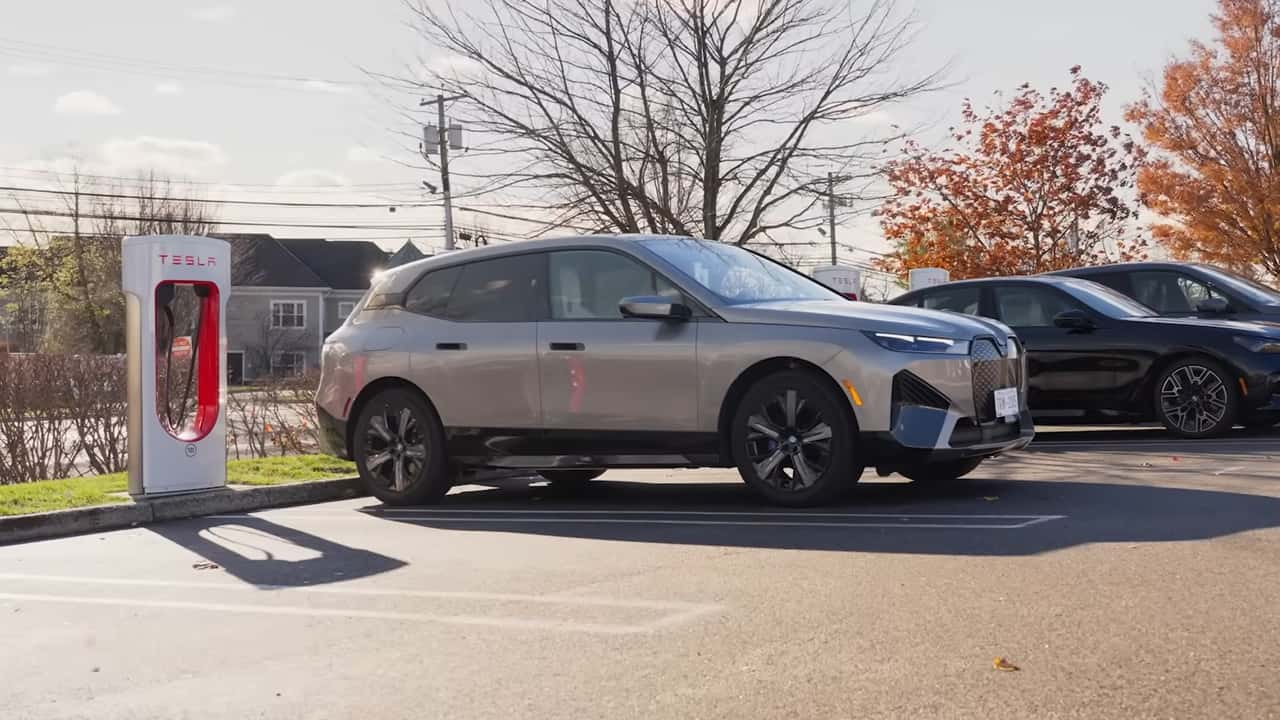
Public Fast Charging Expands Faster Than Ever
Public fast-charging infrastructure across the United States is expanding at a record pace. Charging networks are building aggressively ahead of demand, laying the foundation for a more electric transportation system. For EV drivers, high-power fast chargers offer unmatched convenience, enabling quick top-ups during road trips or busy daily schedules.
Yet as these stations become more accessible, questions are emerging about their long-term impact on battery health. A recent analysis suggests that how often and how aggressively drivers use fast charging may influence battery degradation more than previously assumed.

A Large-Scale Study on Charging Behavior
Canada-based telematics and data firm Geotab examined charging and battery health data from more than 22,700 electric vehicles across 21 different models. The company’s findings point to high-power DC fast charging as the single most influential factor in accelerated battery aging among the variables it analyzed.
Importantly, the study does not argue that fast charging itself is inherently harmful. Instead, it highlights specific usage patterns—particularly frequent charging at power levels above 100 kilowatts—that place additional stress on battery cells over time.
How Power and Frequency Affect Degradation
Geotab’s analysis reveals that battery degradation is not driven by fast charging alone, but by the combination of high charging power and high charging frequency.
Vehicles that relied on DC fast chargers for fewer than 12% of their total charging sessions experienced relatively modest degradation, averaging about 1.5% per year. However, once fast charging exceeded that threshold, degradation rates increased notably.
The most pronounced impact appeared among EVs that used high-power fast chargers above 100 kW for more than 40% of their charging sessions, where annual degradation reached approximately 3%.

Battery Degradation by Fast-Charging Usage
| DC FC Frequency | Group | Average Annual Degradation |
|---|---|---|
| Low | Under 12% of total sessions | 1.5% |
| High | Over 12% of total sessions | 2.5% |
| High-Frequency Low Power (<100 kW) | Under 40% of total sessions | 2.2% |
| High-Frequency High Power (>100 kW) | Over 40% of total sessions | 3.0% |
Context Matters More Than a Single Metric
While the data provides valuable insight, charging behavior is only one variable in a much broader equation. Battery health is influenced by cell chemistry, vehicle design, climate, driving habits, and thermal management systems.
Extreme temperatures—both hot and cold—can accelerate degradation. However, most modern EVs are equipped with heat pumps, battery preconditioning, and advanced thermal controls designed to keep battery packs within optimal temperature ranges during charging and driving.

Conflicting Findings From Other Research
Geotab’s conclusions are not universally echoed across the industry. Battery analytics company Recurrent analyzed data from roughly 13,000 Tesla vehicles in the U.S. and found no statistically significant difference in range retention between frequently fast-charged vehicles and those that relied mostly on slower charging.
However, that study came with a major limitation. Only 344 vehicles in Recurrent’s dataset were classified as frequent fast chargers, compared with more than 13,000 that fast-charged infrequently. This imbalance makes it difficult to draw definitive conclusions and highlights how challenging it is to isolate charging behavior as a standalone factor.
Degradation Trends Are Slowly Increasing
According to Geotab, average battery degradation across EVs in 2025 reached 2.3% annually, meaning a typical battery would retain about 81.6% of its original capacity after eight years. This represents an increase from 1.8% in 2023, though it matches degradation levels observed in 2020.
The company attributes the recent uptick partly to the rapid expansion of higher-powered charging infrastructure across North America. Networks such as Tesla Supercharger, Electrify America, ChargePoint, and Ionna are deploying more 150 kW and 350 kW chargers, particularly in the U.S., even as EV sales growth shows signs of slowing.

Built-In Protections Reduce Real-World Risk
The encouraging news is that automakers have long anticipated these challenges. Modern EVs are equipped with sophisticated battery management systems (BMS) designed to limit stress regardless of charging method.
Charging speeds automatically taper as the battery approaches a high state of charge, and thermal controls reduce power if temperatures rise too quickly. Most manufacturers also recommend maintaining daily charging between 10% and 80%, as consistently storing batteries near full or empty states can accelerate aging.
For drivers who regularly charge to 100% or deeply discharge their batteries—such as rideshare or delivery drivers—manufacturers typically include hidden buffer zones at both the top and bottom of the usable capacity. These buffers protect the battery even when the display reads 0% or 100%.
What This Means for Everyday EV Drivers
The takeaway is relatively straightforward. Drivers who want to preserve maximum range over eight to ten years should avoid relying on high-power fast charging when it is unnecessary. Slower Level 2 charging remains the gentlest option for long-term battery health.
That said, frequent fast charging is not a death sentence for modern EV batteries. A vehicle like a Tesla Model Y with an original EPA range of 357 miles would still offer roughly 285 miles at 80% capacity after eight years—more than sufficient for daily use and long-distance travel.
Unless an EV is fast-charged constantly at high power levels, severe degradation remains unlikely. Battery warranties of at least eight years or 100,000 miles further reduce financial risk for owners.

A Balanced Approach to Charging
Fast chargers exist to be used, and occasional reliance on them will not compromise battery longevity. The smartest strategy is a balanced one: use slower, cheaper charging when convenient, and fast charging when time or distance demands it.
Today’s EVs are engineered with enough safeguards to ensure their batteries remain healthy for years, even as fast-charging networks continue to expand.
Recommend Reading: New York Plans East Coast’s Largest Battery-Powered EV Charging Hub


Share:
Mazda CX-6e Signals a New Electric Direction for the Brand
Electric Pickup Truck Sales in the U.S. Struggle to Gain Traction in 2025
1 comment
Great read! I appreciate the balanced explanation about fast charging and its actual impact on EV battery health. Many people assume fast charging always damages batteries, but your data-driven approach makes the topic much clearer. This article is helpful for both new and experienced EV users.