



Introduction
As electric vehicles continue to dominate the market, more owners rely on home charging—especially Level 1 charging, which uses a standard 120V NEMA 5-15 household outlet. One of the most common questions EV owners ask is:
“Is Level 1 charging bad for my EV battery?”
This question matters for both Tesla Model 3/Y drivers and J1772 EV owners such as the Nissan Leaf, Chevy Bolt, Ford Mustang Mach-E, Hyundai IONIQ 5/6, Kia EV6, Volkswagen ID.4, and many more.
In this in-depth guide, we’ll break down whether Level 1 charging harms battery longevity, why slower charging is often beneficial, when Level 1 can be problematic, and how to choose the safest certified Level 1 EV chargers—including NACS options like the EVDANCE Level 1 NEMA 5-15 Charger with native NACS plug (no adapter required).

1. Is Level 1 Charging Bad for Your EV Battery?
Short answer: No. Level 1 charging is NOT bad for your EV battery.
In fact, Level 1 charging is often the gentlest and most battery-friendly charging method because:
-
It generates less heat
-
It produces low and steady current
-
It reduces thermal stress
-
It avoids high-power peaks associated with DC fast charging
Lithium-ion batteries degrade fastest when exposed to:
-
High temperatures
-
High charging power
-
Frequent 0–100% charging cycles
Level 1 avoids all three.

2. Why Level 1 Charging Can Be Good for Battery Health
1. Lower Charging Speed = Lower Heat Generation
Battery degradation accelerates when cells heat up during charging. Level 1’s slow ~1.2–1.44 kW input keeps the battery cool.
2. Gentle on the Battery’s Chemical Structure
Low voltage + low amperage = slower lithium-ion movement.
This reduces long-term wear on anode/cathode materials.
3. No High-Current Stress Like Level 3 DC Fast Charging
Frequent fast charging (supercharging) increases degradation.
Level 1 is the exact opposite: mild and steady.
4. Perfect for Maintaining Daily State-of-Charge (SoC)
Most EV batteries last longest when kept between 20% and 80%.
Slow charging naturally keeps the pack within this range.
3. When Level 1 Charging Might Become a Problem
While Level 1 charging itself isn't harmful, external factors can create risk.
✔ 1. Old or damaged household outlets
Loose or overheated plugs can be unsafe.
Always use a dedicated outlet in good condition.
✔ 2. Using cheap, non-certified Level 1 chargers
Non-ETL/UL chargers may lack proper protection:
-
Over-temperature cutoff
-
Over-current protection
-
Ground fault protection
-
Surge protection
This is why certified chargers like EVDANCE, Lectron, and Schumacher are essential.
✔ 3. Charging in extremely hot environments
Even slow charging will create some heat.
Keep your EV in shade or garage when possible.
✔ 4. Poor electrical circuits or overloaded breakers
If too many devices share the same circuit, overheating may occur.
4. Does Level 1 Charging Cause More Battery Cycling?
Level 1 charging does NOT cause more harmful cycles.
In fact, EV owners using Level 1 often keep the battery at ideal mid-range SoC because:
-
Charging is slow
-
They tend to plug in every night
-
They avoid deep discharge
This prevents the battery from reaching very low or very high states—the two biggest degradation triggers.
5. Is Level 1 Charging Enough for Daily Use?
Yes—especially if you drive 20–40 miles per day.
Level 1 adds:
-
3–5 miles of range per hour
-
30–50 miles overnight
Which is perfect for typical commuters.
6. Level 1 vs Level 2: Which Is Better for Battery Life?
Battery Longevity Perspective: Level 1 wins.
Level 2 charging (240V) is faster, but faster speeds generate more heat.
Battery health ranking:
-
Level 1 (best for battery preservation)
-
Level 2 (still safe and recommended for most homes)
-
Level 3 DC Fast Charging (convenient but increases wear)
You can safely use all three—but Level 1 places the least stress on the cells.

7. Why Nighttime Level 1 Charging Is Ideal
Night charging matches daily consumption and protects the battery:
-
EV cools down at night (less heat)
-
Long, uninterrupted charging window
-
Avoids high daytime temperatures
-
Avoids repeated fast charging cycles
-
Often aligns with off-peak electricity rates
This is especially ideal for:
-
Tesla Model 3/Y drivers
-
J1772 vehicles
-
Apartment residents
-
Short-distance commuters
-
Drivers without Level 2 installation privileges

8. Best Level 1 Chargers for Battery Safety
To keep Level 1 charging safe for your EV battery, choose UL/ETL certified Level 1 chargers.
Below is a curated list of the best Level 1 chargers with safety certifications.
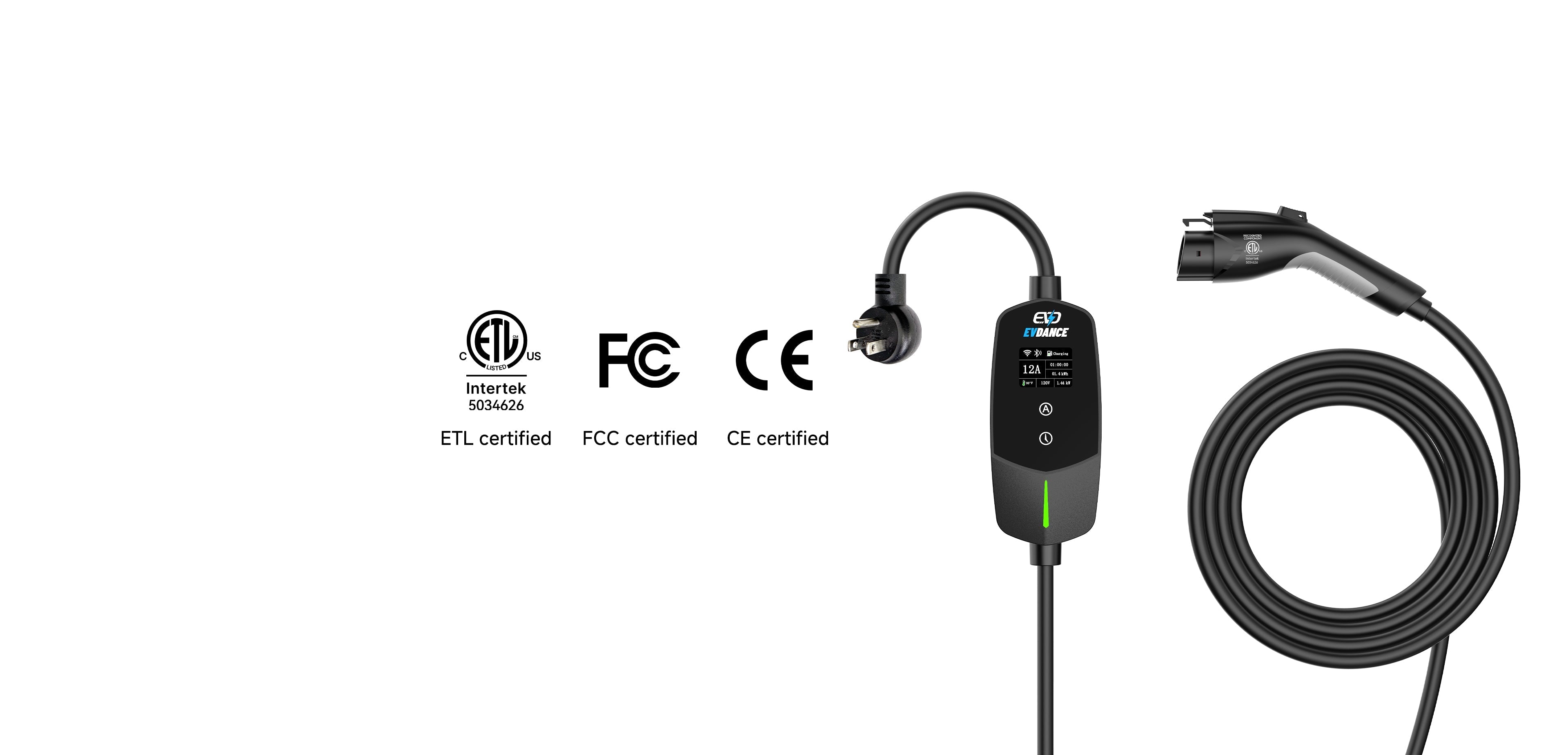
⭐ Top Pick: EVDANCE Level 1 NEMA 5-15 Plug Charger (with Dedicated NACS Or J1772 Version)
→ One of the on
-
Level 1 EV charger
-
best Level 1 charger for Tesla Model 3
-
best Level 1 charger for Tesla Model Y
-
NACS Level 1 charger
-
certified Level 1 EV charger
-
NEMA 5-15 Level 1 charger
Why it protects your battery:
-
ETL/UL-based design
-
Built-in overheat and surge protection
-
Thick, heat-resistant cable
-
Perfect for long overnight charging
Compatibility:
-
Tesla Model 3/Y/S/X (native NACS — no adapter)
-
All J1772 EVs (J1772 version available)

Schumacher SEV1670 Level 1 Charger
-
IP66 water resistance
-
ETL certified
-
Long, heavy-duty cable
-
Very stable temperatures during charging
9. Does Level 1 Charging Reduce Battery Degradation in the Long Run?
In many cases, yes.
Long-term studies show that heat is the #1 cause of EV battery aging.
Level 1 creates the least heat, meaning:
-
Less thermal cycling
-
Lower internal resistance growth
-
Slower capacity loss
Many long-term EV owners report extremely low degradation when using primarily Level 1 charging.
10. Should You Switch to Level 2?
You should consider Level 2 only if:
-
You drive more than 60–80 miles per day
-
You need quick turnaround charging
-
You want time-of-use scheduling features
-
You prefer faster replenishment
But for most EV drivers, Level 1 is completely sufficient and battery-friendly.
Conclusion
Level 1 charging is not bad for your EV battery—in fact, it’s often the safest, gentlest way to charge. It protects your battery from heat, provides steady low-current charging, and is ideal for overnight replenishment. As long as you use a certified Level 1 charger like the EVDANCE NACS Level 1 version, Level 1 charging can support excellent long-term battery health.
Recommend Reading: Level 1 EV Charger Installation Guide for First-Time Users


Share:
Why an Overcrowded EV Market Is Holding Electric Sales Back
Should You Choose Level 1 Charging? A Complete Guide to When, Why, and How Level 1 EV Charging Works Best
2 comments
I’ve done some research on charging efficiencies and different charging rates (currents and voltages), and I’m surprised at the results. My concerns about resistive losses in my previous post are applicable, but it turns out that other types of losses far outweigh this. Generally when charging at level 1 or 2, the higher the current the more efficient the overall energy transfer is to get the battery charged. Level 2 is more efficient than level 1. 3-phase is more efficient than single-phase.
The best overall analysis of the efficiencies of different charge rates is here:
https://www.sciencedirect.com/science/article/pii/S0360544217303730
I agree with everything said. However, it would be good to mention that the charging current from a level 2 charger can be controlled by going to your car’s app or the charge settings in the car. This has several benefits.
The Tesla charger in my garage has a max charging current of 40 amps (the higher cost for the heavier wiring to allow for 48 amps was significant, and I really don’t need that high of a charge rate). I normally leave the charge current for my Model 3 set to 10 amps based simply on the fact that higher currents cause higher energy losses due to heating in the entire charging circuit (the wiring from the breaker box to the charger, the cord from the charger to the car, etc.). The thing that really woke me up to this situation is a portable charger I bought that can charge up to 32 amps. At max charge current its cord and car connector got surprisingly warm! So, I turned down the charging current to keep that portable charger much cooler (and I’m sure it’s safer as well!). The charge rate in my car can go as low as 5 amps, so maybe I’ll experiment with turning it even lower than 10 while making sure there’s plenty of time for it to be ready to go the next morning when I need it.
Technically, the key to understanding heating losses is the equation P=(I^2)*R.
‘P’ = power loss in watts
‘I’ = current in amps
‘R’ = resistance in ohms
‘I^2’ means current squared
As charging current is increased, that increases the power loss disproportionally more due to the fact that the current is squared on the right side of that equation. Also, there is a double-whammy when increasing the current. It causes the resistance of copper wires (the ‘R’ in the equation) to increase because of increased conductor temperature which then contributes to even more power loss. For every 1°C rise in temperature, its resistance increases by about 0.4%. That’s very significant! Therefore, the accumulated power bill savings could be quite significant if you charge a vehicle at home at far lower charge currents than the charger’s maximum.
I haven’t seen this subject talked about to this level of detail (but I haven’t really searched much), so it would be great for someone to do a deep-dive on this (with real-world numbers and measurements) to become the defacto reference for this kind of information.