



Shifting Demand and a Misread Market
The idea that “consumers don’t want EVs” is repeated constantly by critics, dealership groups and some policymakers. Yet this argument collapses quickly under close inspection. In 2023, the Tesla Model Y became the best-selling vehicle in the world, and the Model 3 routinely outsold its gasoline rivals in the U.S. sedan segment.
So the public’s hesitation is not about electric vehicles as a concept. Consumers want EVs—they simply don’t want weak, overpriced, or uncompetitive ones. And right now, the U.S. market is filled with models that struggle to stand out, even as the number of nameplates climbs rapidly.

Too Many Models, Too Few Buyers
Cox Automotive reported that the U.S. offered 90 different EV models in the third quarter. At first glance, variety looks like progress. But only 10 of those models sold more than 10,000 units during that period—a tiny volume compared with mainstream gas vehicles.
The Ford F-Series, for example, moved over 200,000 trucks in the same quarter. Even popular gasoline crossovers routinely exceed 10,000 sales every few weeks.
This imbalance tells us two things:
-
The overall EV customer base is still relatively small.
-
A handful of strong models capture most of the demand, while the rest struggle for relevance.
Rather than proving that buyers “don’t want EVs,” the data shows that many automakers are spreading resources too thin, releasing too many electric variants before perfecting even one.
Mercedes and the Risks of Overextension
Mercedes-Benz offers a cautionary example. In attempting to electrify nearly its entire lineup, it introduced EQ versions of major gasoline models: the EQC, EQE, EQS, and their SUV counterparts.
The problem? Most EQ models failed to outperform the gasoline cars they were meant to replace.
Owners and reviewers noted:
-
Less refined ride quality
-
Higher prices
-
Designs that lacked the identity of Mercedes’ best-known models
-
A limited market for pricey electric sedans
By the time the EQE sedan landed in the U.S., the shortcomings of the EQS were already evident, and neither model succeeded in reshaping the luxury EV segment. Mercedes didn’t build a halo EV—it built a crowd of products that failed to lead.

Audi Faces a Similar Challenge
Audi’s electric catalog illustrates the same pattern. Few consumers could list the brand’s EV offerings without looking them up, even though Audi has been selling electric models for years.
The Q4 E-Tron—essentially an upscale Volkswagen ID.4—carried over many of that vehicle’s weaknesses. The Q8 E-Tron, once Audi’s flagship EV, has been overshadowed by the newer and better-reviewed Q6 E-Tron, which briefly became one of America’s fastest-selling EVs.
Then there’s the E-Tron GT, a beautiful but niche relative of the Porsche Taycan with limited audience.
None of these products are failures on their own. But none are strong enough to anchor the brand’s EV strategy, and none define what an “Audi electric vehicle” should be.

Why “Good Enough” Falls Short in the EV Era
In the gasoline market, an automaker can launch multiple average products without undermining its entire strategy. The EV market doesn’t offer that buffer.
Electric vehicles are still more expensive on average, and consumers remain cautious. Buyers compare EVs not only against one another, but also against mature, affordable, and familiar gasoline choices.
A model that is simply “fine” won’t win that comparison. To justify the price premium and learning curve of EV ownership, buyers need a vehicle that feels unquestionably better than the gas alternative.
Three Strategic Paths for Automakers
As the industry shifts, automakers generally take one of three approaches:
1. Launch Many EVs at Once
This is the strategy behind the German brands, General Motors, and Volvo.
The benefit: you gather broad market data quickly.
The risk: you dilute your engineering resources and may end up with several mid-tier vehicles that never reach scale.

2. Concentrate on One or Two Strong Models
This is the approach taken by Ford and Hyundai.
Ford focused on the Mustang Mach-E, improved it continuously, priced it aggressively and kept it in the public eye. It is now a reliable top seller.
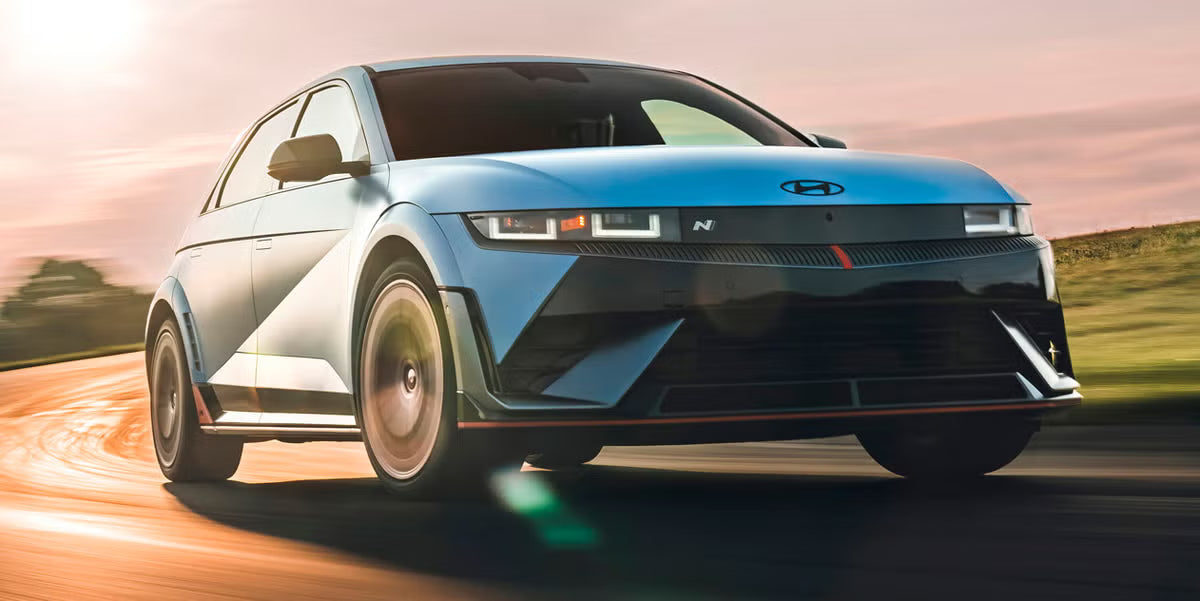
Hyundai did the same with the Ioniq 5, building momentum through design, performance, and upgrades.
Focus creates winners. Spread-thin strategies rarely do.

3. Delay Electrification Almost Entirely
This path—taken by Honda, Stellantis, and until recently Toyota—avoids the early risks of electrification.
But it creates a long-term threat: you cannot build a strong EV tomorrow if you do not build a good one today.

Why Strategy #2 Creates the Real Leaders
With EVs, scale and quality reinforce each other.
-
You need sales volume to reduce costs.
-
You need strong products to achieve sales volume.
This loop is extremely difficult to break with a lineup of “just okay” vehicles. But a single, exceptional model can trigger it.
Tesla proved this by focusing on the Model S, then the Model 3. That template allowed it to scale manufacturing and eventually expand into a broader lineup.
Rivian followed a similar playbook with the R1 series, using a tight and focused lineup to build expertise before launching the R2.

Winning Means Choosing Fewer Battles
In a market where EVs cost more, where charging networks still frustrate some drivers, and where buyers remain cautious, automakers cannot afford to release forgettable electric cars.
To win, a brand must pick the segments where it has a natural advantage—and dominate them.
That means fewer models, better execution and deeper investment in the product that will define the brand’s electric future.
Conclusion
The EV market is not failing from a lack of demand. It is struggling with a surplus of mediocre options. The brands that succeed will be the ones that concentrate their efforts rather than oversaturate the market.
In electrification, victory goes to the focused—not the prolific.
Recommend Reading: Kia EV4 U.S. Launch Put On Hold Amid EV Market Uncertainty


Share:
Why Modern EV Door Handles Are Becoming a Growing Safety Concern
Is Level 1 Charging Bad for Your EV Battery?