



Taking your furry friend on the road is one of life’s greatest joys—but when you drive an electric vehicle (EV), it’s also a chance to travel smarter, cleaner, and more comfortably. EVs offer a number of pet-friendly features that can make every trip safer and more enjoyable for both you and your companion. Whether you’re planning a weekend getaway or a cross-country adventure, here’s how to make the most of your EV’s capabilities while keeping your pet happy on the road.

1. Make Sure Your EV Is Pet-Ready
Before you hit the road, take a moment to ensure your EV can accommodate your pet comfortably. Modern electric vehicles often come with features that are perfect for traveling with animals.
Look for cars with “Pet Mode” or “Dog Mode.”
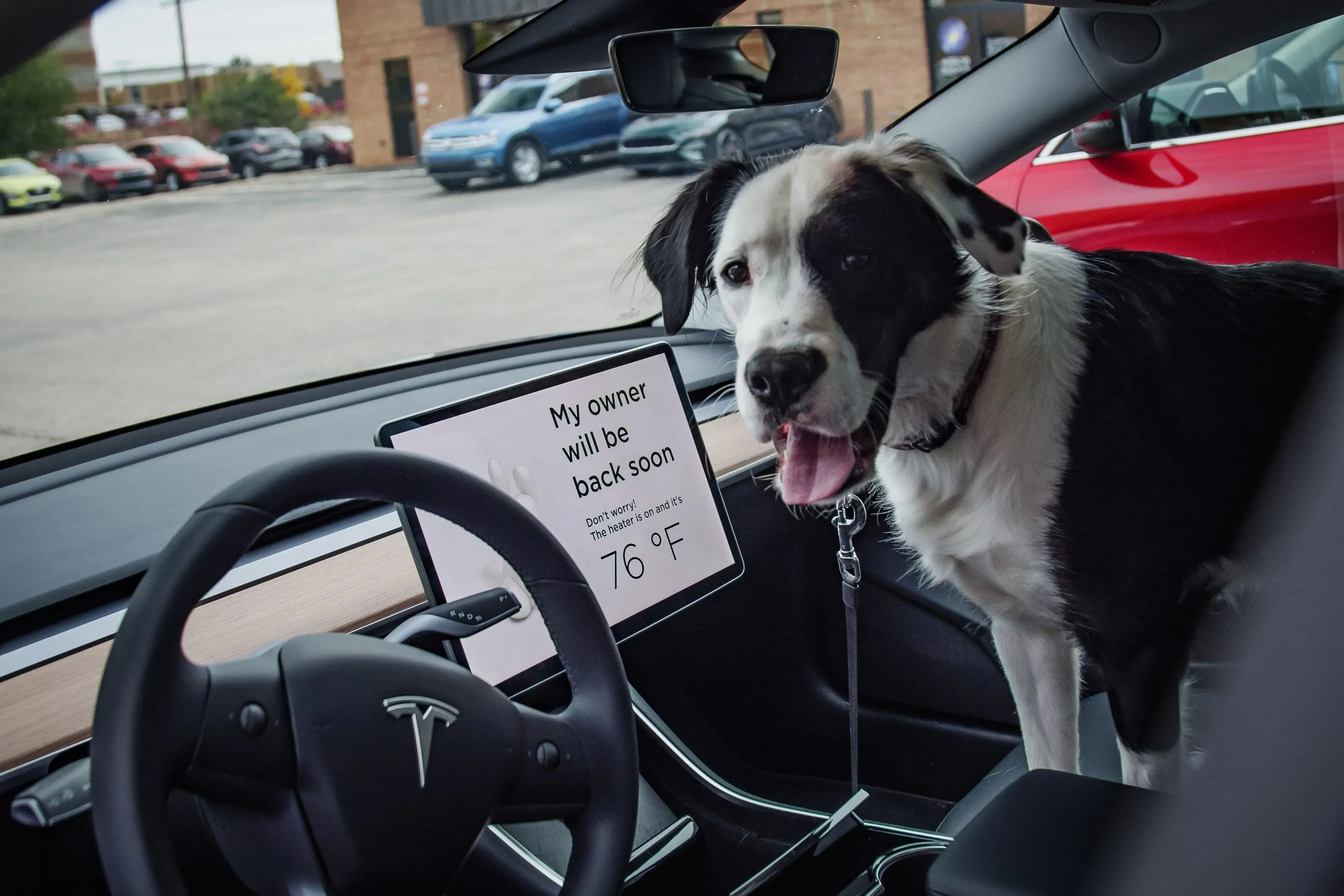
Tesla pioneered this feature, but other brands like Rivian, Hyundai, and Ford are following suit. Pet Mode keeps the cabin climate-controlled even when you’re away from the car—displaying a message on the infotainment screen to let passersby know your pet is safe and comfortable. This is especially useful during charging stops or short errands.
Flat load floors and wide cargo areas are also big advantages in many EVs. Without bulky transmissions or exhaust tunnels, EVs often have more usable rear space for crates, beds, or carriers. Vehicles like the Hyundai Ioniq 5, Kia EV9, and Tesla Model Y are popular among pet owners for exactly this reason.
Pro Tip: Bring a washable cargo mat or seat protector. EV interiors often use premium materials, and a durable mat will protect against fur, scratches, or muddy paws.
2. Safety Comes First: Secure Your Pet Properly
Even the calmest pet can become anxious during travel. That’s why securing them safely is essential—not only for their protection but also to avoid distractions while driving.
Use a pet seat belt, carrier, or harness system.
The safest way to transport pets is to keep them restrained. Harnesses that clip into seat belt receivers are ideal for dogs, while cats or smaller animals should travel in secured carriers. In case of sudden braking, this prevents injuries and keeps your pet from interfering with driving controls.
If your EV has rear climate vents, ensure that cool or warm air can reach your pet comfortably. Some EVs let you adjust climate zones individually—great for when your pet is in the back seat or cargo area.
Avoid the front seat.
Airbags can injure pets in the event of a crash, even at low speeds. Always use the rear seats or trunk area when possible.

3. Plan Charging Stops with Pets in Mind
Traveling in an EV means thinking about charging—especially with pets onboard. The good news? With some planning, charging stops can be just as comfortable for your furry companion as for you.
Use apps like PlugShare or ChargeHub to find EV charging stations near pet-friendly parks, rest areas, or walking trails. Many stations near major highways are now integrated with convenience stores, pet relief areas, or open spaces where your dog can stretch their legs.
When stopping to charge:
-
Always engage Pet Mode or climate control before stepping out.
-
Keep a water bowl and portable fan handy.
-
Avoid leaving your pet in direct sunlight, even for short periods.
Pro Tip: Choose stations with covered parking or shade structures—common in newer EV networks like Electrify America or Tesla Superchargers in warmer regions.

4. Keep Pets Comfortable During Long Drives
Long drives can be tiring for pets, especially in warm or cold weather. EVs, however, offer unique comfort advantages.
Quiet cabins mean less stress.
Because EVs operate nearly silently, pets are less likely to be startled by engine noise or vibration. This helps them stay relaxed for longer periods.
Consistent temperature control is another plus. With instant cabin heating and cooling—powered by the EV’s battery rather than the engine—you can maintain ideal comfort without idling. Adjust the climate gently to avoid sudden changes that might stress your pet.
Bring the right gear:
-
Soft bedding or a familiar blanket to make them feel at home
-
Chew toys or calming sprays to reduce anxiety
-
Pet wipes for easy cleanup
-
A collapsible water bowl and spill-proof food container
And don’t forget frequent breaks. Stopping every two to three hours gives both you and your pet time to stretch and recharge.

5. Pet-Friendly Destinations for EV Travelers
If you’re planning an EV road trip, why not pick a destination that welcomes pets with open arms? Here are a few ideas that combine great charging access with pet-friendly attractions:
Pacific Northwest (USA)
Oregon and Washington are full of scenic drives with plenty of chargers and dog-friendly trails. Portland even has several “dog cafés” and EV-friendly hotels.
California Coastline
Drive along Highway 1 in your EV, stopping at pet-welcoming beaches like Carmel-by-the-Sea or Huntington Dog Beach. Tesla Superchargers and other networks are abundant here.
National Parks (U.S. and Canada)
Parks like Acadia, Banff, and Shenandoah offer EV chargers nearby and designated pet areas. Always check local rules—some parks restrict pets on certain trails.
European Road Trips
If you’re abroad, destinations like Germany’s Black Forest or France’s Loire Valley offer EV infrastructure and pet-friendly hotels that cater to eco-travelers.

6. Charging Etiquette When Traveling With Pets
It’s tempting to leave your car running in Pet Mode at a public charger for an extended time, but remember charging station etiquette:
-
Move your car when charging is done so others can use the station.
-
If your pet needs to stay inside during charging, monitor the session through your app and be ready to return promptly.
-
Keep noise and waste under control—carry bags, and clean up after your pet.
Responsible EV and pet ownership go hand in hand!
7. After the Trip: Maintenance and Clean-Up
Once you get home, take a few minutes to restore your EV to pristine condition.
Vacuum pet hair from the seats and cargo area, wipe surfaces with a gentle cleaner, and wash removable mats. EV interiors often include vegan leather or synthetic fabrics, which are easy to clean but can scratch—use soft cloths.
It’s also a good time to check:
-
Any claw marks or bites on seat belts or harnesses
-
Whether your pet’s accessories need replacement
-
Charging port or cables (just in case of curious pets!)

Final Thoughts
Electric vehicles make traveling with pets more comfortable and sustainable than ever before. With features like Pet Mode, quiet cabins, and climate efficiency, EVs provide a stress-free experience for both pets and their owners. Combine that with careful planning, proper safety measures, and pet-friendly destinations, and you’ve got everything you need for the ultimate eco-friendly road trip with your furry friend.
Because in the end, happy pets make for happy journeys—and EVs make them cleaner, calmer, and kinder to the planet.
Recommend Reading: Traveling with Kids in an EV: Tips for Stress-Free Trips


Share:
EV-Friendly National Parks in North America
How to Manage Battery Range on Remote Trips