





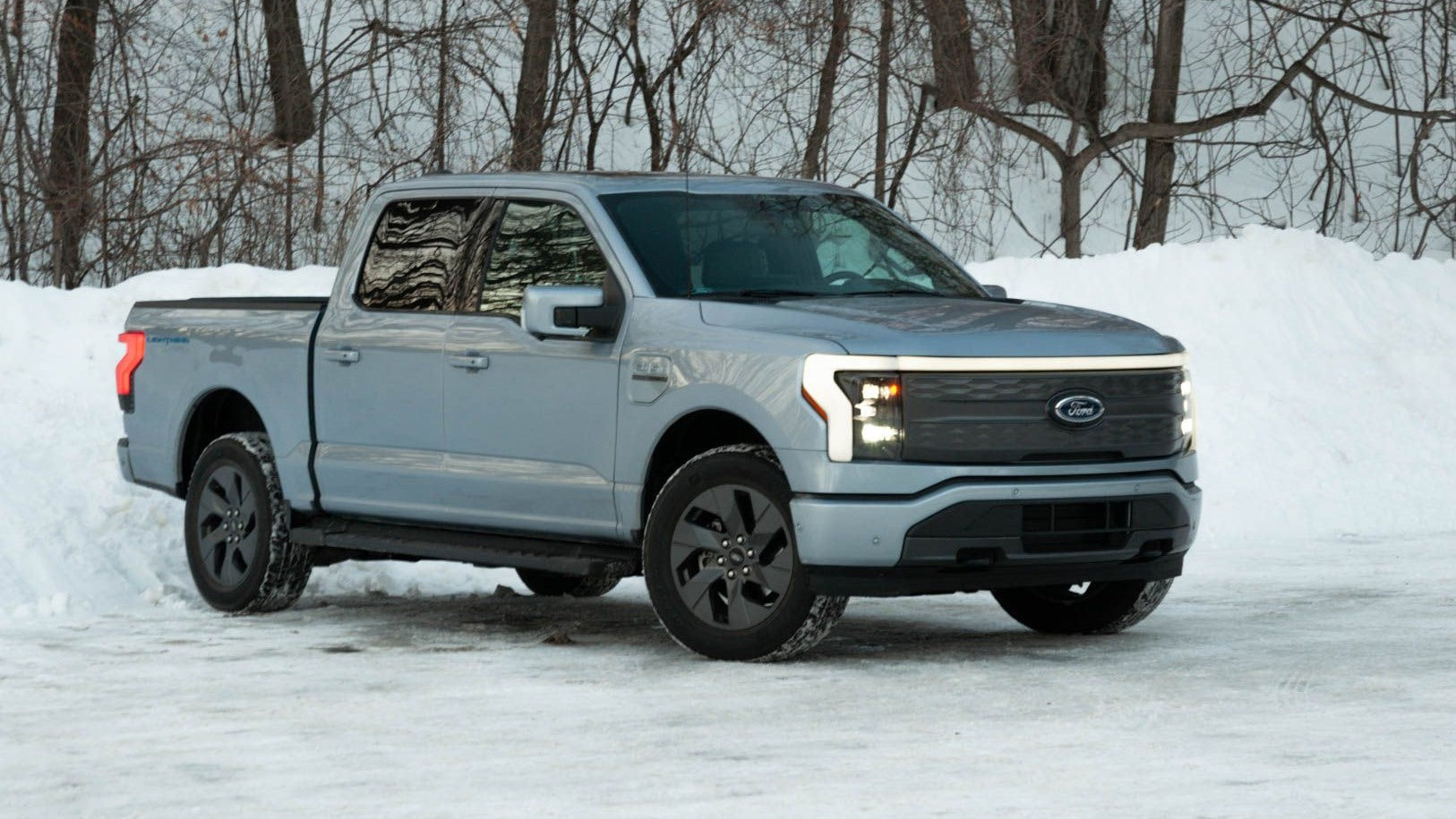
Early Expectations for Electric Pickup Trucks
Several years ago, many automakers believed electric pickup trucks could be the breakthrough product that would persuade skeptical American drivers to adopt battery-powered vehicles. Large trucks dominate the U.S. market, so manufacturers expected that electrifying them would quickly bring EV technology into suburban households across the country.
Excitement around the concept was intense. Preorders for electric pickups surged across the industry, including the widely publicized reservation list for Tesla’s Cybertruck. Companies rushed to position themselves at the front of what they believed would become a massive market segment.
Looking back, Ford CEO Jim Farley now says the company would likely have approached the project differently if it had understood how the market would evolve. In a recent interview with Car and Driver, Farley acknowledged that early assumptions about demand proved overly optimistic.

Production Expanded Faster Than Demand
Ford invested heavily to prepare for large volumes of the F-150 Lightning, the company’s electric version of its flagship pickup. The automaker expanded manufacturing capability and supply chains in anticipation of strong consumer demand.
However, the surge in interest that initially surrounded electric trucks gradually cooled. Although the Lightning remained available and functional as a full-size pickup, the level of demand ultimately fell short of the ambitious projections that guided Ford’s production plans.
Manufacturing of the current generation concluded in December 2025, roughly three years after the truck first entered production. During its run, the model achieved a notable milestone by becoming the top-selling electric pickup in the United States for much of its time on the market. Yet the vehicle never triggered the large-scale EV adoption wave that many observers had predicted.
Pricing Became a Major Barrier
Cost played a significant role in limiting the Lightning’s reach. According to Farley, market conditions during the COVID-19 period created misleading signals about what buyers were willing to pay for vehicles.
During that time, supply shortages allowed manufacturers to charge considerably higher prices. Farley explained that automakers were able to sell vehicles 30% to 40% above pre-pandemic levels when inventory was limited. This temporary environment encouraged companies to assume that consumers would continue accepting those higher prices.
As production conditions normalized, that assumption proved unrealistic. While drivers appreciated the Lightning’s capabilities, the cost of producing the truck made it difficult to offer at a price many buyers considered affordable.
Internal Design Assumptions Were Challenged
Another lesson emerged when Ford began closely analyzing competitors’ technology. After Doug Field, a former Apple and Tesla executive, joined the company to lead EV and digital development, Ford engineers examined Tesla vehicles in detail.
The comparison revealed significant differences in engineering philosophy. For example, Farley noted that the wiring harness in one Ford EV prototype weighed roughly 70 pounds more and extended about one mile longer than the equivalent system used by Tesla.
These findings highlighted how design choices can dramatically affect cost and efficiency. Tesla engineers often start by minimizing component size and complexity, whereas traditional automakers sometimes adapt existing vehicle architectures instead of redesigning systems from scratch.
Farley later summarized the contrast by explaining that Tesla approached EV development without preconceived assumptions rooted in internal-combustion design traditions.
A Culture of Extreme Cost Optimization
Industry sources say that Tesla’s approach extends to very small details throughout the vehicle. Engineers reportedly examine individual components carefully, even considering how the spacing of wiring clips or fasteners might influence production expenses.
Such incremental savings may appear minor on their own, but they can significantly reduce overall costs when multiplied across hundreds of thousands of vehicles. This level of attention to efficiency has become a benchmark that other manufacturers are studying closely as they refine their own EV programs.
For legacy automakers, adapting to this mindset can require fundamental changes in engineering processes and supplier relationships.
Ford’s Strategy Is Now Shifting
In response to these lessons, Ford has begun adjusting its electric vehicle roadmap. Rather than focusing primarily on high-priced models with strong margins, the company is increasingly exploring vehicles designed to reach a broader range of customers.
One example is an upcoming electric pickup expected to cost around $30,000, which aims to address the affordability concerns highlighted by Farley. By lowering entry prices, Ford hopes to attract buyers who are interested in EVs but unwilling to pay premium prices for early-generation models.
The automaker is also reevaluating how it allocates capital across new platforms. While Ford continues to invest billions in battery technology, software, and electrification, executives say the company is now taking a more cautious approach to expanding production capacity.
Expensive Lessons From the First Wave of EV Trucks
Although the F-150 Lightning did not achieve the widespread adoption some expected, the project still provided valuable insights. Ford gained experience in electric truck manufacturing, charging infrastructure integration, and battery supply chains.
Farley has suggested that learning these lessons required significant investment, but the knowledge gained will shape future vehicle development. In an industry undergoing rapid technological change, experiments that fall short of expectations can still influence long-term strategy.
As automakers refine their plans for electrification, the story of the Lightning illustrates how early enthusiasm for new technology can evolve once real-world market conditions emerge.
Recommend Reading: What to Expect From Ford’s $30K Electric Truck Platform in 2027


Share:
Hyundai Plans to End Most Ioniq 6 Sales in the United States
BYD Unveils Blade 2.0 Battery, Sets New Benchmark for EV Charging