



Production Cuts Ahead
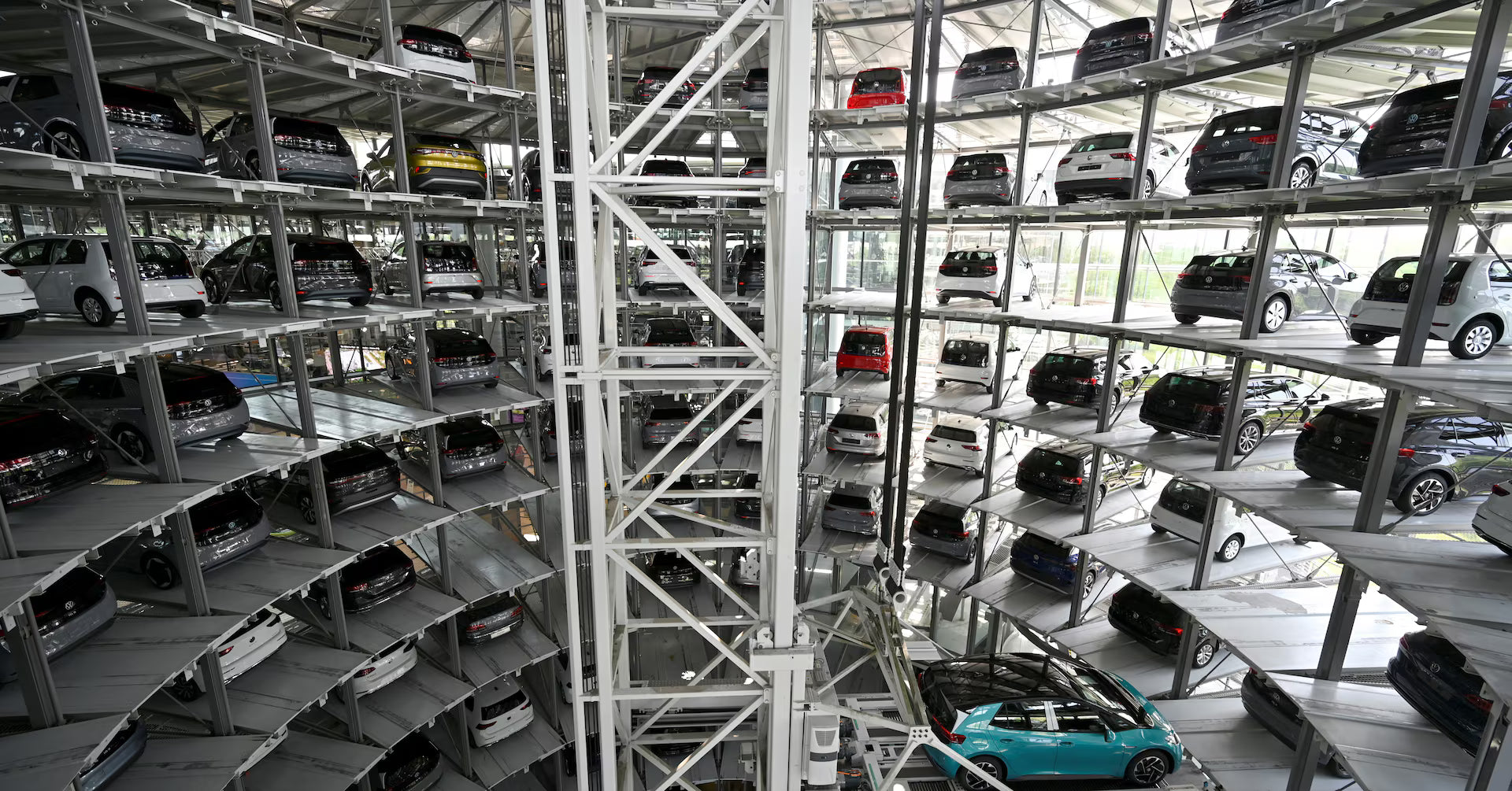
Volkswagen Group is preparing to temporarily pause production of several key electric models in Europe as demand softens and trade tensions complicate pricing. According to a Bloomberg report citing people familiar with the matter, the Audi Q4 E-Tron, Volkswagen ID.4, and Volkswagen ID.7 will all be affected in the coming weeks.

Zwickau Plant Hit First
At the company’s Zwickau, Germany, factory, production of the Audi Q4 E-Tron will halt for a week starting October 6. A spokesperson confirmed the move, pointing to weak demand in Europe and pricing challenges linked to U.S. tariffs.
The Zwickau facility is significant because it was converted into an all-EV plant, serving as the backbone of Volkswagen’s European electric strategy. It currently builds the Audi Q4 E-Tron, Volkswagen ID.3, ID.4, and ID.5, as well as the Cupra Born.
Although U.S.-market ID.4 units are assembled at a separate plant in Chattanooga, Tennessee, that site is also set to face disruptions. Reports suggest a temporary worker furlough is planned for October.
Emden Factory Scales Back
At the same time, Volkswagen’s Emden, Germany, facility, which produces the ID.4 and the larger ID.7 sedan, is cutting employee hours. According to sources who requested anonymity, management is preparing to shut down production lines for several days in October.
This is not the first time Emden has faced disruptions. Along with Zwickau, it has experienced several temporary closures as the automaker tries to align output with fluctuating EV demand.
Market Context: Gains and Limits
The production pause comes after a turbulent period for Volkswagen’s electric strategy. Following lackluster EV sales in 2023 and early 2024, the company rebounded to become the European EV sales leader, surpassing Tesla.
Key updates to the ID.3 and ID.4—including improved software and greater reliability—helped repair Volkswagen’s reputation and restore consumer confidence. As a result, the brand delivered more than 16,000 EVs in Europe last month, a 45% increase compared to a year earlier.
Why Pause Now?
Despite that progress, sales volumes still appear insufficient to sustain uninterrupted production across multiple plants. Analysts note that margins in the EV sector remain thin, and higher costs tied to tariffs and supply-chain adjustments make it harder for automakers to justify running lines at full capacity.
Volkswagen’s strategy to diversify its lineup has provided resilience, but the temporary closures highlight the volatility of Europe’s EV market. Rising competition, uneven demand across regions, and shifting trade dynamics are forcing manufacturers to recalibrate output more frequently than in the traditional combustion-car era.

Looking Ahead
Volkswagen has not confirmed how long the pauses will last beyond the initial week at Zwickau. The company says it will continue to monitor demand closely and adjust production as needed.
While Volkswagen remains Europe’s best-selling EV brand, the current slowdown underscores the delicate balance automakers face: scaling up fast enough to compete globally, while avoiding costly overproduction.
As one industry analyst put it, Volkswagen may have dethroned Tesla in Europe, but it has not yet solved the puzzle of making EVs consistently profitable.
Recommend Reading: Tesla Expands German Production Despite Falling European Sales
Share:
Stellantis Unveils IBIS: A Smarter, Smaller EV Battery That Boosts Range and Charging
Volvo EX60 Ushers In A New Era Of Prismatic, Structural EV Batteries