





Hyundai Motor Group has built a strong reputation in the electric vehicle market. Its EVs offer competitive range, fast charging, bold design, and solid performance, often at prices that undercut rivals. Yet one critical area still lags behind the industry’s leaders: advanced autonomous driving.
As competitors like Tesla, General Motors, and Waymo continue to refine hands-free and eyes-off driving systems, Hyundai is under growing pressure to elevate its own capabilities. Recent developments suggest the company recognizes this gap—and is preparing to address it more aggressively.

Where Hyundai Excels—and Where It Falls Short
Hyundai’s electric lineup, spanning brands like Hyundai, Kia, and Genesis, checks many boxes that matter to consumers. Vehicles such as the Ioniq 5, Ioniq 6, and EV6 deliver high efficiency, strong performance, and industry-leading charging speeds thanks to their 800-volt architectures.
What they do not yet offer is true hands-free highway driving or robust city-level autonomy. While Hyundai’s driver assistance systems are competent, they remain firmly in the Level 2 category, requiring constant driver supervision. For buyers accustomed to Tesla’s Full Self-Driving beta, GM’s Super Cruise, or Ford’s BlueCruise, this is becoming a noticeable limitation.
As autonomous features increasingly influence purchasing decisions and brand perception, Hyundai’s relative absence in this space is turning into a strategic challenge.

A Signal From the Top
According to recent reports from South Korea, Hyundai Motor Group Executive Chair Euisun Chung visited the company’s autonomous driving subsidiary, 42dot, and personally took a test ride in an autonomous Hyundai Ioniq 6 prototype.
The visit itself is notable, but the technology behind the demonstration matters more. The prototype reportedly uses an end-to-end autonomous driving system, a cutting-edge approach in which raw sensor data from cameras, radar, and lidar is processed by a single AI model. Rather than relying on traditional rule-based logic, the system learns driving behavior holistically.
While executive visits are common in the auto industry, Korean media interpreted this moment as a vote of confidence—and perhaps a signal that Hyundai’s leadership wants faster progress after a period of uncertainty.
Organizational Turbulence Inside Hyundai’s AV Efforts
Hyundai acquired 42dot in 2022 as a cornerstone of its autonomy ambitions. However, momentum has been uneven. The recent departure of Song Chang-hyeon, who led both 42dot and Hyundai’s Advanced Vehicle Platform division, raised questions about internal alignment and execution.
Reports in Korea suggest leadership changes may reflect frustration with the pace of development. This comes at a time when Hyundai faces growing competition not only from established AV players like Waymo, but also from Chinese technology firms, many of which are rapidly advancing autonomous systems alongside their global EV expansion.
In this context, Hyundai’s autonomy roadmap appears to be at a crossroads.

Existing Partnerships and What They Deliver
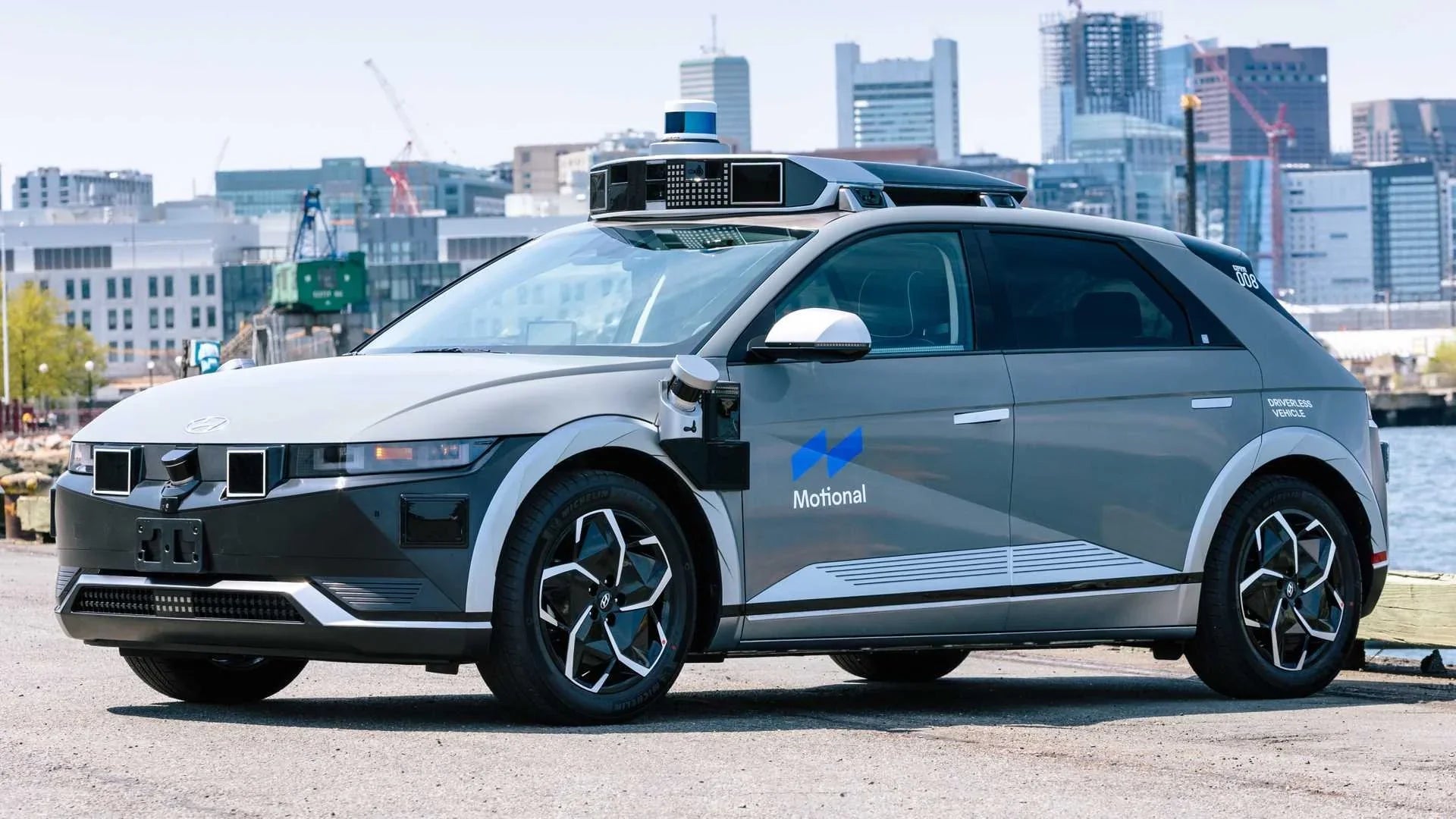
Despite challenges, Hyundai is far from absent in the autonomous space. Its joint venture with Aptiv, known as Motional, has been testing autonomous Hyundai Ioniq 5 vehicles in cities including Las Vegas, Pittsburgh, Los Angeles, and Singapore.
Hyundai also supplies Ioniq 5s to other autonomous developers, including startup Avride and, soon, Waymo. These partnerships provide valuable real-world data and validation of Hyundai’s EV platforms as reliable autonomous testbeds.
Additionally, Hyundai owns Boston Dynamics, one of the world’s most advanced robotics companies, and continues to invest heavily in automation across its manufacturing operations.
Yet partnerships alone may not be enough.
Why In-House Autonomy Matters More Than Ever
Across the industry, automakers are realizing that outsourcing autonomy limits long-term control. End-to-end self-driving platforms are becoming core intellectual property, shaping everything from vehicle architecture to customer-facing software services.
For investors and analysts, autonomy is increasingly viewed as a growth engine—perhaps even more compelling than EV sales themselves, especially as global EV demand is expected to soften around 2026.
In the near term, consumers have shown they are willing to pay recurring fees for advanced driver assistance features such as Super Cruise and BlueCruise. Over time, automakers envision a unified software platform capable of powering private vehicles, robotaxis, delivery fleets, and autonomous shuttles.
Hyundai appears to understand that remaining competitive means developing its own centralized, software-defined vehicle architecture, rather than relying primarily on external suppliers.

The Convergence of EVs, AI, and Robotics
Autonomous driving does not exist in isolation. It sits at the intersection of electric powertrains, artificial intelligence, advanced sensors, and robotics. EVs, with their electronic architectures and drive-by-wire systems, are naturally better suited for autonomy than combustion vehicles.
This convergence may ultimately accelerate EV adoption rather than slow it. As vehicles become smarter, more connected, and increasingly automated, the value proposition shifts from horsepower and styling to software capability and continuous improvement.
Hyundai’s broad technology portfolio positions it well for this future—if it can execute effectively.
What to Watch Next
Hyundai has announced that it will unveil its “AI Robotics Strategy” at the upcoming CES, including advancements in humanoid robots from Boston Dynamics, AI learning systems, and next-generation automated factories.
While autonomous driving has not been officially confirmed as part of that presentation, it would be surprising if Hyundai did not at least hint at its next steps. The timing suggests the company is preparing to reframe itself not just as an automaker, but as a mobility and robotics technology leader.
Whether Hyundai can translate ambition into a competitive, production-ready autonomous system remains to be seen. But recent signals suggest that the company recognizes what is at stake—and is preparing for a more decisive push.
Recommend Reading: Hyundai Prepares Its Largest Electric Van for European Debut









Share:
Understanding All Major EV Battery Types and Their Applications
Are Extended-Range EVs Becoming Obsolete?