



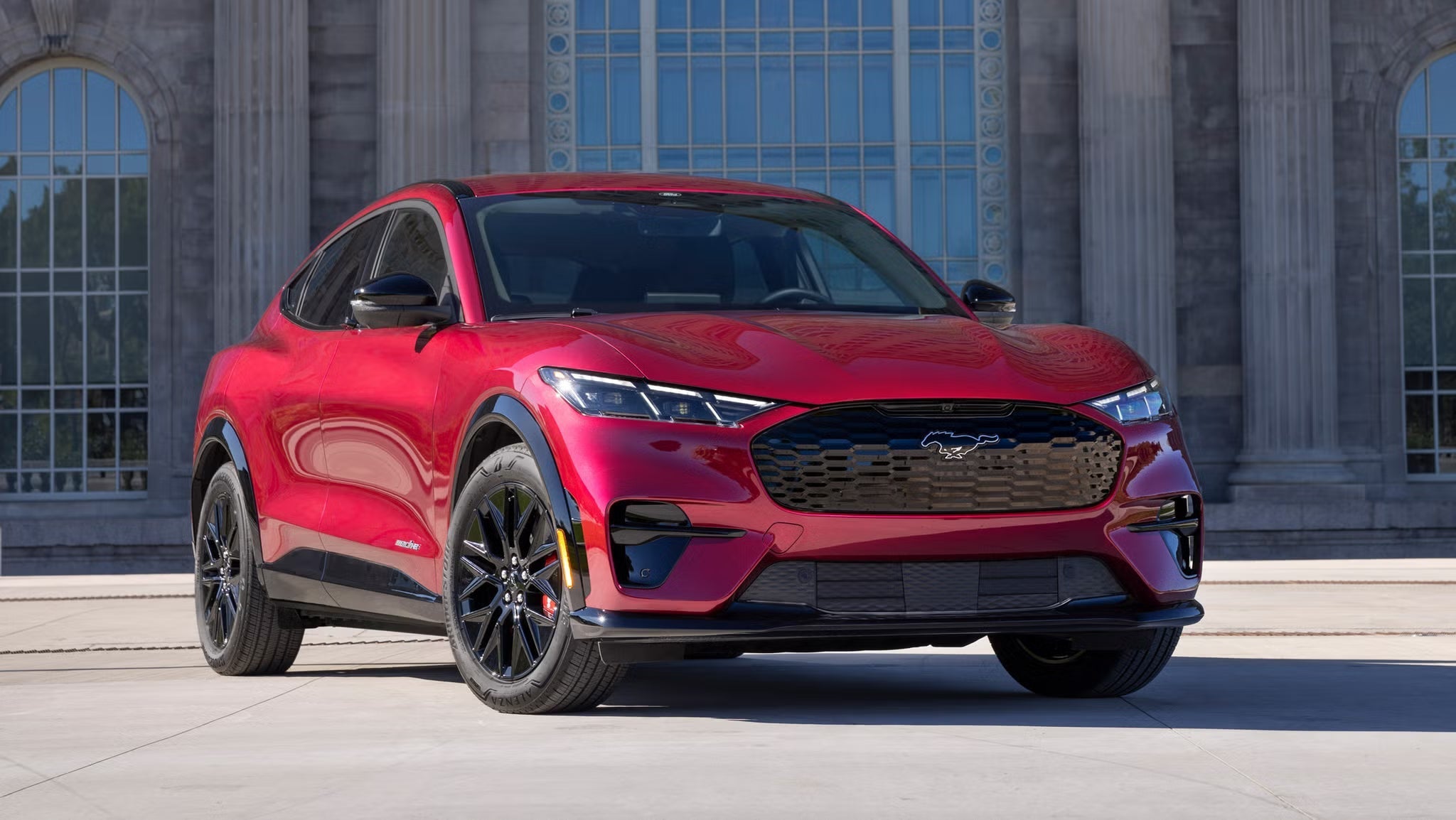
Ford Steps Back From Overdesigned Controls
For years, automakers chased futuristic interiors by replacing intuitive controls with touch panels, capacitive buttons and unconventional shifters. The results often looked modern but felt frustrating in daily use. With the 2025 Mustang Mach-E, Ford has finally taken a meaningful step back toward usability by removing one of its most criticized features.
The rotary gear selector, shared across several recent Ford models, is gone. In its place is a traditional column-mounted shifter, a change that immediately improves how the Mach-E feels to drive, park and live with. It is a small update on paper, but one that makes a noticeable difference every time the car is used.

Why the Column Shifter Matters
The rotary knob shifter was awkwardly placed, required drivers to look down to use it, and consumed valuable center console space. In contrast, a column shifter sits within natural reach and can be operated by feel alone, reducing distraction and improving safety.
This layout has already been adopted by competitors such as General Motors, Hyundai, Mercedes-Benz and Rivian. By bringing the same solution to the Mach-E for 2025, Ford eliminates a long-standing pain point and aligns the vehicle with best practices across the EV industry.
After extended time with the updated Mach-E, everyday tasks like parking, three-point turns and quick gear changes feel smoother and more intuitive. It is a quality-of-life improvement that drivers will notice immediately.
The Mach-E Still Struggles With Interface Design
While the shifter change is welcome, it does not solve all of the Mach-E’s usability issues. The vehicle remains heavily dependent on its touchscreen, and that system continues to show its age.
Menu transitions are slow, scrolling lags behind finger inputs, and new sections take several seconds to load. The graphics are clean and the layout is logical, but the hardware struggles to keep up. Because nearly every function is controlled through the screen, the sluggish performance becomes unavoidable in daily driving.
Other design choices compound the issue. Touch-based door release buttons interrupt what should be a simple motion, while frunk access is buried inside menus that take time to load. These decisions reflect an era when minimalism was prioritized over practicality.
A Broader Industry Reversal
Ford’s decision to restore a conventional shifter is not happening in isolation. Across the industry, automakers are rethinking their approach to interior controls.
Volkswagen has publicly committed to bringing back physical buttons, with executives acknowledging that cars should not behave like smartphones. New EV startups such as Scout and Slate are emphasizing tactile controls as a core design principle. Hyundai is also reversing earlier design trends, especially in response to customer feedback.
In Europe, regulators are even considering mandating physical controls for critical vehicle functions, further accelerating the shift away from all-touch interiors.
Value Improvements Reflect a Maturing EV Market
The Mustang Mach-E originally launched during a period when EV makers pushed aggressive cost cutting and minimalist interiors to offset high battery expenses. Over time, Ford has steadily improved the vehicle by increasing range, adding power, upgrading technology and repeatedly lowering prices.
The 2025 model reflects a more balanced approach. As EV production scales and battery costs decline, manufacturers are finding room to improve interior quality without driving prices higher. The return of the column shifter is part of that correction.

A Small Change With Outsized Impact
The Mach-E still has room to improve, particularly in infotainment performance and interface design. However, the 2025 update proves that Ford is listening and willing to reverse unpopular decisions.
By restoring a familiar, intuitive control, Ford makes the Mach-E easier and more pleasant to drive. It is not a complete redesign, but it is a meaningful step toward making EVs feel less experimental and more refined.
Recommend Reading: 2026 Ford Mustang Mach-E Gains Subtle but Useful Rear Door Handles


Aktie:
Musk Reflects on Political Detour as Tesla Faces Sales Declines
Ionna Accelerates U.S. Fast-Charging Expansion at Record Pace