





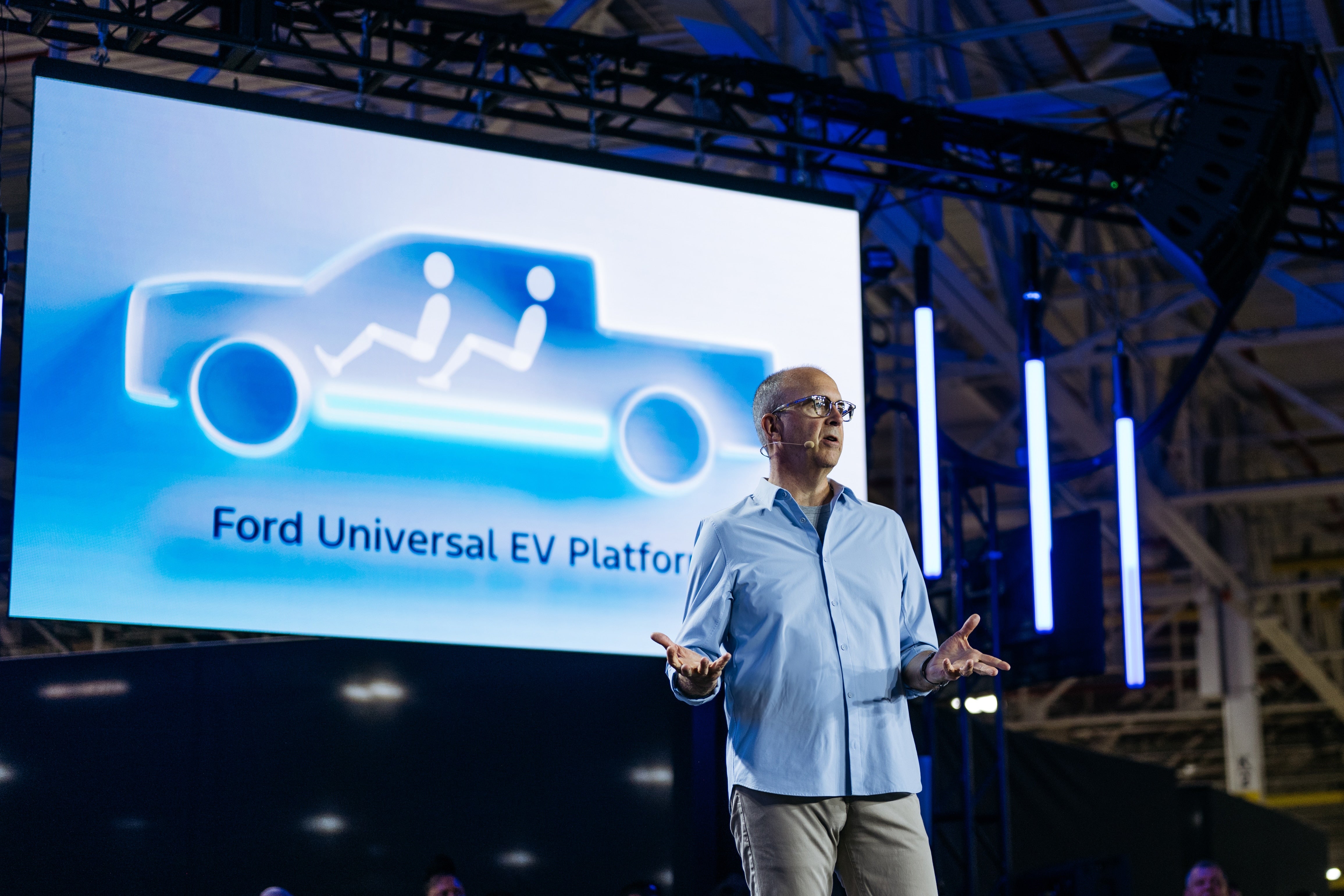
Ford Cancels Multiple EVs
Ford has been scaling back its electric vehicle plans, canceling several anticipated models including a three-row electric SUV, an F-150 Lightning successor, and an E-Transit replacement. While the company is not abandoning EVs entirely, its efforts are now focused on an all-new Universal Electric Vehicle (UEV) platform. This architecture, developed by Ford’s "skunkworks" team, is designed to underpin affordable EVs in the U.S., including a roughly $30,000 electric pickup.

Europe Launch Still Uncertain
Despite being called “universal,” the UEV platform may not reach Europe. Ford Europe President Jim Baumbick described bringing the platform across the Atlantic as a “very significant undertaking in terms of engineering and capital intensity.” Pickups are far less popular in Europe than in the U.S., raising questions about the viability of launching the platform there.
Compact EVs Could Follow
The UEV platform is expected to support not only pickups but also compact SUVs and other EV models. Yet Ford has not confirmed if any of these models will reach the European market. CEO Jim Farley emphasized caution, noting that the company “has not landed the plane yet” and wants to focus on the U.S. launch first.
Reliance on Partners
Ford’s European strategy currently depends on rebadged and partner-built EVs. The company already sells MEB-based Volkswagen models and recently partnered with Renault for affordable EVs in Europe. However, the slow sales of the VW-built Explorer EV and Capri EV show the challenges of relying on external platforms. Buyers often prefer products built by the brand itself, leaving Ford at a disadvantage.

Regulatory Pressure Remains
EVs are crucial to Ford’s long-term European strategy. Despite rolling back its EV mandate in the U.S., European regulators still require drastic emission reductions by 2035, essentially mandating a strong EV lineup. Farley has warned that Chinese newcomers are rapidly gaining market share, a trend already visible in Europe. Without competitive EV offerings, Ford risks further decline in the region.
A Strategic Crossroads
Ford’s cautious approach highlights a critical inflection point. While the UEV platform could redefine its EV portfolio, the company is balancing profitable U.S. gas-truck sales with its shrinking European presence. Historically dominant in Europe, Ford is now struggling to maintain relevance. Partnerships like Renault may help, but the underlying challenge remains: consumers tend to favor local EVs over rebadged imports, leaving Ford’s European ambitions uncertain.
Recommend Reading: Ford Scales Back EV Ambitions at a Cost of Nearly $20 Billion











Share:
Used Tesla Cybertruck Prices Keep Sliding as Demand Falters
Hyundai Prepares Its Largest Electric Van for European Debut