





Expansion Plans Signal a Strategic Shift
While several established automakers in the United States have recently moderated their electric vehicle plans, Toyota is moving in the opposite direction. The company announced a $1 billion investment across its U.S. manufacturing network, with a significant portion dedicated to expanding electric vehicle production capacity.
This move reflects a broader adjustment in Toyota’s long-term strategy, as the company accelerates its transition toward electrification after years of a more cautious approach.

Kentucky Plant to Lead EV Growth
The largest share of the investment—$800 million—will be directed toward Toyota’s facility in Georgetown, Kentucky. This funding will support the development of a second electric model produced domestically, while also increasing output of key existing models such as the Camry and RAV4.
The remaining $200 million is allocated to Toyota’s Princeton, Indiana plant, where production of the Grand Highlander will be expanded. This site also manufactures the Sienna minivan and the Lexus TX SUV, reinforcing its role as a multi-model production hub.
First Electric Model Already Confirmed
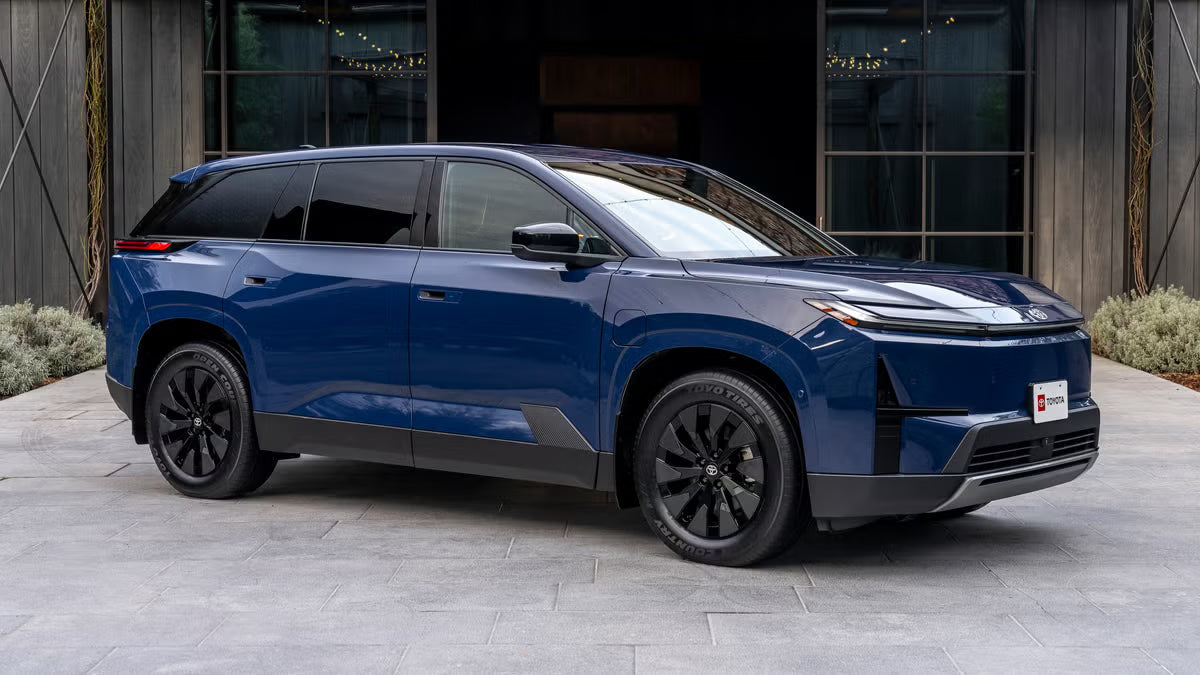
Toyota has already outlined plans for its first EV to be built in Kentucky: a three-row electric SUV carrying the Highlander name. The model is expected to transition into a fully electric offering, marking the end of the gasoline-powered Highlander, which is scheduled to conclude production within the year.
In contrast, the larger Grand Highlander will continue to be offered with traditional and hybrid powertrains, suggesting a dual-track approach where electrification and hybridization coexist.
What Could the Second EV Be?
Toyota has not officially disclosed the identity of the second electric vehicle planned for Kentucky, but several possibilities have emerged based on industry reports and prior concept reveals.
One potential direction involves electric versions of established models. Reports have indicated that future U.S.-built EVs could draw inspiration from vehicles like the RAV4 or Land Cruiser. The company has already introduced a concept version of an all-electric Land Cruiser, designed as a three-row SUV with a focus on versatility and off-road capability.
Another scenario points toward a premium offering under the Lexus brand. During an earlier electrification showcase, Toyota presented a large electric SUV concept positioned as a luxury counterpart to mainstream models. Such a vehicle could compete with high-end electric SUVs already entering the market.
Manufacturing Strategy Still Evolving
There are additional factors that could influence Toyota’s final decision. Reports have suggested that the company is restructuring parts of its U.S. manufacturing footprint, particularly for Lexus models.
Changes in trade policies and tariffs have prompted adjustments, including shifting certain sedan production back to Japan. As a result, Toyota may be reassessing how best to utilize its American facilities, potentially dedicating more capacity to electric vehicles.
Another possibility involves collaboration with partners. Toyota could develop a related model for Subaru, similar to existing joint projects, which might result in a three-row electric SUV variant tailored for that brand.
Broader EV Portfolio Expansion
The new investment comes as Toyota expands its electric lineup for the 2026 model year. The company has introduced multiple new models alongside updates to existing ones, signaling a more aggressive rollout strategy.
Among these is a revised version of its earlier electric crossover, now featuring improved styling, extended driving range, and faster charging capabilities. Notably, the updated model includes a native NACS charging port, aligning with evolving charging standards in North America.
Additional entries include a more compact, sport-oriented crossover and a utility-focused wagon designed for outdoor use. Together, these models broaden Toyota’s appeal across different customer segments.
Lexus Also Accelerates Electrification
Toyota’s luxury division is following a similar path. Lexus has refreshed its electric crossover lineup and introduced a new sedan that is available exclusively with electrified powertrains, including both hybrid and fully electric configurations.
This coordinated push across both brands highlights a more unified approach to electrification, with investments spanning multiple vehicle categories and price points.

A Notable Change in Direction
Toyota has historically taken a measured stance on battery electric vehicles, emphasizing hybrids as a transitional solution. However, the latest investment and product announcements indicate a clear shift toward a more balanced portfolio that includes a stronger focus on fully electric models.
By committing substantial resources to domestic EV production, the company is positioning itself to compete more directly in a rapidly evolving market. The exact identity of the second Kentucky-built EV remains unknown, but its development will likely play a key role in Toyota’s next phase of growth in the United States.
Recommend Reading: 2027 Toyota Highlander EV Adds Bidirectional Charging










Share:
US Safety Review Finds One-Pedal Driving Not a Risk
Tesla Sales in Europe Rise After Over a Year of Declines