




A Revised Take on a Familiar EV
Volkswagen has introduced a thoroughly updated version of its compact electric hatchback, now called the ID.3 Neo, aiming to correct long-standing criticisms while refining its overall appeal. The original model, first released in 2021, delivered solid fundamentals but faced persistent feedback around usability and styling.
With this latest iteration, the company appears focused on aligning the car more closely with its mainstream identity. The changes are not limited to cosmetic tweaks; instead, they reflect a broader effort to improve both driver interaction and perceived quality.

Exterior Updates Move Toward a Classic Look
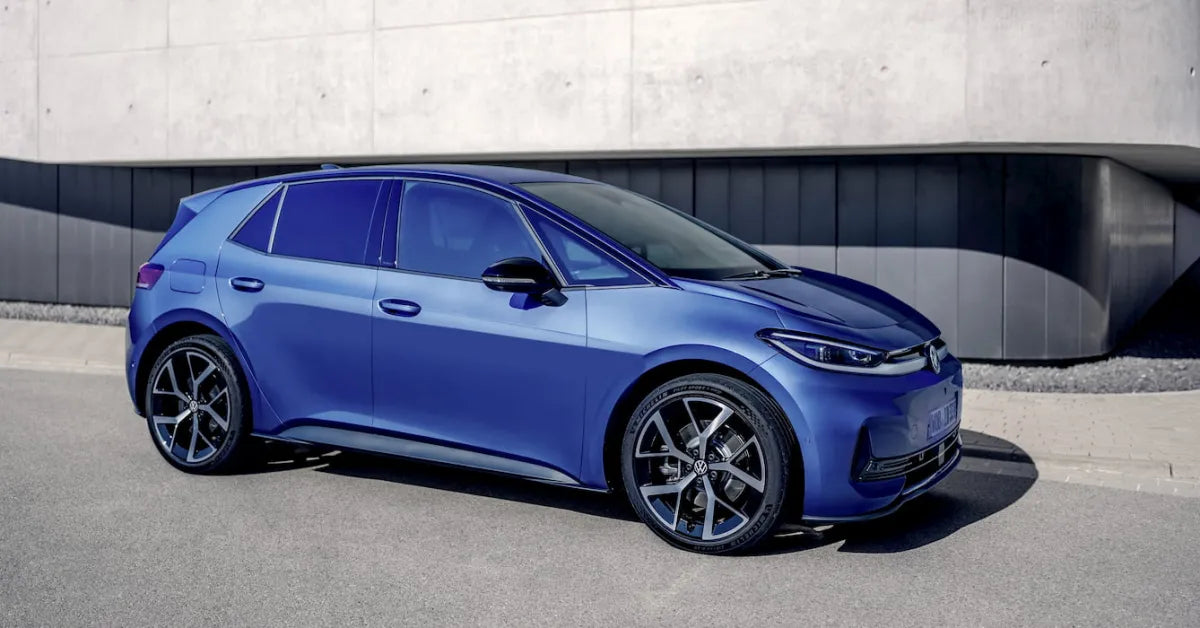
One of the most noticeable revisions appears at the front of the vehicle. The redesigned fascia adopts a cleaner, more conventional appearance that echoes the familiar proportions of Volkswagen’s traditional hatchbacks.
A continuous light strip now connects the headlights, giving the car a more cohesive and modern visual signature. Subtle adjustments to the front proportions also contribute to a less abrupt profile, reducing the compact, rounded look seen previously.
Elsewhere, the exterior remains largely consistent with the outgoing model, though new wheel options and updated color selections provide additional customization.
Interior Overhaul Focuses on Usability
The most significant improvements are found inside the cabin. Volkswagen has reworked key elements including the dashboard, door panels, and steering wheel, aiming to create a more intuitive and comfortable environment.
A major shift is the return of physical controls. Earlier touch-based inputs, which required sliding gestures for basic functions, have been replaced with traditional buttons and switches. In total, the cabin now includes 19 physical buttons, offering direct access to frequently used features.
Climate settings are managed via a dedicated control row beneath the central air vents, allowing drivers to adjust temperature, airflow, and defrost functions without navigating menus. Additionally, a rotary volume knob has been introduced, positioned within easy reach, replacing the less practical touch interface.
Window operation has also been simplified. Instead of a shared control system, separate switches now allow direct control over both front and rear windows, improving convenience.
Technology Blends Modern and Retro Elements
Volkswagen has retained its large infotainment display, measuring 12.9 inches, while introducing a revised 10.25-inch driver display with a retro-inspired layout. The design references older analog clusters, offering a visual style that contrasts with the otherwise digital environment.
Material quality has also been addressed. Previous criticism centered on extensive use of hard plastics, and the new version incorporates upgraded surfaces intended to enhance the tactile experience.
Together, these changes suggest a shift toward balancing advanced technology with more familiar, user-friendly interfaces.
Battery Options and Performance Improvements
The ID.3 Neo is offered with multiple battery configurations, providing flexibility across different price points and usage needs. The largest pack has increased to 79 kWh, enabling a claimed range of up to 391 miles (630 km) under WLTP testing. This version is paired with a rear-mounted motor producing 223 horsepower.
Two additional variants are available: a mid-level option with a 58 kWh battery and 188 hp, and an entry-level version featuring a 50 kWh pack delivering 168 hp. Charging capabilities vary depending on the battery size, with the largest supporting up to 183 kW, while the smaller packs peak at 105 kW.
All versions now include vehicle-to-load (V2L) functionality, allowing the car to supply power to external devices.
Potential Performance Variant and Market Launch
Volkswagen is also considering a higher-performance version of the model, which could carry the well-known GTI designation. If introduced, it may feature significantly increased output, potentially comparable to sportier models within the broader Volkswagen Group lineup.
Order availability in Europe begins on April 16, with initial deliveries expected in July. Pricing details have not yet been released.
Looking ahead, Volkswagen is preparing a separate fully electric successor to the Golf, expected toward the end of the decade. That model will transition to a new platform designed to improve efficiency and performance beyond the current architecture.

A Strategic Adjustment Rather Than a Reinvention
The ID.3 Neo represents a targeted evolution rather than a complete redesign. By addressing usability concerns and refining its design language, Volkswagen appears to be repositioning the model to better meet customer expectations.
While the original version established the foundation, this update focuses on practical improvements that could make a meaningful difference in everyday use. Whether these changes are enough to strengthen its position in an increasingly competitive EV market will become clearer once it reaches customers.
Recommend Reading: Volkswagen ID. Buzz Self-Driving Vans Begin Testing in Los Angeles









Share:
Jeff Bezos-Backed Slate Auto Raises New Capital for Low-Cost Electric Truck Program
2027 BMW iX3 Review: A Strong Comeback in Electric SUVs