


A Major Expansion of Hyundai’s Battery Development
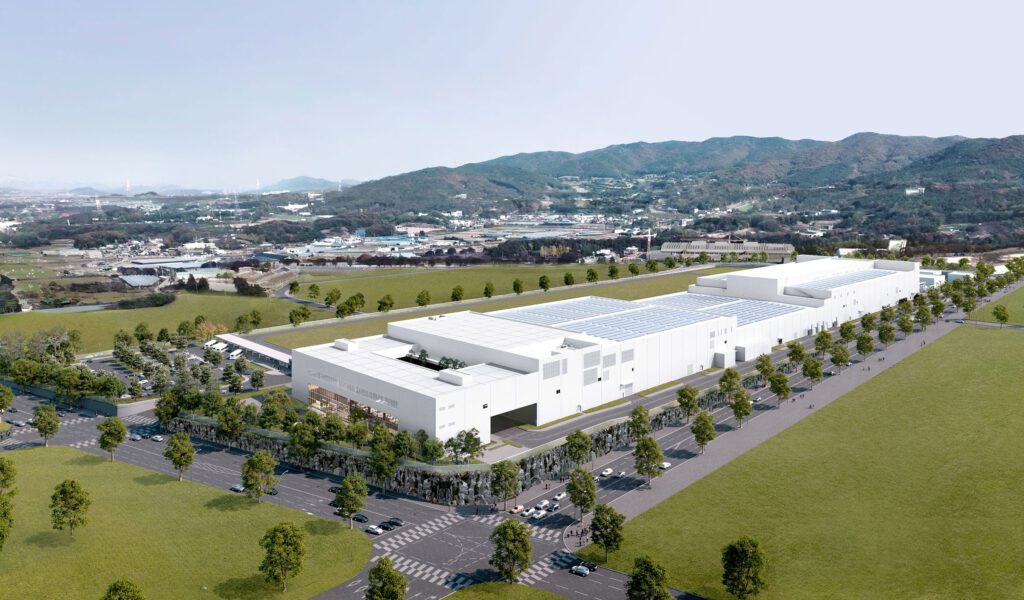
Hyundai Motor Group—parent company of Hyundai, Kia, and Genesis—has begun construction of its largest and most advanced battery R&D facility to date in South Korea. The new Future Mobility Battery Campus, valued at 1.2 trillion won (about $817 million), represents one of the company’s most significant investments in ensuring its future EVs and hybrids remain competitive as global battery technology rapidly evolves.
Located on a 200,000-square-meter site, the center is designed to strengthen Hyundai’s ability to validate, test, and refine battery systems before they enter mass production. The automaker says the campus will support “continuous process validation,” a workflow that puts battery packs through real-world durability simulations far earlier than before.

Expanding Validation and Real-World Testing
The campus gives Hyundai the ability to green-light battery designs only after they have undergone extensive performance and safety assessments. If an issue appears during testing, the facility includes the equipment needed to diagnose failures, evaluate materials, and modify designs quickly.
Hyundai has conducted battery experiments at its Namyang and Uiwang R&D centers for years, but the new campus centralizes and significantly scales those efforts. The team will work on next-generation high-performance lithium-ion cells for both EVs and extended-range hybrids, exploring multiple form factors and manufacturing methods. Production-simulation lines will enable testing of electrode fabrication, cell assembly, thermal stability, and structural durability under near-manufacturing conditions.
Automakers Race to Bring Battery Development In-House
Hyundai’s move reflects a broader industry shift. As EV performance becomes increasingly tied to battery chemistry, thermal management, and pack integration, more automakers are internalizing these capabilities. Developing batteries in-house gives companies tighter control over cost, safety, lifecycle performance, and software integration, all of which directly influence long-term competitiveness.
Relying heavily on suppliers can limit innovation speed or vehicle-specific optimization. With EV demand fluctuating and competition intensifying, automakers with strong internal battery expertise are better positioned to adapt quickly and introduce new chemistries.
Tesla, General Motors, BYD, and several Chinese manufacturers already invest heavily in their own battery technologies, though they still partner with established cell suppliers to scale production. Toyota is also deepening its internal battery operations, including work at its $14 billion North Carolina battery campus, which will support EVs and hybrids.
Parallel Efforts Across the Industry
General Motors is building a validation facility in Warren, Michigan, where it plans to test its upcoming lithium-manganese-rich cell chemistry before rolling it out for full-size SUVs and trucks around 2028. Hyundai is now part of an increasing list of automakers—including Ford, Ram, Volvo, and major Chinese brands—developing extended-range EV platforms that rely on advanced battery efficiency and thermal control.
The new campus will also support early-stage development of solid-state batteries, an area Hyundai continues to explore but rarely discusses publicly. Solid-state chemistry is considered one of the most promising future technologies thanks to its potential for higher energy density and improved safety.

Strengthening Hyundai’s EV Strategy
The launch of the Future Mobility Battery Campus underscores Hyundai’s long-term ambition to secure a stronger role in the global EV market. Battery performance and production efficiency will play central roles in determining whether Hyundai’s next generation of EVs can maintain momentum, especially as rivals—from China to North America—compete aggressively on technology and cost.
With this investment, Hyundai aims to accelerate innovation across its portfolio and ensure future Hyundai, Kia, and Genesis models remain competitive in range, durability, performance, and pricing.
Recommend Reading: U.S. EV Makers Turn to LFP Batteries for Lower Costs and Wider Adoption

Partager:
Why Tesla Studied Chinese EVs—and What It Learned About Cost and Design
Porsche Cayenne EV Draws Strong Early Interest With 110,000 Configurations