



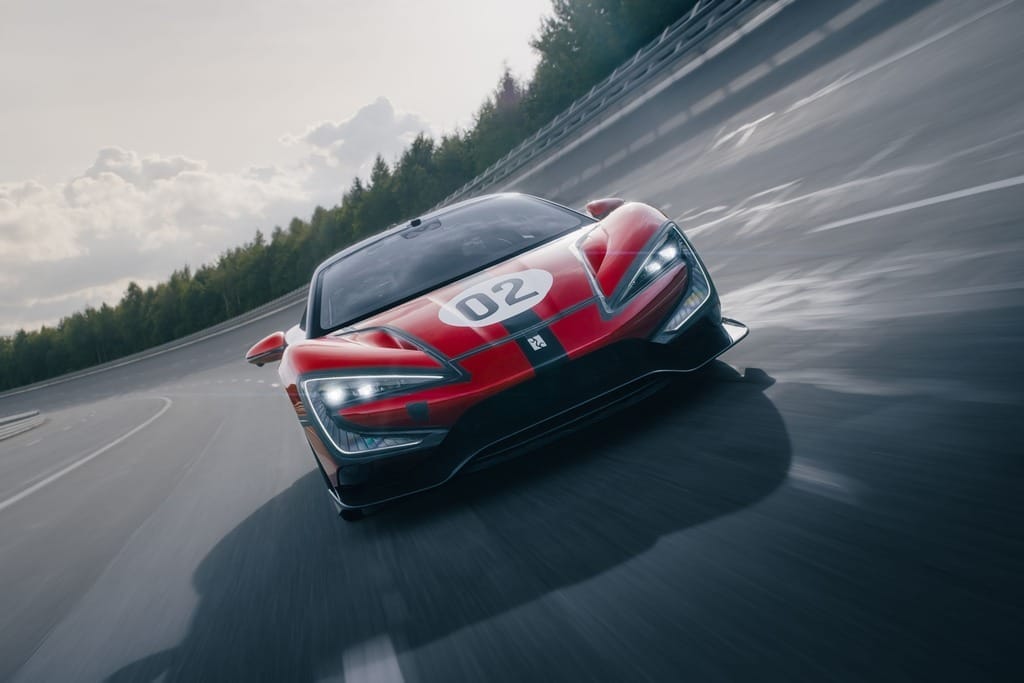
Chinese carmakers have yet to enter the U.S. market in any meaningful way. Still, their presence looms large. Tech-focused, affordable, and rapidly advancing, Chinese automakers are reshaping the global EV industry — and American consumers are starting to take notice.

Chinese Cars Absent, But Not Invisible
There are virtually no Chinese-branded vehicles officially sold in the U.S., aside from models like the China-built Polestar, Volvo, or Buick. Yet China’s influence is everywhere in the global car market. Its electric vehicles are setting new benchmarks in pricing, performance, and technology.
That dominance has made U.S. regulators uneasy. Washington has imposed tariffs exceeding 100% on Chinese EVs and plans to restrict imports of vehicles with Chinese-developed software or hardware, citing national security risks. In practice, these measures amount to an outright ban.
Still, despite government barriers and political tension, the appeal of Chinese cars among U.S. consumers continues to grow.
Survey: Familiarity and Acceptance Rising
According to new data from AutoPacific, Americans’ familiarity with Chinese auto brands rose sharply in 2025. Sixty-five percent of survey participants said they recognize at least one Chinese car brand — up from 52% a year ago. Even more striking, 52% said they would consider buying a Chinese car, compared to 41% in 2024.
Among respondents who knew specific brands, Huawei topped the list, with 27% saying they’d consider one of its vehicles. Xiaomi followed at 23%, BYD at 19%, Great Wall Motors at 16%, Geely at 13%, and Nio at 13%.
Security Concerns Remain, But Are Easing
While attitudes are softening, skepticism remains. Many U.S. buyers still worry about data privacy and cybersecurity, but those fears are declining.
AutoPacific’s report found that concerns about data security dropped from 80% in 2024 to 77% in 2025, while national security worries eased from 82% to 79%. The numbers remain high, but the trend shows a steady reduction in fear — a sign that more Americans are willing to look past geopolitical issues when evaluating new technology.
Media and Visibility Drive Awareness
“We’ve seen awareness of disruptors like BYD, Geely, Huawei, and Zeekr grow substantially year over year,” said Robby DeGraff, manager of product and consumer insights at AutoPacific. “A lot of that can be attributed to an increase in media coverage and real-world exposure.”
Indeed, coverage of Chinese EVs has become unavoidable. From TikTok to Instagram Reels, videos reviewing or reacting to Chinese EVs are everywhere, often highlighting sleek designs and surprising value. Even major U.S. news outlets now report regularly on China’s growing EV influence.
As DeGraff noted, this shift in perception is happening despite political rhetoric from the Trump administration portraying Chinese tech as a security threat.
From Imitators to Innovators
Not long ago, Chinese automakers were dismissed as builders of low-cost knockoffs or licensed Western models for developing markets. Today, that perception is rapidly changing.
Brands like BYD, Nio, and Zeekr are pioneering affordable, high-performance EVs that compete directly with Tesla, Volkswagen, and Hyundai. Their cars are now sold across Europe, Southeast Asia, and Latin America — markets where Chinese EVs are proving reliable, capable, and stylish.

Will Chinese Cars Ever Reach U.S. Roads?
At least for now, politics, tariffs, and security concerns will keep Chinese EVs out of the American market. But consumer interest tells another story.
If the regulatory barriers were ever lifted, Chinese brands could find a surprisingly receptive audience waiting for them. After all, the combination of price, technology, and innovation has already reshaped the EV landscape worldwide — and it may only be a matter of time before that wave reaches American shores.
Recommend Reading: Hyundai Questions Chinese EV Pricing Advantage Amid Subsidy Concerns
Share:
10-Minute EV Charging Is Coming to the U.S.—But Drivers May Not Need It
UK Charging Network Fights EV Cable Theft With GPS Tracking