





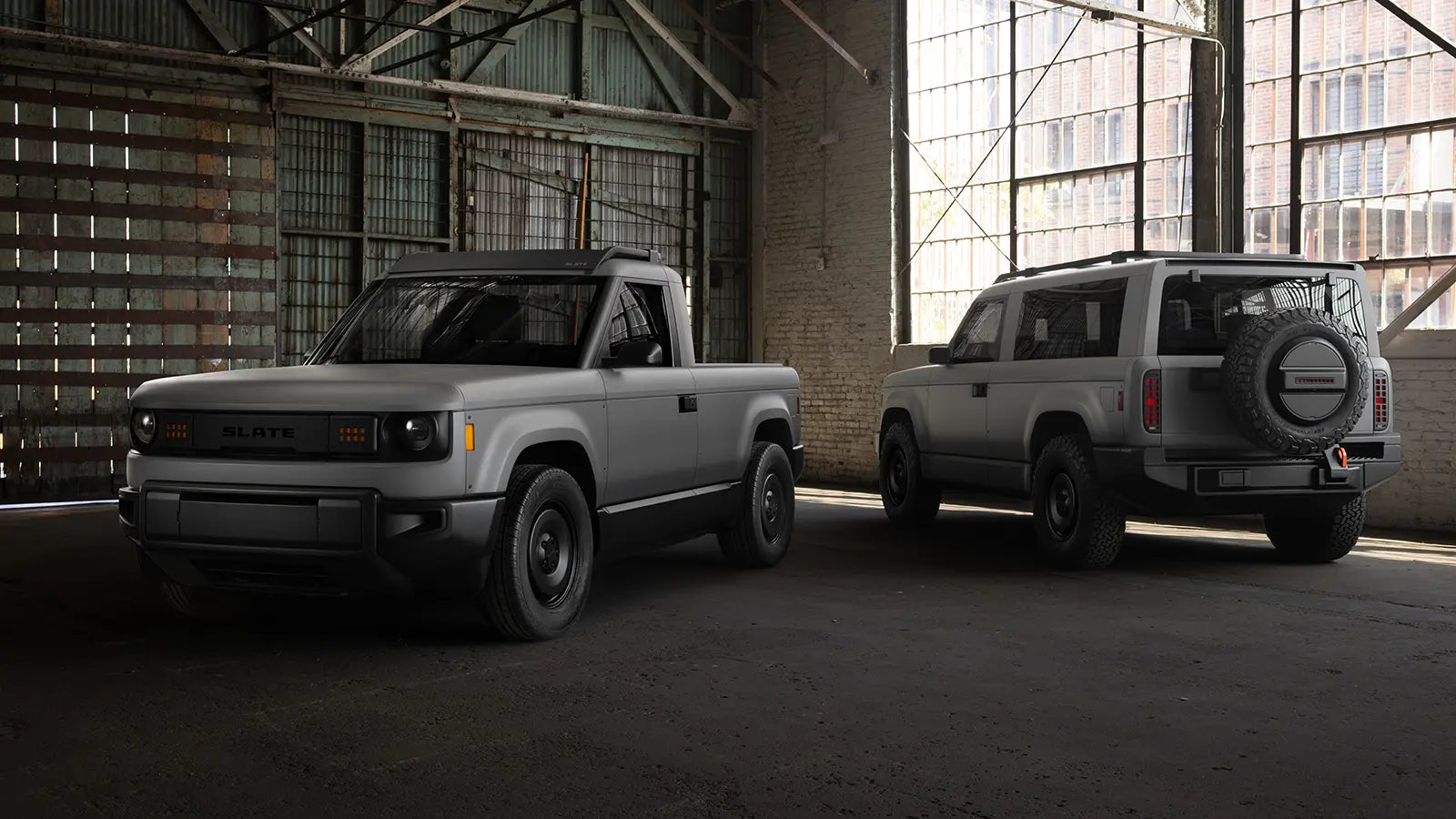
Slate Truck Hits Major Milestone
Slate Auto’s affordable electric truck has reached 150,000 pre-orders, matching its planned annual production. The company is preparing to launch production toward the end of next year, with a ramp-up through 2027 to reach full capacity. If early demand translates into sales, the truck will effectively be sold out for its first year.
The Slate Truck, priced in the mid-$20,000 range after the expiration of the $7,500 federal EV tax credit, has drawn attention for its low cost and practical design, making it one of the most anticipated budget EV pickups in the U.S.

No Self-Driving Technology
Despite interest in autonomous features, Slate CEO Chris Barman confirmed the truck will not include self-driving technology. The company aims to keep costs low and accessible. Advanced autonomy systems would significantly increase the price, which runs counter to the truck’s main appeal: affordability.
Barman emphasized that the focus remains on providing a simple, reliable electric truck rather than high-tech automated features. This positions the Slate Truck as a straightforward, budget-friendly alternative in the growing EV market.
Pricing and Market Context
The Slate Truck was originally targeted at around $20,000 with the tax credit, but the post-credit price is expected to be closer to $26,000–$27,000. Even with incentives removed, demand has remained strong, reflecting the continued need for affordable EVs in the U.S. market.
However, demand for electric pickups has generally softened. Major automakers have faced challenges: Ford discontinued the F-150 Lightning, Ram canceled its electric 1500, and Tesla is struggling to sell Cybertrucks. This context highlights the Slate Truck’s unique positioning as a low-cost, no-frills option.
Competition on the Horizon
Ford’s upcoming smaller EV pickup will become the Slate Truck’s primary competitor. Expected to start around $30,000 and offer more standard features, the Ford model will enter production in 2027, roughly a year after Slate begins deliveries.
Despite similarities on paper, Slate does not view the Ford truck as a direct rival. The company believes its vehicle’s customization options, simplicity, and low repair costs will appeal to buyers seeking practicality and affordability over premium features.

Affordability and Incentives
State-level EV incentives may further reduce the Slate Truck’s effective price, making it accessible to a broader audience. The company also promises no markups, aiming to maintain transparency and keep the truck within reach for first-time EV buyers.
While the tax credit expiration and the arrival of competing EV pickups could challenge Slate, its strategy of combining low cost, simplicity, and customizable options may help sustain strong demand. The truck’s popularity demonstrates the market’s hunger for budget-friendly electric vehicles.
Recommend Reading: The Slate Truck Gains Tesla Supercharger Access — Expanding Its Everyday Range


Share:
How Driving an EV Quickly Reduces Range Anxiety
Ford Recalls F-150 Lightning and Other EVs Over Park Module Issue
1 comment
why no self driving? The tesla technology is amazing, and safe. this definitely should be considered in the future.
a $30,000 robo taxi is on the horizon, might be a better option