Understanding the Charging Confusion

Hyundai and Kia drivers now have access to Tesla’s Supercharger network, and recent models even include the Tesla-style NACS port straight from the factory. On paper, this should make charging more convenient than ever—no adapters, no extra steps, just plug in and go.

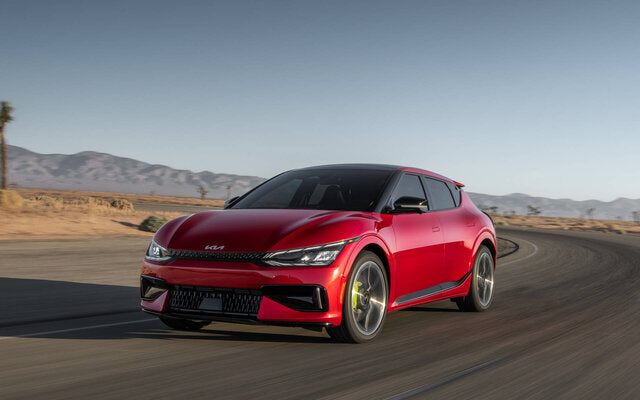
But there is an unexpected twist: you may actually get slower charging speeds at Tesla Superchargers if you drive a Kia EV6, EV9, or Hyundai Ioniq 5, Ioniq 6, or Ioniq 9. It sounds counterintuitive, so let’s break down why this happens and how to get the fastest possible charge.

Kia charging at Tesla Supercharger


Why Tesla Superchargers Slow Down Hyundai and Kia EVs

Hyundai and Kia’s newest electric vehicles share the advanced E-GMP platform, which supports charging rates well above 200 kW. Under ideal conditions, the Ioniq 5 has even been recorded exceeding 260 kW—exceptional performance for a mainstream EV.

However, those speeds simply don’t appear at Tesla Superchargers.

Real-world reports show:

  • Some EV6 owners see around 97–120 kW at Superchargers

  • Ioniq 5 and Ioniq 9 models typically reach only up to 126 kW

  • Hyundai’s flagship EV9 shows similar limits

These numbers fall far short of what these cars are capable of on other networks, meaning longer wait times and less efficient charging stops.


The Voltage Mismatch Behind the Slow Speeds

The root of the issue is voltage compatibility.

  • Hyundai and Kia EVs operate at 800 volts, which is key to their rapid charging capability.

  • Tesla Superchargers traditionally operate around 500 volts, because Tesla’s own vehicles historically used lower-voltage systems.

To make this work, Hyundai and Kia use an onboard voltage booster when plugged into a Supercharger. This bottleneck prevents the car from taking full advantage of its high-voltage architecture, so charging power is capped well below the vehicle’s potential.

Other 800V EVs—like the Lucid Air, Lucid Gravity, and Porsche Taycan—experience similar limitations at Superchargers for the same reason.


Where Hyundai and Kia EVs Actually Charge Fastest

If your priority is the quickest charging session, Superchargers should not be your first choice.

To unlock the best speeds, look for:

These stations allow E-GMP vehicles to reach their peak rates, often well above 200 kW.
Meanwhile, Tesla’s newer V4 Superchargers promise better compatibility with high-voltage vehicles, but their availability varies by region.

If your car uses the new NACS port, you may need a CCS-to-NACS adapter at non-Tesla stations—an added complication during the industry transition.


How Much Time You Lose at a Supercharger

The charging time differences are more than trivial.

  • A new Hyundai Ioniq 5 with the 84-kWh pack can go 10–80% in about 20 minutes under ideal high-voltage conditions.

  • At a Tesla Supercharger, that same window stretches to around 30 minutes.

For the larger Hyundai Ioniq 9:

  • Optimal charging: 10–80% in roughly 24 minutes

  • At a Supercharger: around 40 minutes

For quick top-ups, the impact may be small—but on long road trips or during work shifts, choosing the right station can save significant time.

A IONIQ 6 is charging in Tesla super charging station with EVDANCE Pulse Fusion NACS DC to ccs1 adapter charging


The Bottom Line

Hyundai and Kia’s newest EVs are among the quickest-charging models on the market—but not on Tesla’s Supercharger network.
For now, if you want the fastest charging stop possible, high-power non-Tesla stations remain the superior choice until voltage-compatible networks become more widely available.

Recommend Reading: Hyundai Pushes Toward Ultra-Fast EV Charging and Three-Minute Top-Ups
FAQs - Level 3 DC Fast Charging

What is Level 3 DC fast charging for electric vehicles?

Level 3 charging, also known as DC fast charging (DCFC), provides direct current at high power levels (typically 50 kW to 350 kW) to quickly recharge an electric vehicle battery. Unlike Level 1 and Level 2 charging, DC fast charging bypasses the onboard charger, enabling much faster energy transfer.

How fast is Level 3 DC fast charging compared to Level 2 charging?

Level 2 chargers (240V AC) usually add 20–30 miles of range per hour, while Level 3 DC fast chargers can add 100–300 miles of range in 20–40 minutes, depending on EV battery capacity and charging power.

Does Level 3 fast charging damage EV batteries?

Frequent use of DC fast charging can accelerate battery degradation over time due to higher heat generation and faster charge cycles. However, modern EVs have battery thermal management systems that minimize impact. Occasional fast charging is safe and convenient for road trips.

What connector types are used for Level 3 DC fast charging?

The main EV fast charging connectors in North America are:

  • CCS (Combined Charging System) – widely adopted by most automakers
  • CHAdeMO – mainly used by older Nissan LEAF models
  • NACS (Tesla plug) – now being adopted across multiple brands (Ford, GM, Rivian, etc.)
What is the maximum power output of Level 3 DC fast charging stations?

Most public DC fast chargers range from 50 kW to 150 kW, while ultra-fast chargers can reach 250 kW to 350 kW. Tesla Superchargers V3 deliver up to 250 kW, and upcoming next-gen chargers may exceed 500 kW for heavy-duty EVs.

How much does Level 3 DC fast charging cost?

Pricing varies by network and location. Costs are usually based on per kWh, per minute, or a flat session fee. In the U.S., rates typically range from $0.25 to $0.60 per kWh, which is higher than home charging but competitive compared to gasoline costs.

Where can I find Level 3 DC fast charging stations in the U.S.?

DC fast chargers are commonly located along highways, rest stops, shopping centers, and EV charging networks like Tesla Supercharger, Electrify America, EVgo, and ChargePoint. Apps like PlugShare and ChargeHub help drivers locate fast charging stations.

Can all EVs use Level 3 DC fast charging?

Not all EVs are compatible. Some plug-in hybrid EVs (PHEVs) and older models lack DC fast charging capability. The maximum charging speed also depends on the vehicle’s onboard DC charging acceptance rate, which can range from 50 kW to 270 kW.

How does weather affect Level 3 DC charging speed?

Extreme cold or heat impacts battery temperature management, reducing fast charging speeds. EVs often precondition the battery before arriving at a fast charger to optimize charging efficiency in winter or summer conditions.

What is the future of Level 3 DC fast charging technology?

The future includes ultra-fast chargers (500 kW+), widespread adoption of NACS connectors, and vehicle-to-grid (V2G) integration. As EV infrastructure expands, Level 3 charging will become even more essential for long-distance travel and heavy-duty electric trucks.

EV News

View all

This New Battery-Powered DC Fast Charger Can Be Installed in Hours

This New Battery-Powered DC Fast Charger Can Be Installed in Hours

ElectricFish unveils its 400squared DC fast charger at CES 2026. Battery-backed and dual-port capable, it can be installed in hours, bypassing expensive grid upgrades and supporting rapid EV infrastructure growth.

Read more

Americans Worry More About EV Range Than Cost, Survey Shows

Americans Worry More About EV Range Than Cost, Survey Shows

A Deloitte survey finds that U.S. buyers worry more about EV range and charging time than cost. Loss of the federal tax credit slowed adoption, but interest remains, especially for affordable, long-range models.

Read more

Tesla’s Cybercab Could Get Regulatory Boost From Congress

Tesla’s Cybercab Could Get Regulatory Boost From Congress

Tesla’s Cybercab aims to be a $30,000 fully autonomous ride-hailing vehicle. Congressional approval could raise production limits, but software, charging infrastructure, and branding challenges still remain.

Read more