





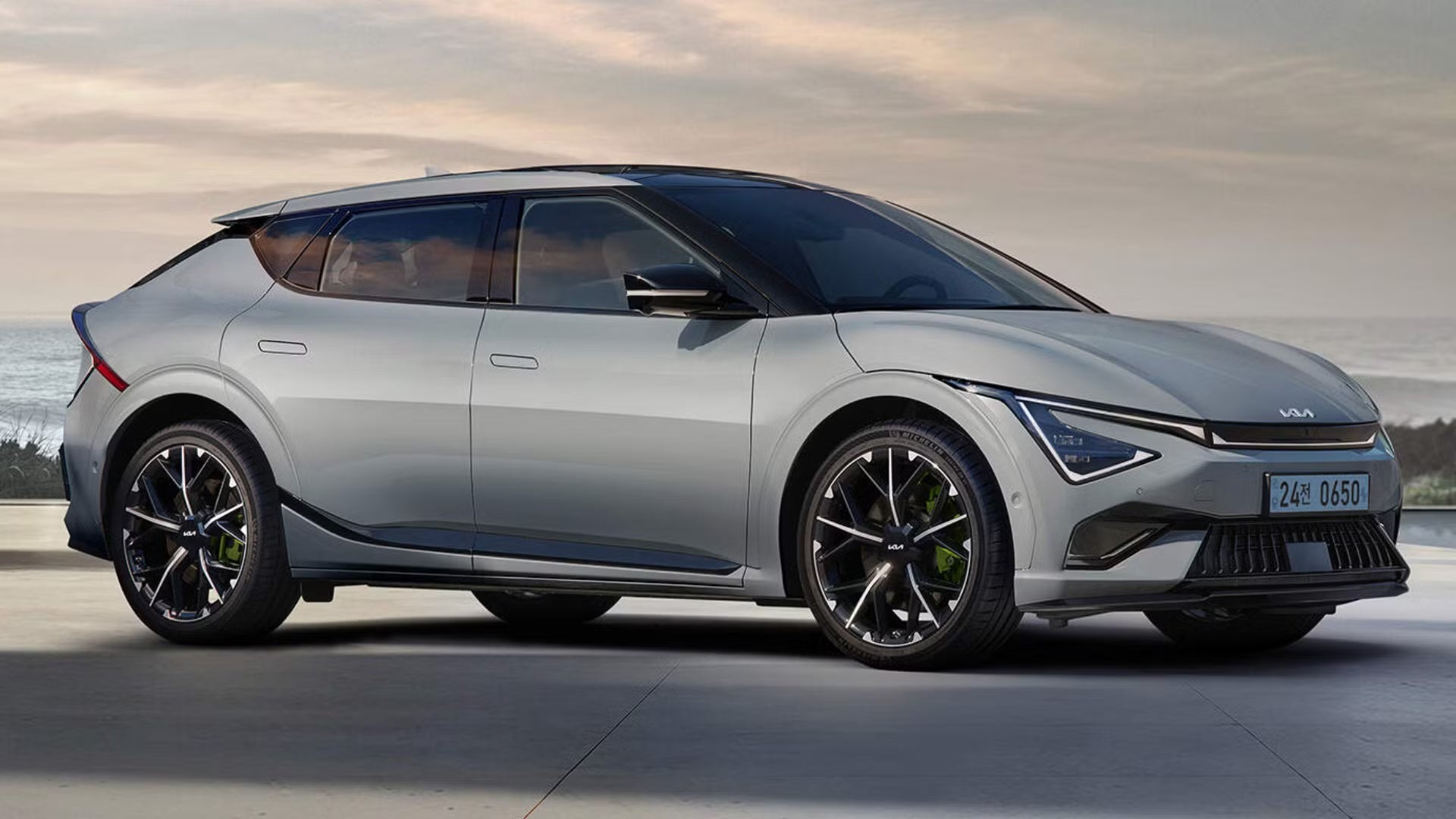
Kia’s EV Momentum Has Clearly Weakened
Kia was once seen as one of the most aggressive legacy automakers in the U.S. electric vehicle market. The launch of the EV6 in 2021 helped establish that reputation, combining fast charging, strong performance, and competitive pricing. The later arrival of the three-row EV9 reinforced the idea that Kia was serious about EV leadership.
However, recent sales data shows that this momentum has faded. Despite record overall brand sales in January, Kia’s electric models experienced sharp declines. The EV9 recorded 674 units sold, down 45% year over year, while the EV6 dropped even more dramatically—from 1,542 units to just 540, a 65% decline. These drops follow an already difficult 2025, when EV6 and EV9 sales fell by 40% and 31%, respectively.

Industry Headwinds Are Part of the Story
Kia is not operating in a vacuum. The broader U.S. EV market is going through a period of contraction. The expiration of the $7,500 federal EV tax credit at the end of September raised effective prices across the segment and reduced the appeal of subsidized leases.
Automakers, including Kia, responded with aggressive incentives, at times offering up to $10,000 in manufacturer discounts. While this helped move inventory, it also strained margins—especially as new tariffs reduced available cash flow. Under these conditions, a decline in EV sales was expected.
But the scale of Kia’s decline suggests that industry factors alone do not explain the full picture.
A Growing Gap Between Kia and Hyundai
A revealing comparison comes from Hyundai, Kia’s corporate sibling. The Hyundai Ioniq 5—mechanically similar to the EV6—saw only a 6% sales decline in the same period. Hyundai sold 2,126 Ioniq 5s in January and more than 47,000 units in 2025. By contrast, Kia sold just 12,933 EV6s last year.
This disparity exists despite similar updates to both models, including North American Charging Standard (NACS) compatibility, improved software, and incremental range gains. On paper, the EV6 should be far more competitive than its sales suggest.
Manufacturing Flexibility Shapes Product Priorities
Kia executives point to production logistics as a major constraint. Both the EV6 and EV9 are built at Kia’s West Point, Georgia plant, alongside high-demand gas and hybrid models like the Telluride, Sorento, and Sportage.
As hybrid demand surged, Kia adjusted production to prioritize these vehicles. That strategy paid off, with record sales for several combustion and hybrid SUVs. Hyundai, meanwhile, produces its EVs at a dedicated EV-focused facility in Georgia, giving it stronger incentives to maximize electric output.
This difference explains why Hyundai can sustain EV volume while Kia reallocates capacity toward more profitable segments.
Product Positioning and Consumer Preference Matter
Logistics alone, however, do not fully explain the EV6’s long-term underperformance. Even before U.S. production began, the Ioniq 5 consistently outsold the EV6. Consumer preference appears to play a meaningful role.
The Ioniq 5’s boxier shape reads more clearly as an SUV, offers a roomier interior, and features more intuitive physical controls. The EV6’s sportier, low-slung design appeals to some buyers, but may confuse shoppers expecting a traditional crossover.
Visibility also matters. Vehicles that sell in higher volumes gain stronger real-world presence, which reinforces consumer awareness. The Ioniq 5 has benefited from this effect, while the EV6 has gradually faded from public attention.
Internal Competition Is Pressuring the EV9
The EV9 faces a similar challenge. Initially praised as the first mainstream three-row electric SUV, it now competes directly with Hyundai’s Ioniq 9. Early sales figures show the two models already running close, and production constraints could further shift momentum toward Hyundai.
If capacity remains limited, Kia may continue prioritizing its most profitable vehicles rather than defending EV-specific market share.

What This Means for Kia’s EV Future
Kia’s current strategy makes financial sense in today’s uncertain EV market. Gas and hybrid SUVs are driving profits, and overall sales remain strong. But reduced EV visibility carries long-term risks.
Kia built its reputation as an EV innovator with the EV6 and EV9. If those models continue to lose relevance, the brand risks becoming a secondary player in electrification rather than a leader. To maintain credibility in the EV space, Kia will eventually need to reinvest in marketing, differentiation, and product excitement—beyond short-term volume optimization.
Recommend Reading: Kia Expands GT Lineup With More Powerful, Sport-Focused Electric Models


Share:
2026 Nissan Leaf Highway Range Test at 70 MPH: Real-World Results Explained
Scout’s South Carolina EV Plant Faces Major Cost Overruns